
“Where does my food come from?” Consumers are asking this question more often, and for independent meat processors, answering it can help tell a powerful marketing story. A package of beef can represent a ranch, animal, or production style instead of simply being another steak in the meat case. But for a meat processor, meat traceability has another, much less glamorous job: safety.
If something goes wrong, a processor needs to know exactly where the product came from, what happened to it in the facility, what other products or ingredients it came into contact with, and where it went after it left.
Traceability can help tell a story, but it also creates a documented chain that follows a product through an operation from beginning to end. At its core, good meat traceability lets a processor follow this chain in both directions: backward to understand where a product and its ingredients came from, and forward to know where the finished product went.


TRACEABILITY STARTS WHEN THE ANIMAL ARRIVES
Imagine five head of beef arrive at a small USDA-inspected processing facility Monday morning.
Before processing begins, information about those animals is already entering the facility’s records. Who owns them? Which animal is which? What is scheduled to happen to each one?
Each animal can be assigned its own harvest or kill lot connected to identifying information such as an ear tag or producer, and from there, the record follows the carcass.


When the carcass is weighed, the system records that information. When it enters the cooler, the processor can document when it went in. When it comes back out for cutting, it becomes part of another production record.
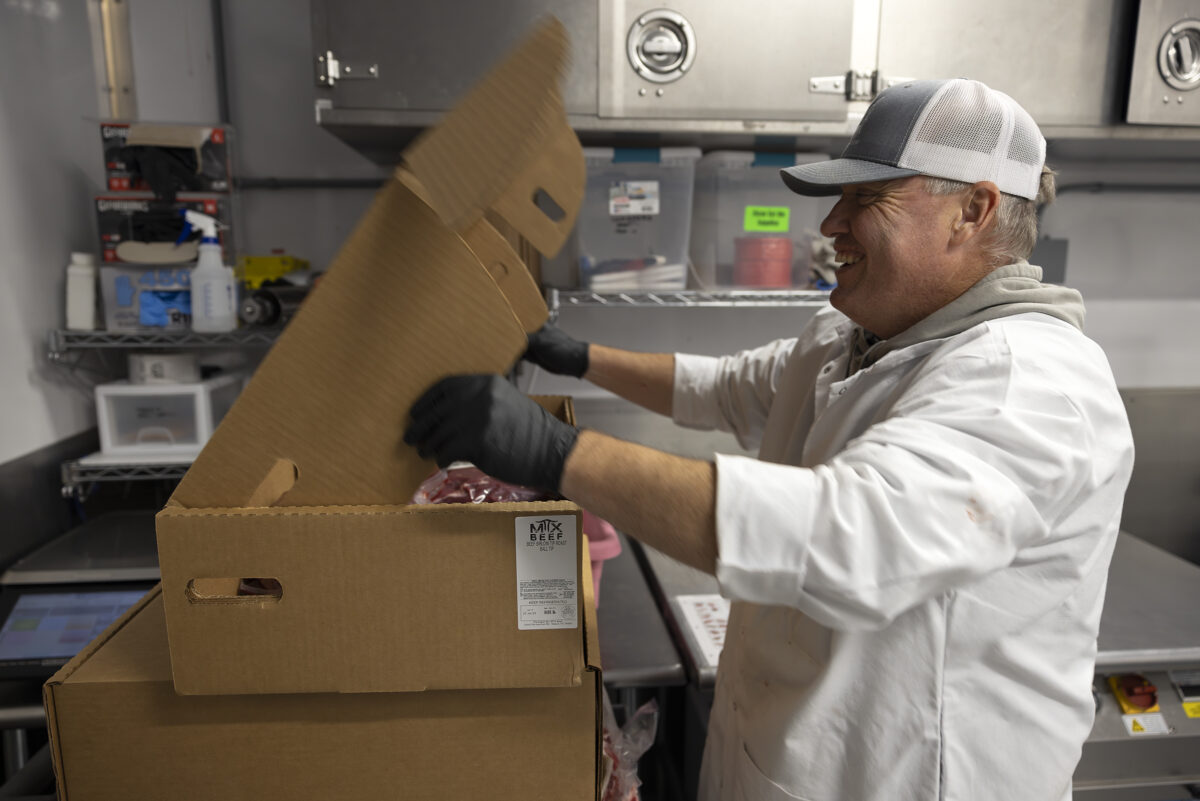
Eventually, a vacuum-sealed package of steaks coming off the cutting room floor can carry a serial number or other identifier that connects it back through this history—traceability in practice.


WHY LOT SIZE MATTERS
Meat traceability isn’t always about tracking individual animals. Sometimes that’s the case, but more often, processors are creating lots. Lot size is one of the most important concepts for a new processor to understand because it directly affects the potential scope of a recall.
Suppose those five beef carcasses harvested Monday are cut together on Tuesday.
The processor may know exactly which five animals are represented in that day’s production. But as meat from those carcasses moves across the same equipment and surfaces, the products are no longer necessarily microbiologically independent.


Maintaining complete microbiological independence between individual carcasses would require a complete sanitation procedure between each one. For most commercial operations, that would be impractical and time-consuming, so processors instead establish lots.
Traceability is more than a compliance exercise. Choosing lot size becomes a management decision about production efficiency and risk.
A small processor might begin with individual harvest lots and later aggregate several animals into a production lot. This creates a manageable production system while still maintaining traceability. Lot size also determines risk, however, so the question becomes: how much product should be included in a single lot?
If 100 animals are aggregated into one lot and a problem is later discovered, the processor must account for the product associated with all 100. Smaller lots can limit that exposure, but they can also add operational complexity.
Traceability is more than a compliance exercise. Choosing lot size becomes a management decision about production efficiency and risk.


WHAT HAPPENS WHEN TUESDAY’S BEEF BECOMES WEDNESDAY’S?
Lot tracking becomes especially important when production doesn’t wrap up neatly at the end of the day—a common occurrence in a meat processing business.
Say a processor reaches the end of Tuesday with 400 pounds of beef trim remaining. This product doesn’t simply become anonymous beef sitting in the cooler. Instead, the paper trail continues: the trim is weighed and labeled as Work in Progress, or WIP, preserving its connection to Tuesday’s production lot. When employees start again Wednesday, they can scan or otherwise record the WIP and continue processing it.


Traceability systems need to reflect what is physically happening inside the plant, not just create a paper trail for the USDA.
But now another food-safety question arises: if Tuesday’s product enters Wednesday’s production without a sanitation break sufficient to establish microbiological independence, a potential issue may connect the two production lots.
A processor might then need to account for product from both days during a recall. This is why traceability systems need to reflect what is physically happening inside the plant, not just create a paper trail for the USDA.


TRACEABILITY GOES BEYOND THE ANIMAL
Following the animal is only the beginning. A USDA-inspected processor operating under HACCP principles builds food safety systems around three broad categories of hazards: biological, chemical, and physical. Traceability helps connect these food safety risks to the products, ingredients, and production lots they may affect.
- Biological hazards can include pathogens such as E. coli or Salmonella.
- Physical hazards can include foreign materials like glass, wood, needles, or bullet fragments.
- Chemical hazards can include improper chemical concentrations, allergens, or ingredients with regulatory limits.
The more complex the product becomes, the more complex its traceability becomes.


A steak, for example, is relatively straightforward. A sausage is more complex because it can contain meat, salt, pepper, spices, curing ingredients, casings, and other components. Each has its own identity and lot information that may need to be recorded. After all, a recall may not involve the meat at all—it could involve the pepper or casings.
For some products, the question isn’t just “What animal did this meat come from?” but “What else went into it?”
Allergens make this especially important because undeclared allergens are a major reason food products are recalled.
Cured and “uncured” products add another layer. Ingredients used to produce nitrites or nitrates must be controlled appropriately because allowable levels in products such as bacon, ham, and snack sticks are regulated.
So, for some products, the question isn’t just “What animal did this meat come from?” but “What else went into it?”


THE RECALL IS WHERE TRACEABILITY EARNS ITS KEEP
Nobody opens a meat processing business hoping to conduct a recall, but operators need to be prepared for one. A recall plan establishes how the facility will respond and provides a deliberate process for evaluating a potential recall. This can help define the boundaries of the problem, make it easier to respond appropriately, and keep emotions from driving decisions.
Now imagine the processor in our example gets a call: a lot of pepper used in Wednesday’s sausage has been recalled by the supplier.

The processor needs to work in both directions through the traceability chain to determine which products could be affected and where they went. Traceability supplies the information needed to answer questions like:
- How much affected product was produced?
- Which production lots could be affected?
- How much remains in inventory?
- Where is it?
- Who purchased the rest?
- Has some of it already been consumed?
The better the records, the more precisely and quickly a processor can answer these questions. Without adequate traceability, a processor may have to cast a much wider—and potentially costlier—net because it cannot confidently establish the extent of the recall.


PRACTICE BEFORE YOU NEED IT
A recall plan isn’t something that should sit untouched in a binder. It’s a living system, and operators should conduct mock recalls to test whether it works.
It’s simple: select a product and trace it.
Think of it as a fire drill for your records. Finding holes in the process during a mock recall is considerably better than finding them during the real thing.
Can you identify the production records associated with it? Can you determine the relevant ingredients and lots? Can you determine how much was produced, what remains in inventory, and where the rest went?
Think of it as a fire drill for your records. Finding holes in the process during a mock recall is considerably better than finding them during the real thing.


IT DOESN’T TAKE A WHOLE DEPARTMENT
Traceability, and the recordkeeping that comes with it, doesn’t require a whole department—or even a whole role—devoted to it. Like many other parts of a processing business, it comes down to knowledgeable people and well-designed processes.
Once the day’s production is established, operators should be able to record information as product moves through the plant rather than reconstructing everything afterward.
All of the records we’ve been following—from Monday’s harvest through Tuesday’s processing and Wednesday’s production—have to live somewhere. Technology can make this considerably easier.
Barcodes, integrated scales, digital production records, inventory systems, and point-of-sale integrations can connect information that would otherwise live in separate documents.


A processor could, for example, connect the serial number on a package of steaks to production information and, ultimately, to an invoice showing where those steaks were sold.
While much of this can be done on paper, a tech-based meat traceability system—like the combined hardware and software system Friesla helps clients set up—makes it much easier.



MEAT TRACEABILITY IS BOTH A MARKETING AND FOOD SAFETY TOOL
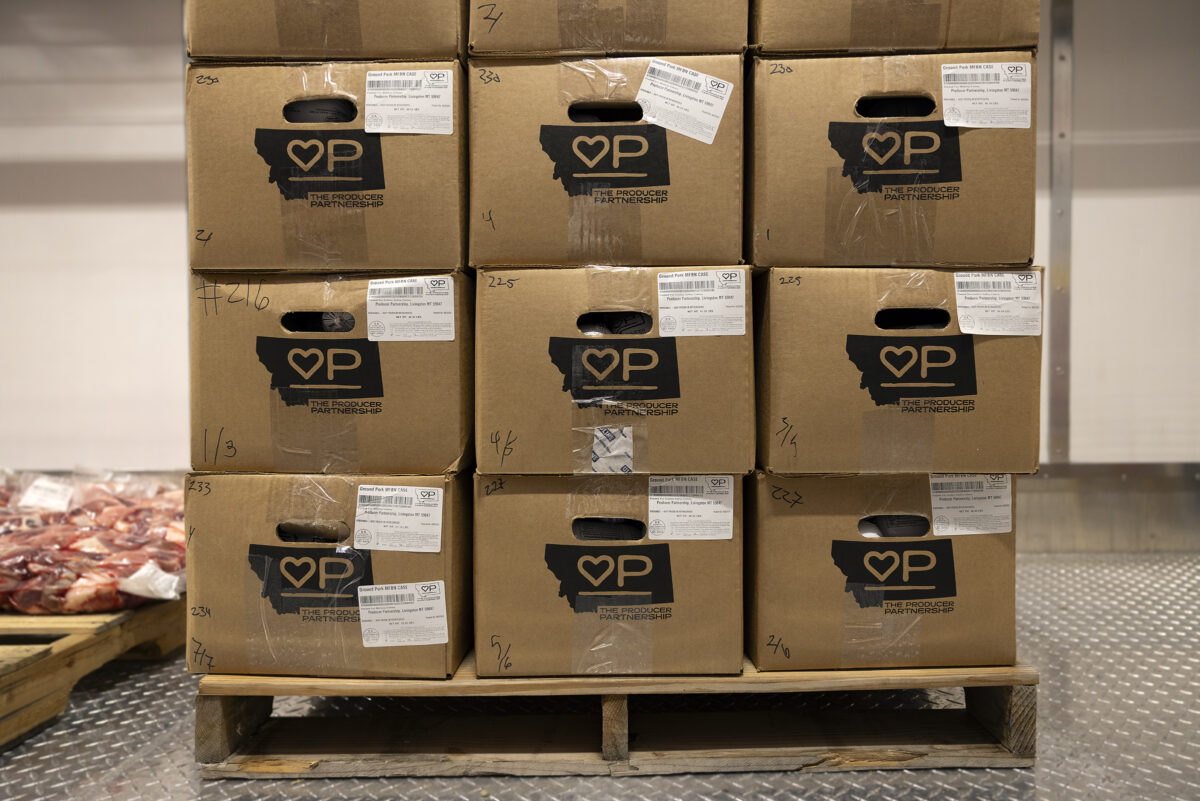
For a processor serving independent farms or ranches, different label designs let retail products carry the producer’s brand, helping tell the “Here’s where your food came from” story customers increasingly want.
The same traceability system a processor uses to answer critical questions during a recall also makes it possible to credibly tell customers where their food came from. With smaller production lots and strong traceability, this story can be carried with the product through the entire process—from the producer to the finished package.
For processors, meat traceability means knowing a product’s history well enough to tell its story when things go right—and to protect customers and the business when something goes wrong.

