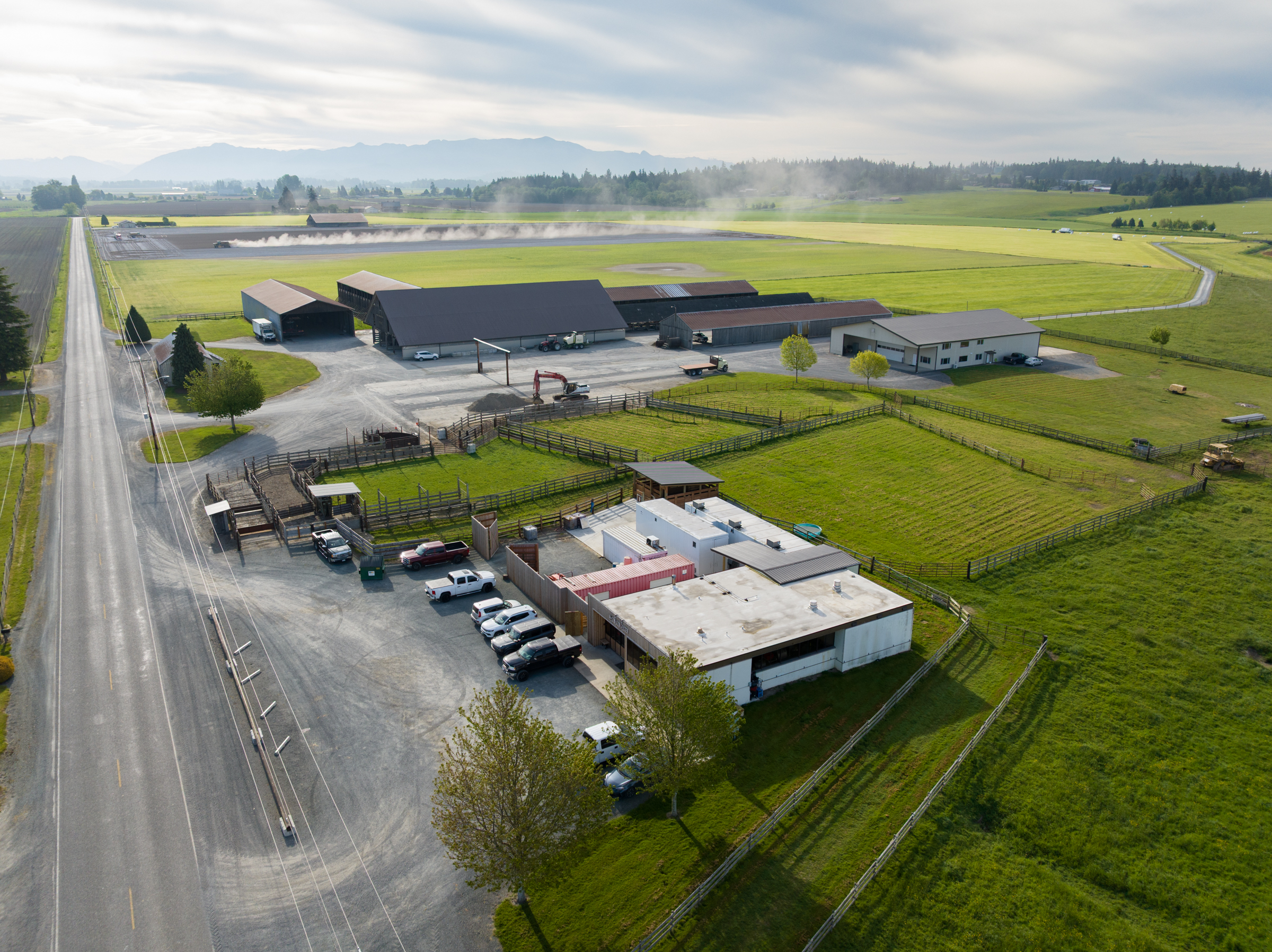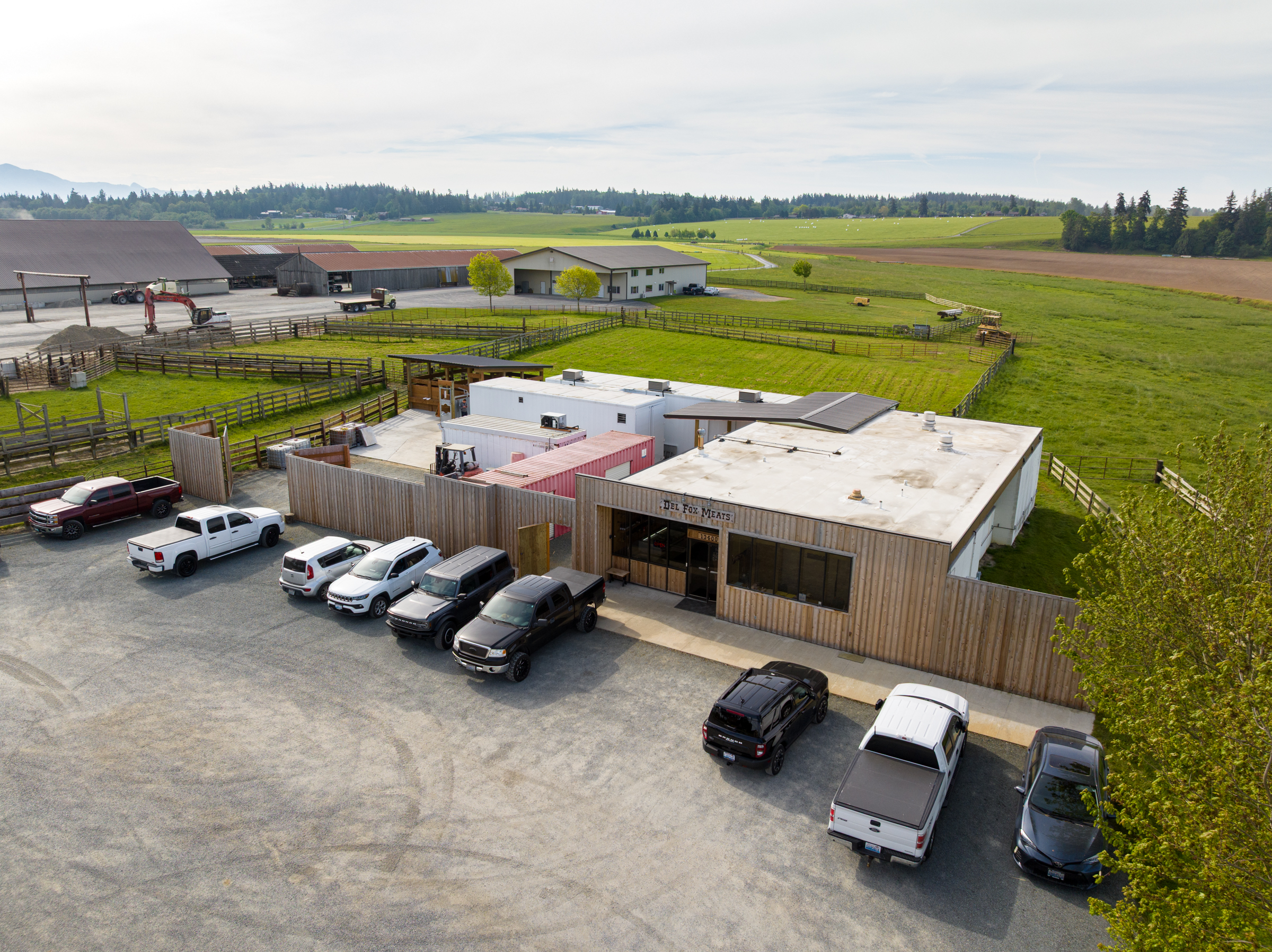
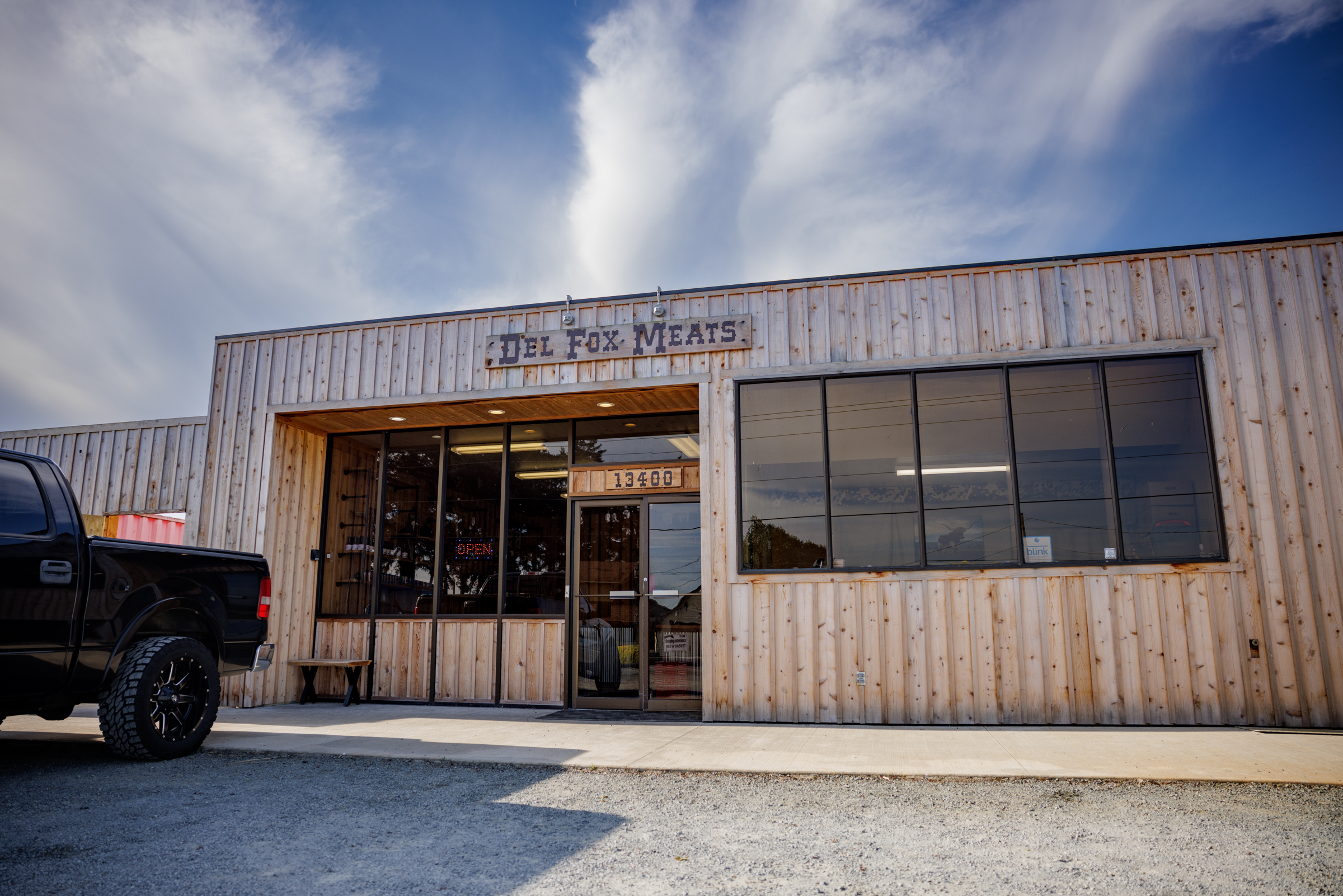
A Pacific Northwest staple, Del Fox Meats has served farmers, ranchers, and families in Northwest Washington State for more than 50 years. What began as a small, seasonal butcher shop has grown into a thriving meat processing and retail business, with busy storefronts at its custom-exempt shop in Stanwood and USDA-inspected facility in neighboring Bow.

Growing from a one-room shop into two successful locations didn’t happen overnight. It took hard work, year after year, and a willingness to take on new opportunities.
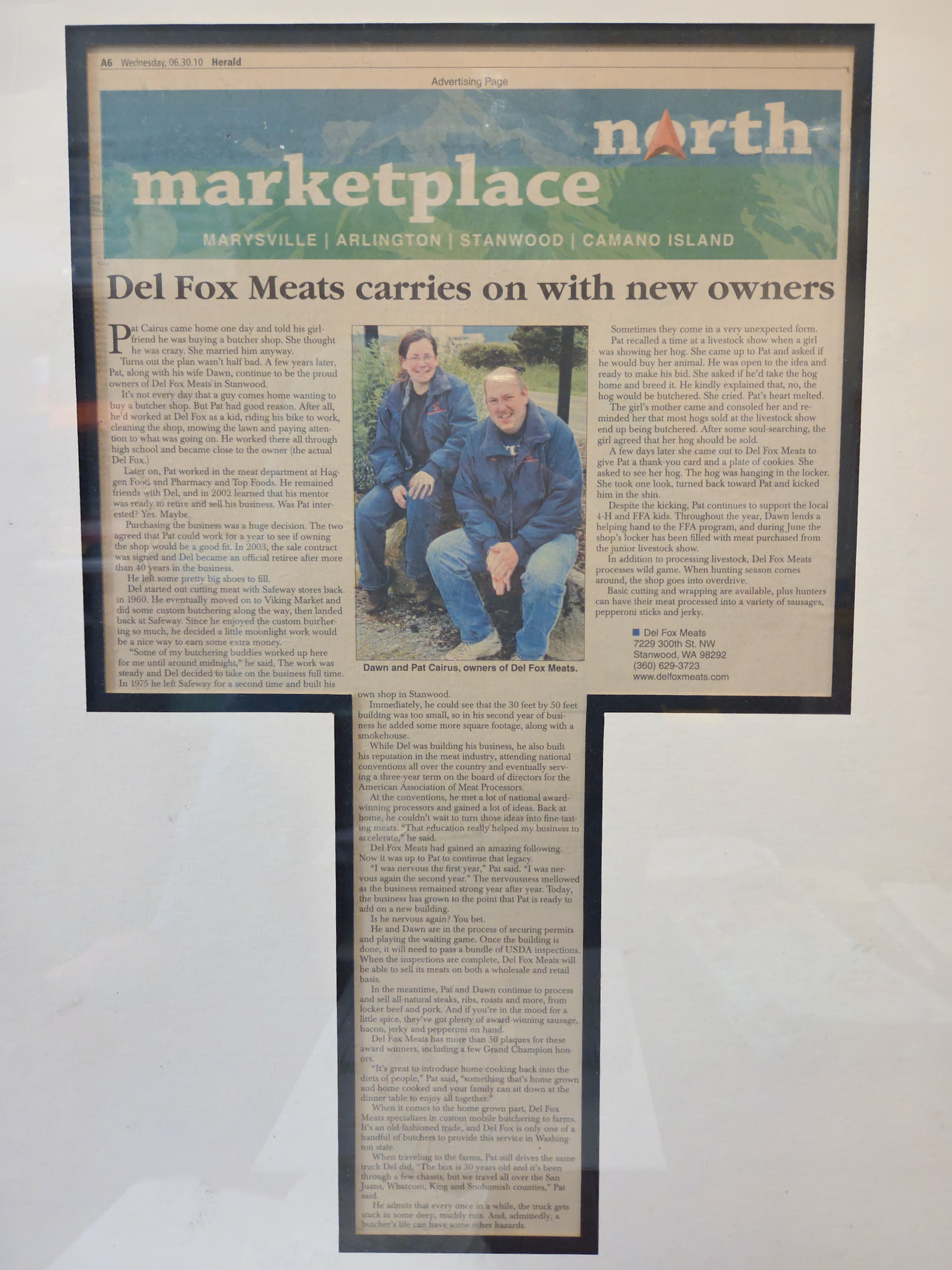
Today, Pat and Dawn Cairus own and operate Del Fox Meats alongside Byron Hill, building on the business Del Fox started more than five decades ago.
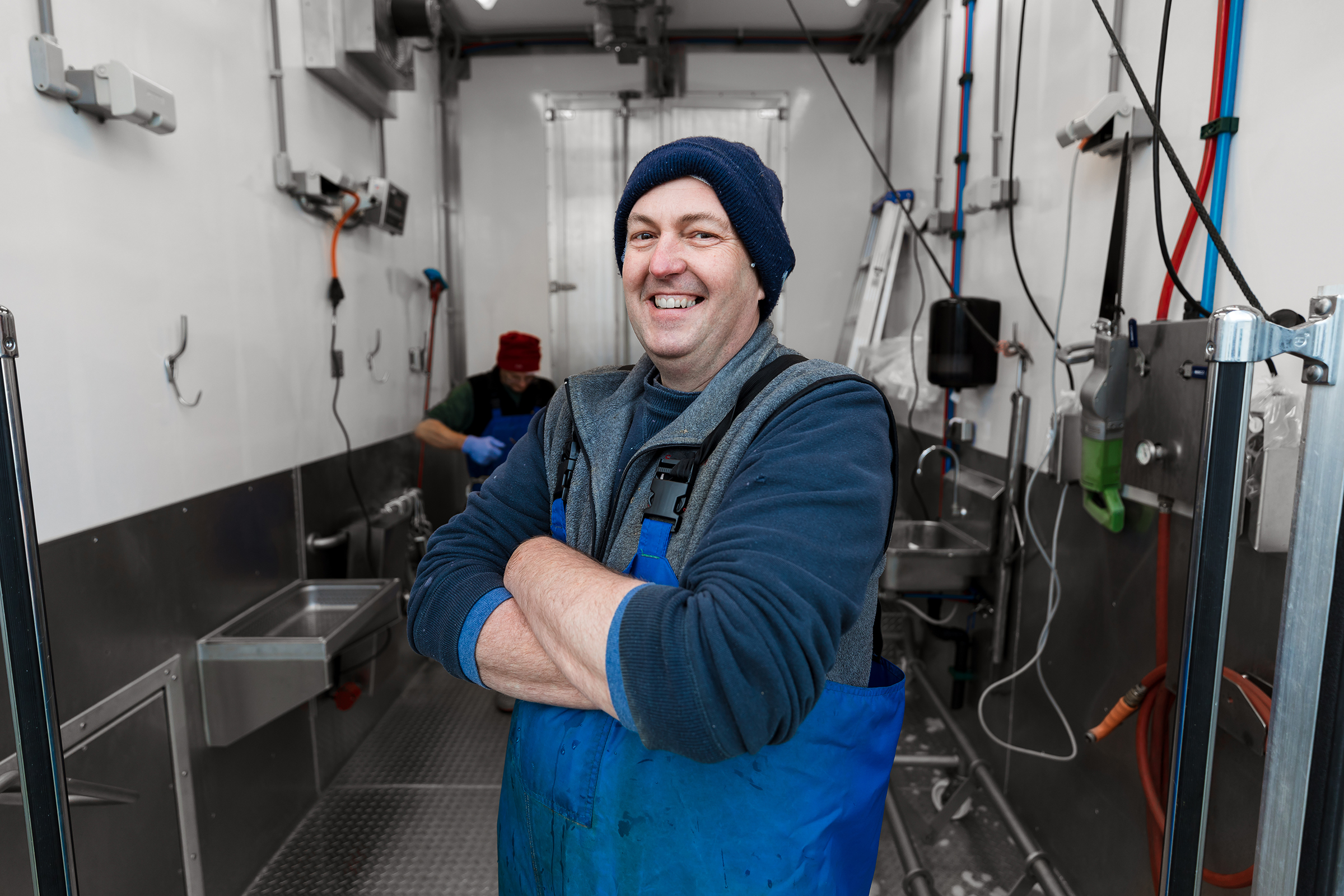
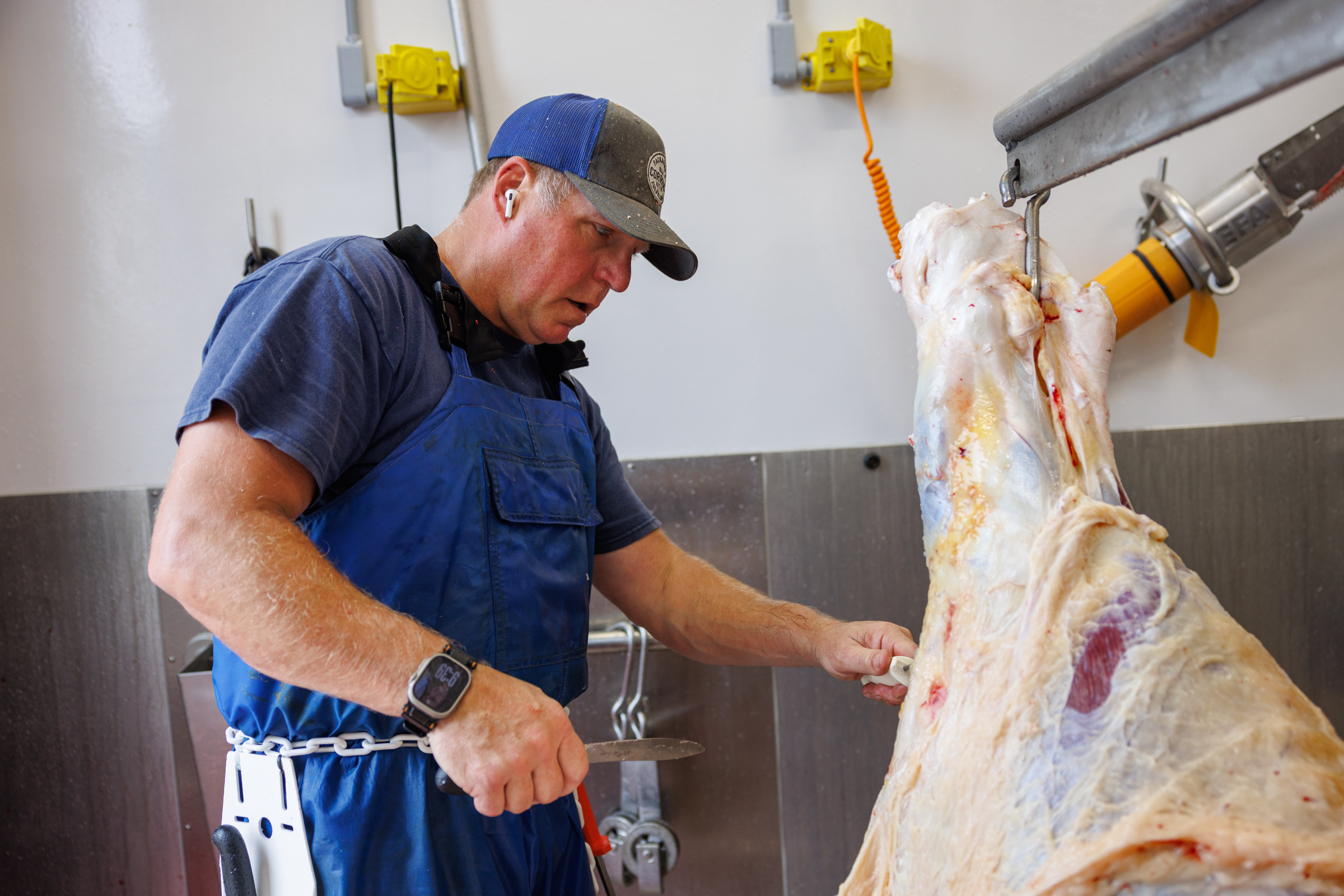
WHERE DEL FOX MEATS STARTED
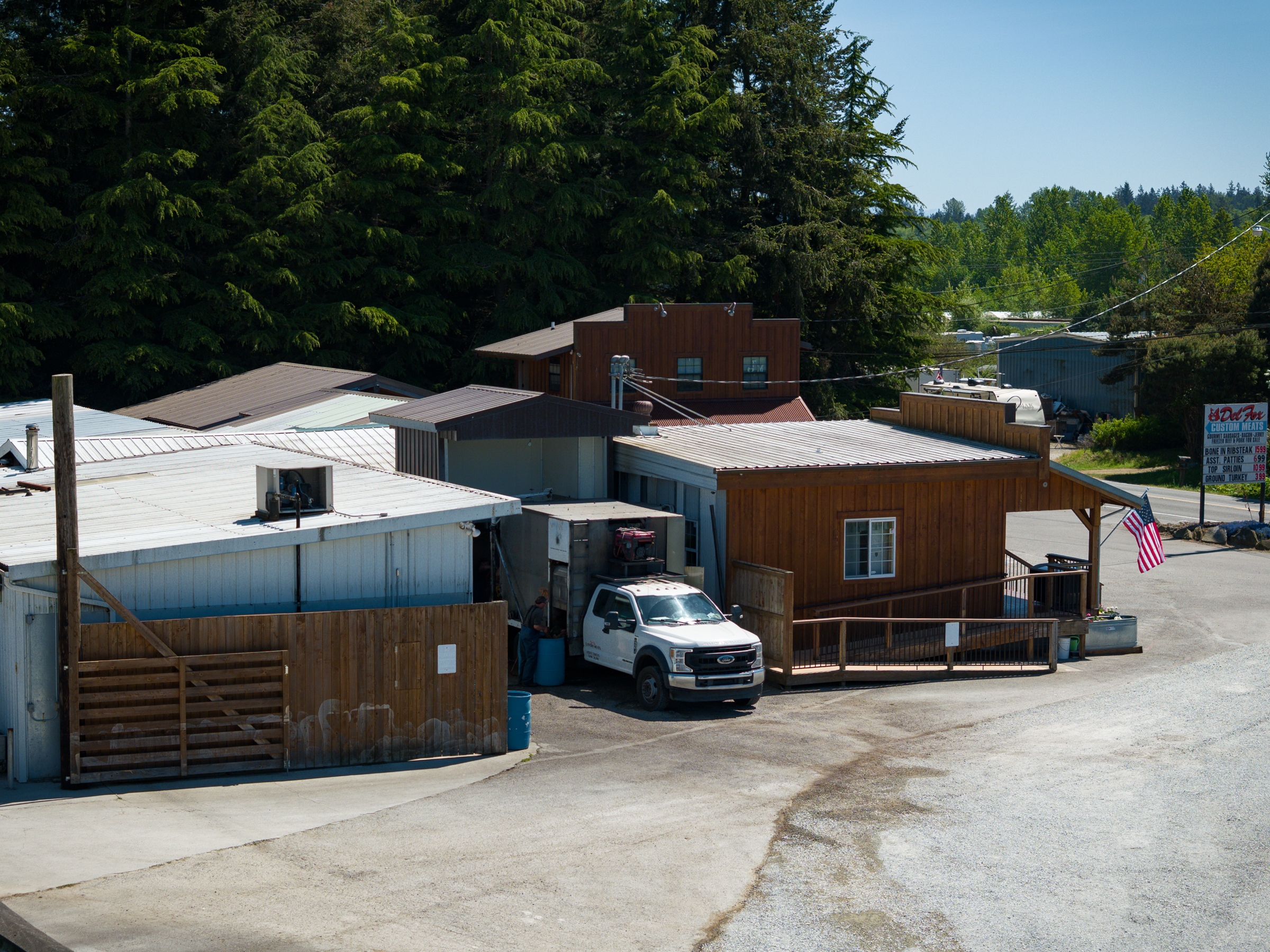
Del Fox, the business’s founder and namesake, started out cutting meat in his garage and working at a local Safeway meat counter. In 1972, he was licensed to process meat under the name Del Fox Meats. The original Stanwood facility was finished around 1976. It was a 30-by-60-foot tin shop in the middle of cow fields, with coolers, a cutting room, and an office. Del processed cattle for the local farming community on a seasonal basis, as farmers had animals ready to process.
Pat came to work for Del when he was 13. His mother had been diagnosed with ovarian cancer, after his father had already had a stroke. “We were poor, and it was go to work or go hungry,” he said. “So we just went to work.”
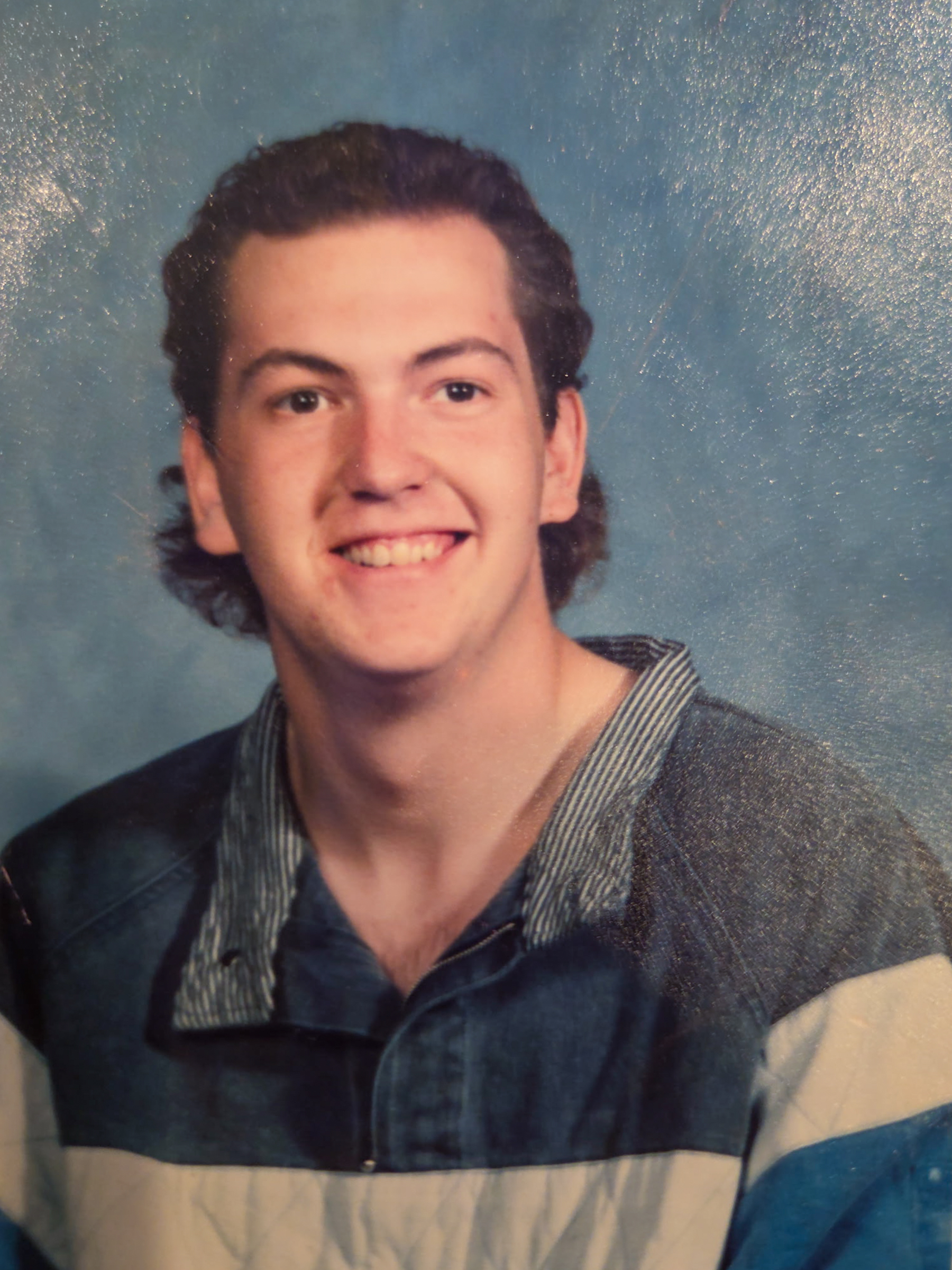
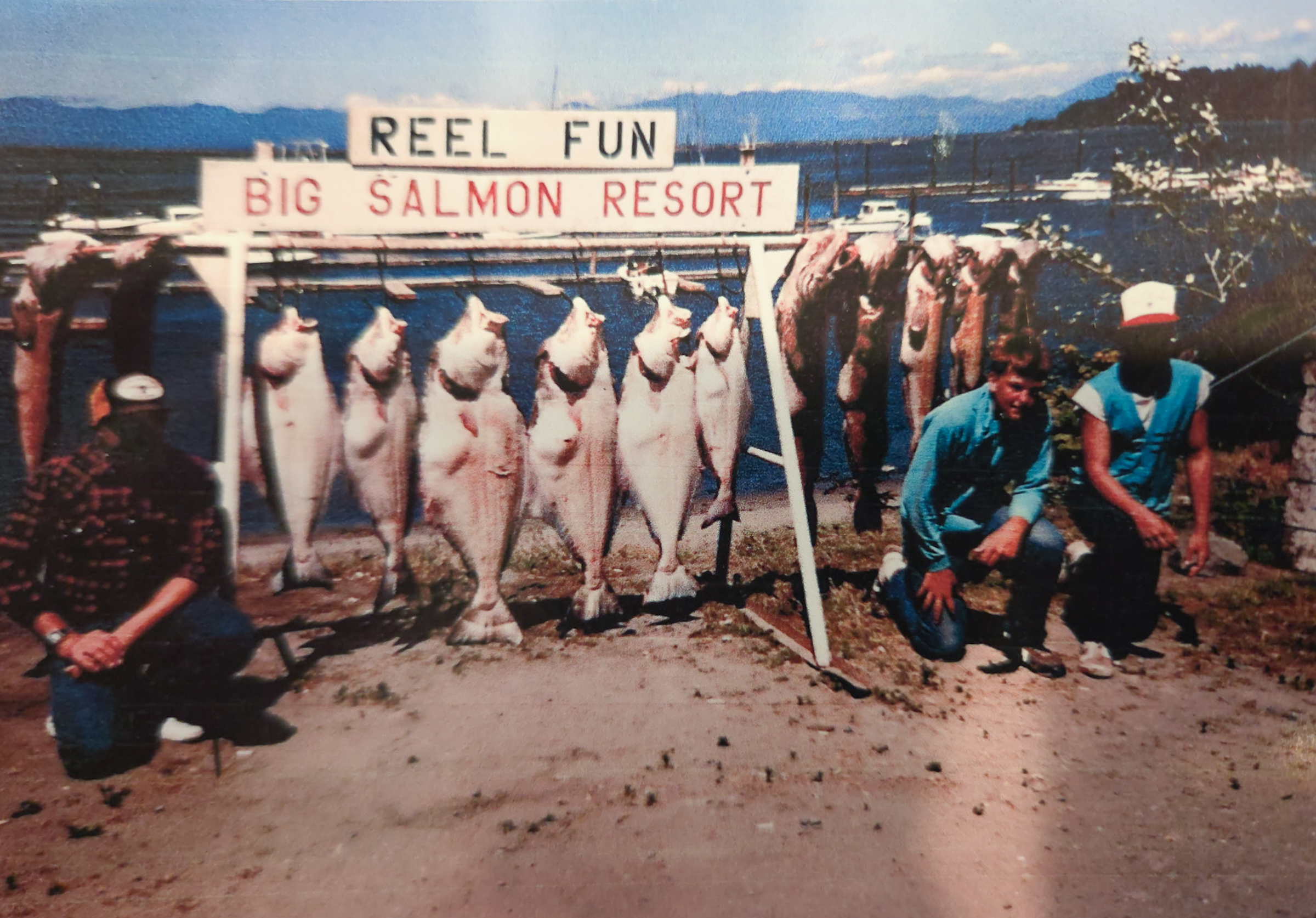
Del would wait for Pat and his brother to get out of school, and then they worked until midnight. They cut, wrapped, and ground meat, and cleaned the shop. When there was no meat hanging, Del had them cut thistles and fix fencing.
After ten years, Del encouraged Pat to gain retail experience at a local grocery store. Pat took a job in a high-volume meat department at Top Foods while still working with Del, building experience in operations and retail. He worked both jobs for 18 years until 2002, when Del invited him to work full-time. They worked together for a year, and when Del was ready to sell the business, Pat came home to Dawn with the news that he’d bought it.
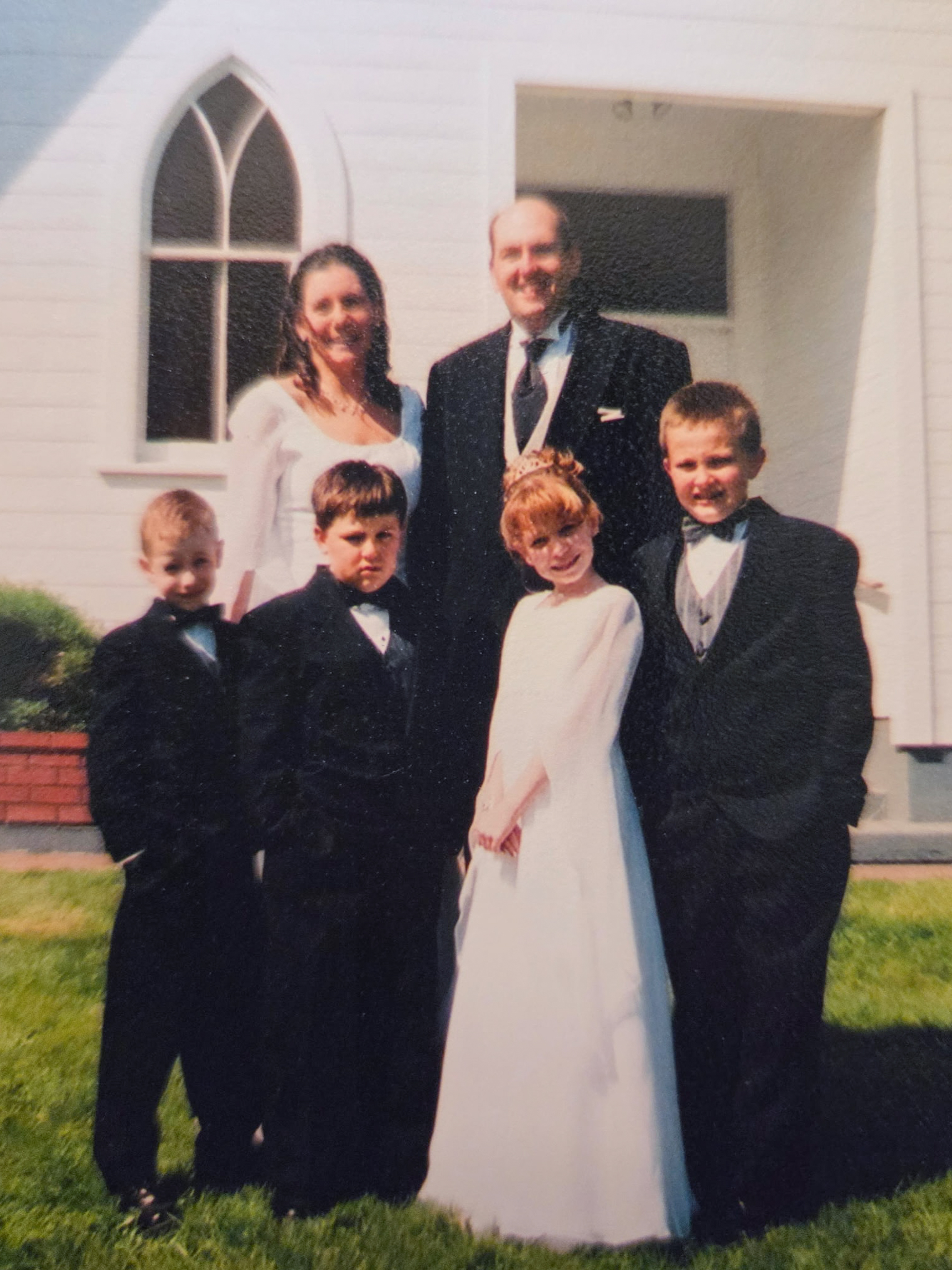
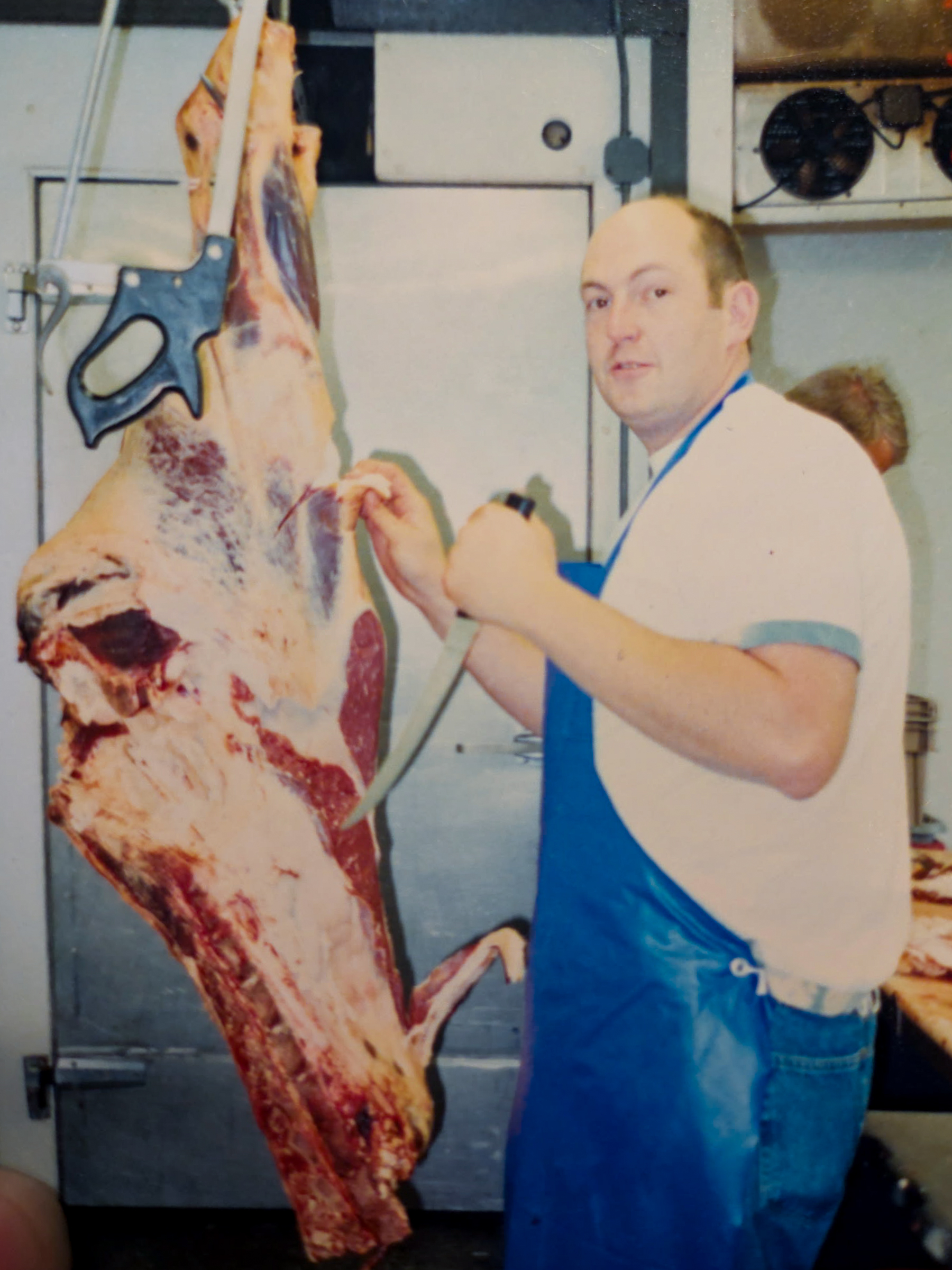
The couple ran the business together until 2018, when an especially busy season prompted them to bring in some additional help. That’s when Byron entered the picture. His employer had recently been bought out, and his sales job kept him away from his two-year-old son for half the year. He was ready for a change.
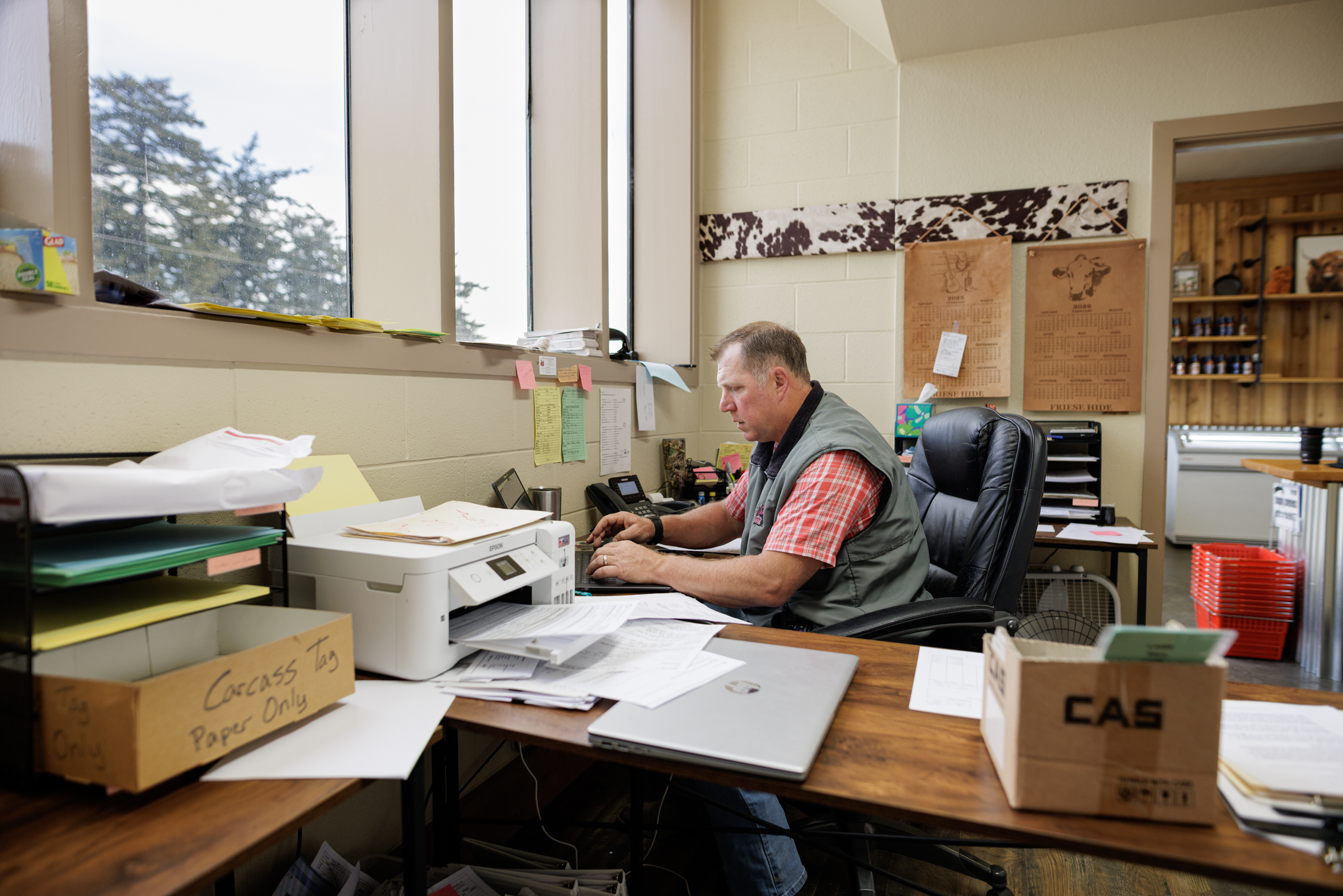
During a visit to the Stanwood facility, Pat and Dawn joked with him, “How would you like to own a butcher shop?” Byron stepped in to help, learning Dawn’s responsibilities for the office, hiring, and finances.
COVID: AN OPPORTUNITY FOR DEL FOX MEATS
The pandemic presented an opportunity for Del Fox Meats and other independent meat processors. Large processors struggled with staffing and supply, and many grocery stores had a hard time keeping fresh meat in stock. Local producers and processors, including Del Fox Meats, worked to fill the gap.
Pat had been considering an expansion for years, but COVID made it clear the time had come. To add USDA-inspected processing, he would likely need a new facility.
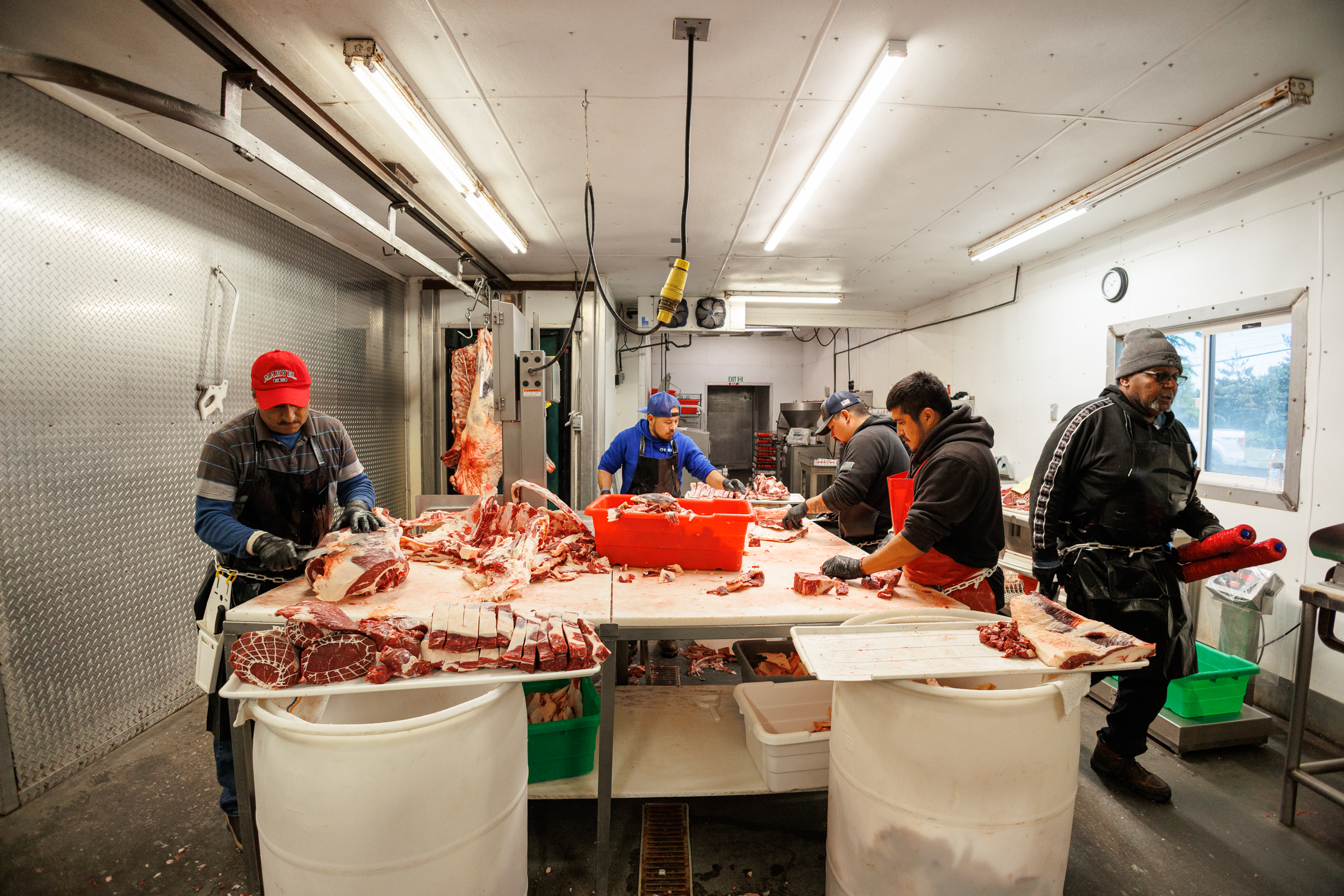
“The problem with the Stanwood shop is it’s been pieced together since the ’70s. It had a small cut room and a small cooler. Then as it grew, they moved another cut room into the back. And then we’re doing more retail. It’s all piecemealed together, but nothing flows.”
Byron Hill, Co-Owner of Del Fox Meats
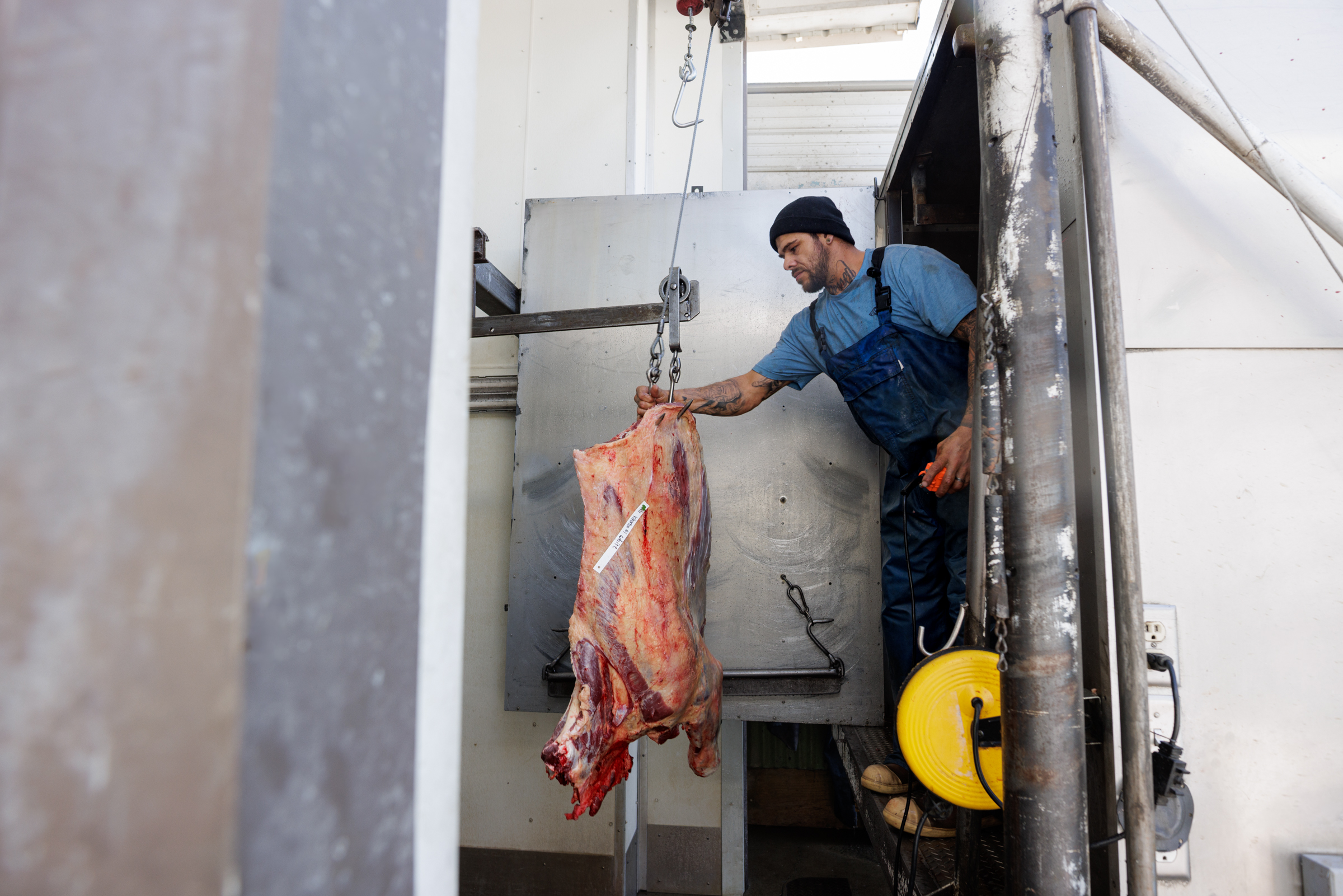
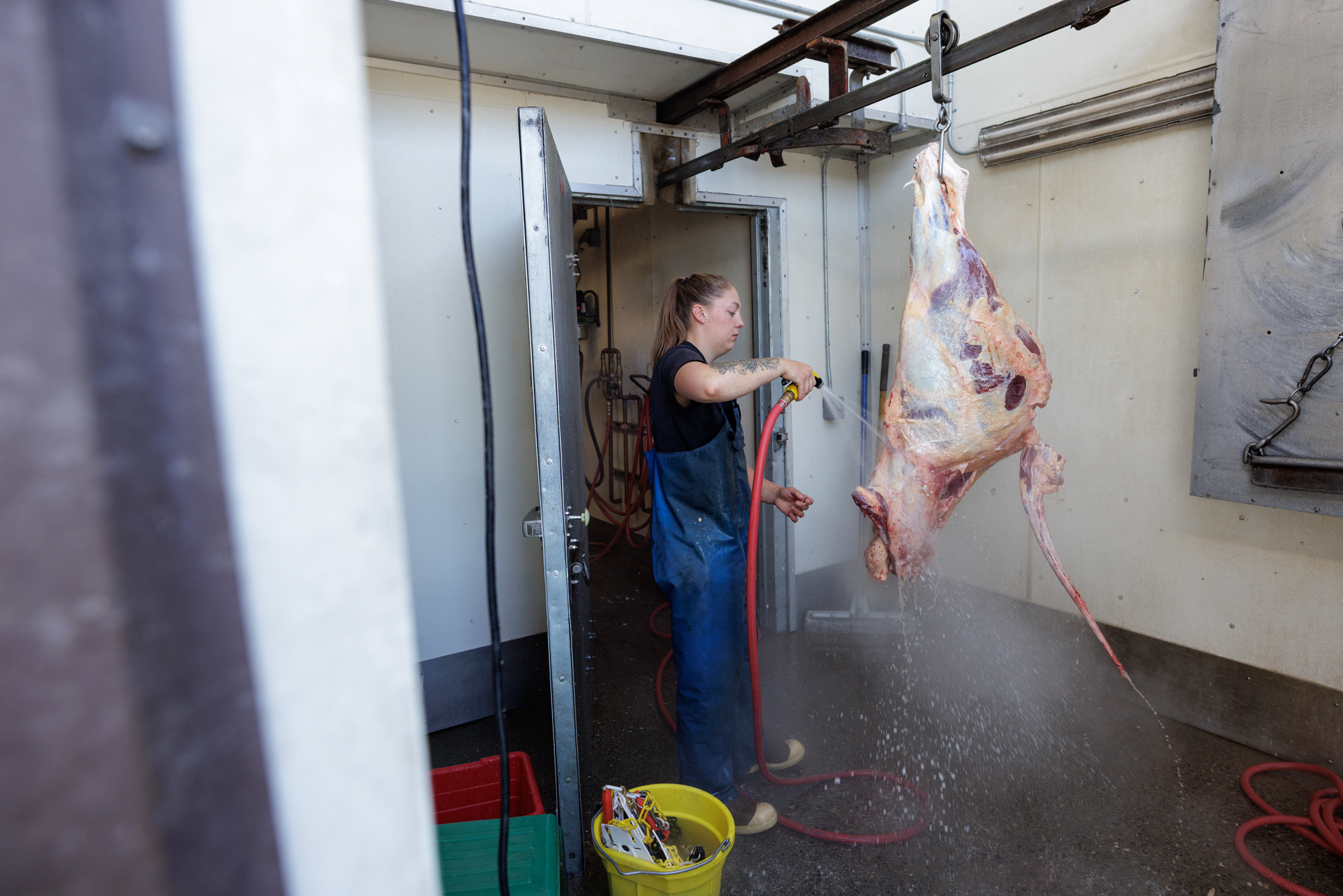
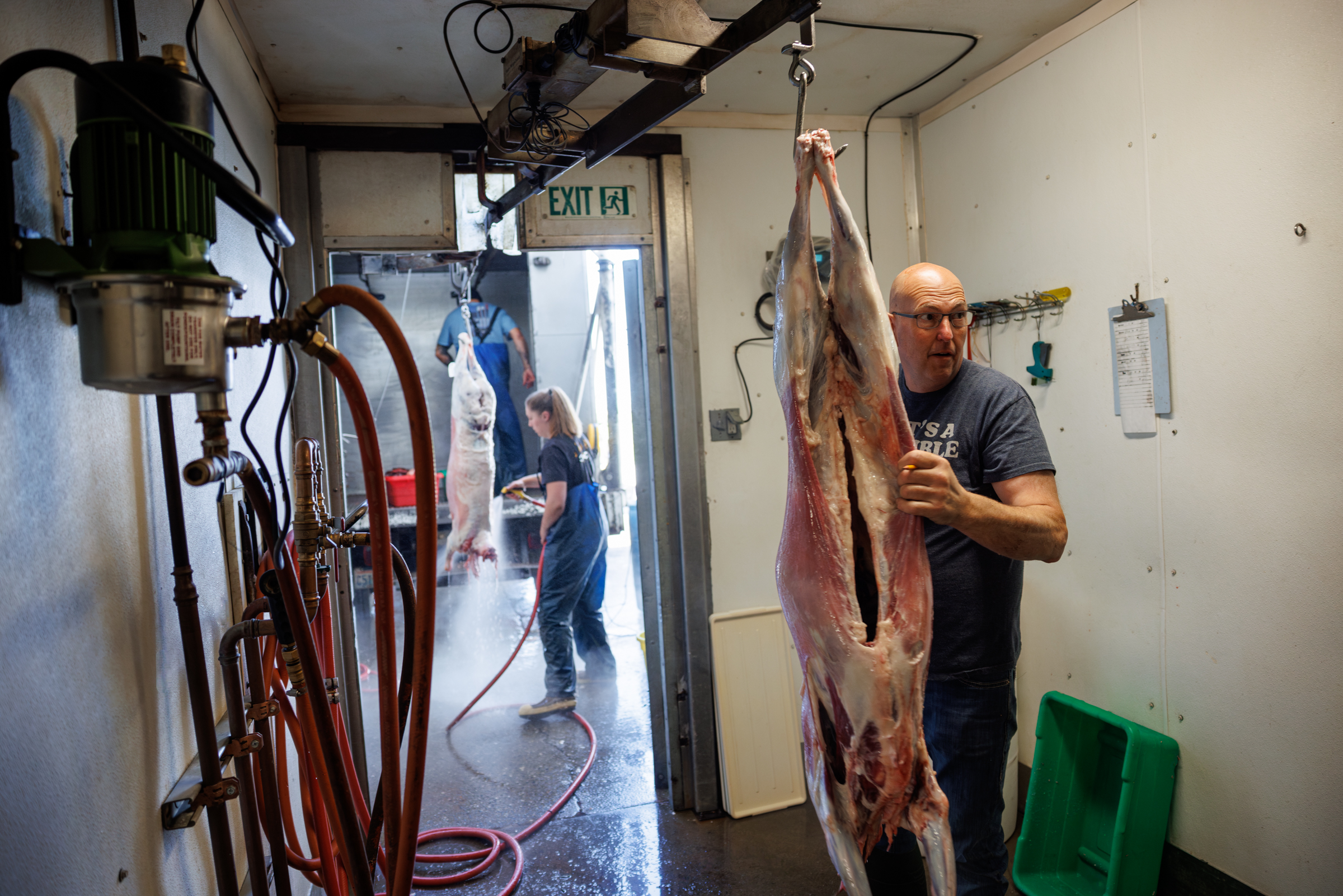
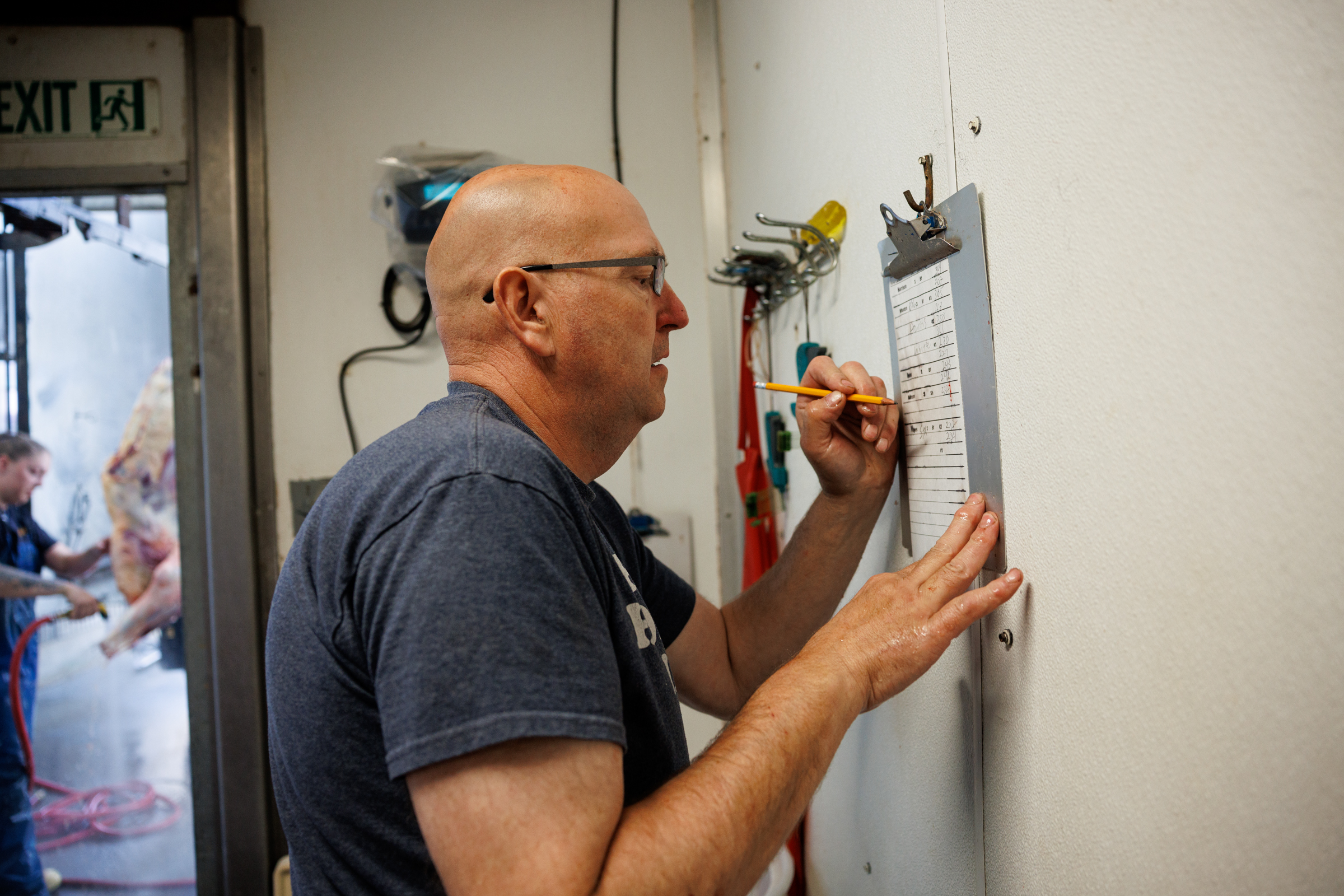
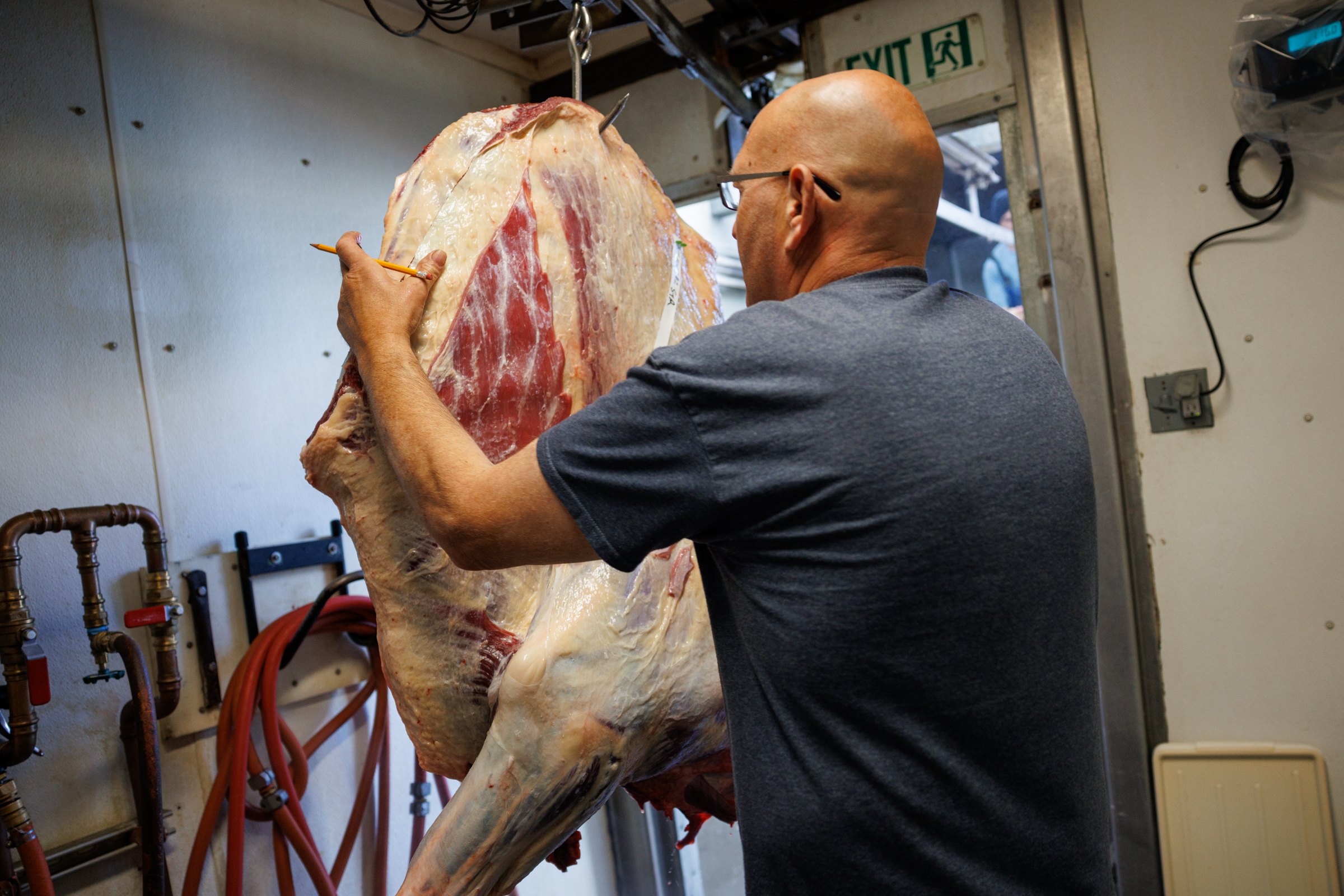
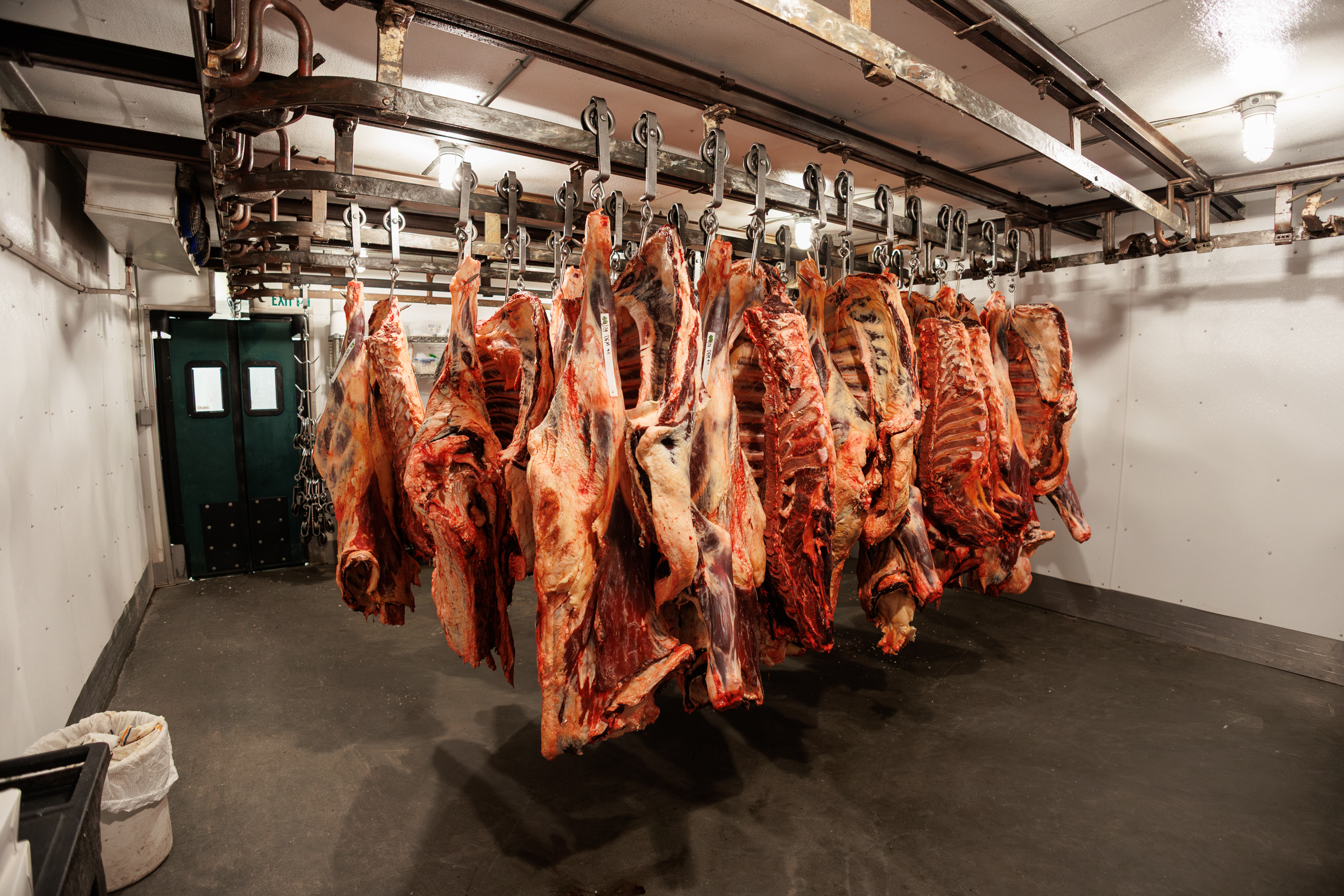
“The problem with the Stanwood shop is it’s been pieced together since the ’70s,” Byron said. “It had a small cut room and a small cooler. Then as it grew, they moved another cut room into the back. And then we’re doing more retail. It’s all piecemealed together, but nothing flows.”
Fifty years of additions left concrete slabs at different elevations, short rails that could only handle quarter carcasses, and old materials and wiring. Bringing the facility up to USDA inspection wasn’t realistic. But with the business’s growth, they needed to expand. Years earlier, in 2010, Pat had explored building a larger, USDA-inspected brick-and-mortar plant.
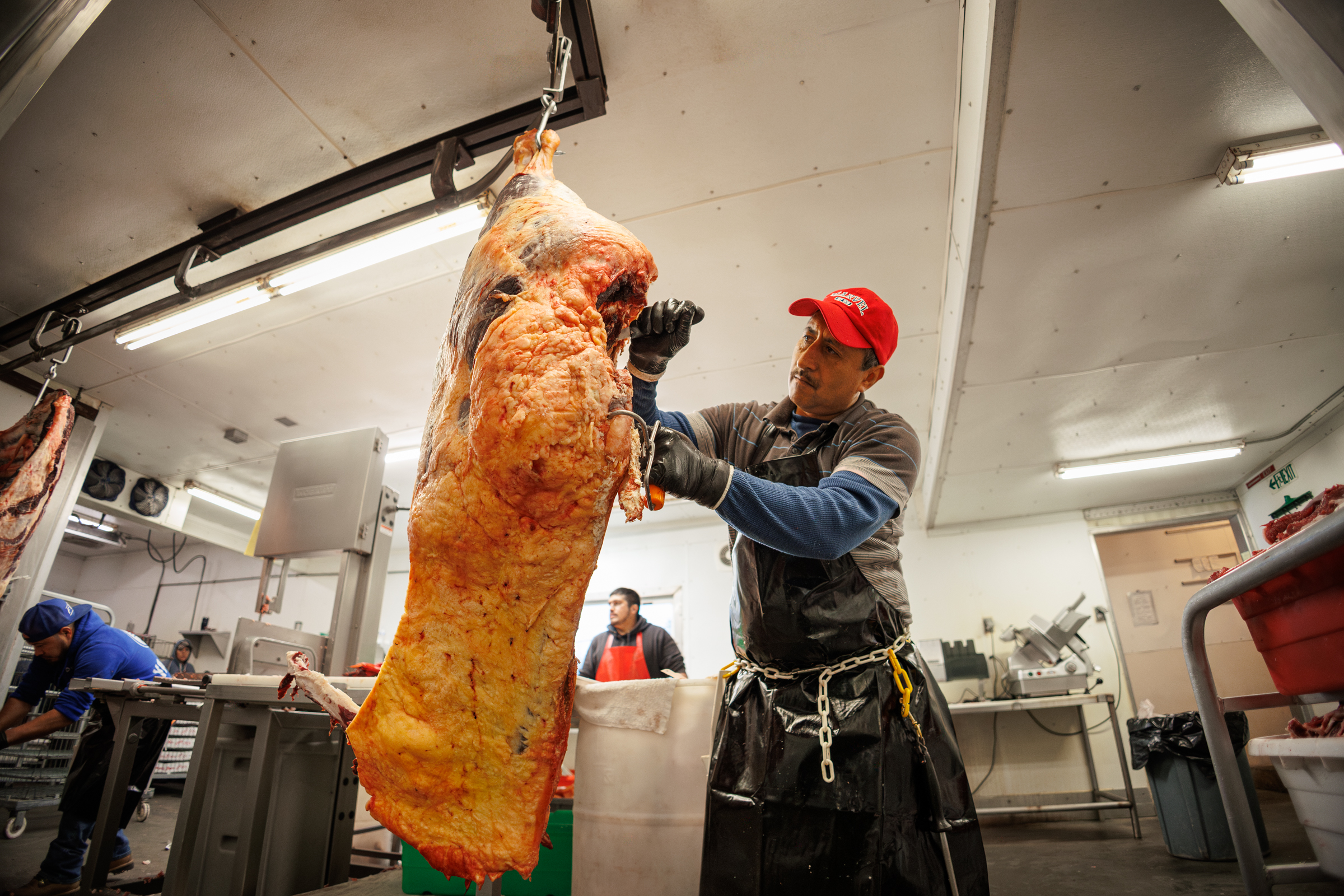
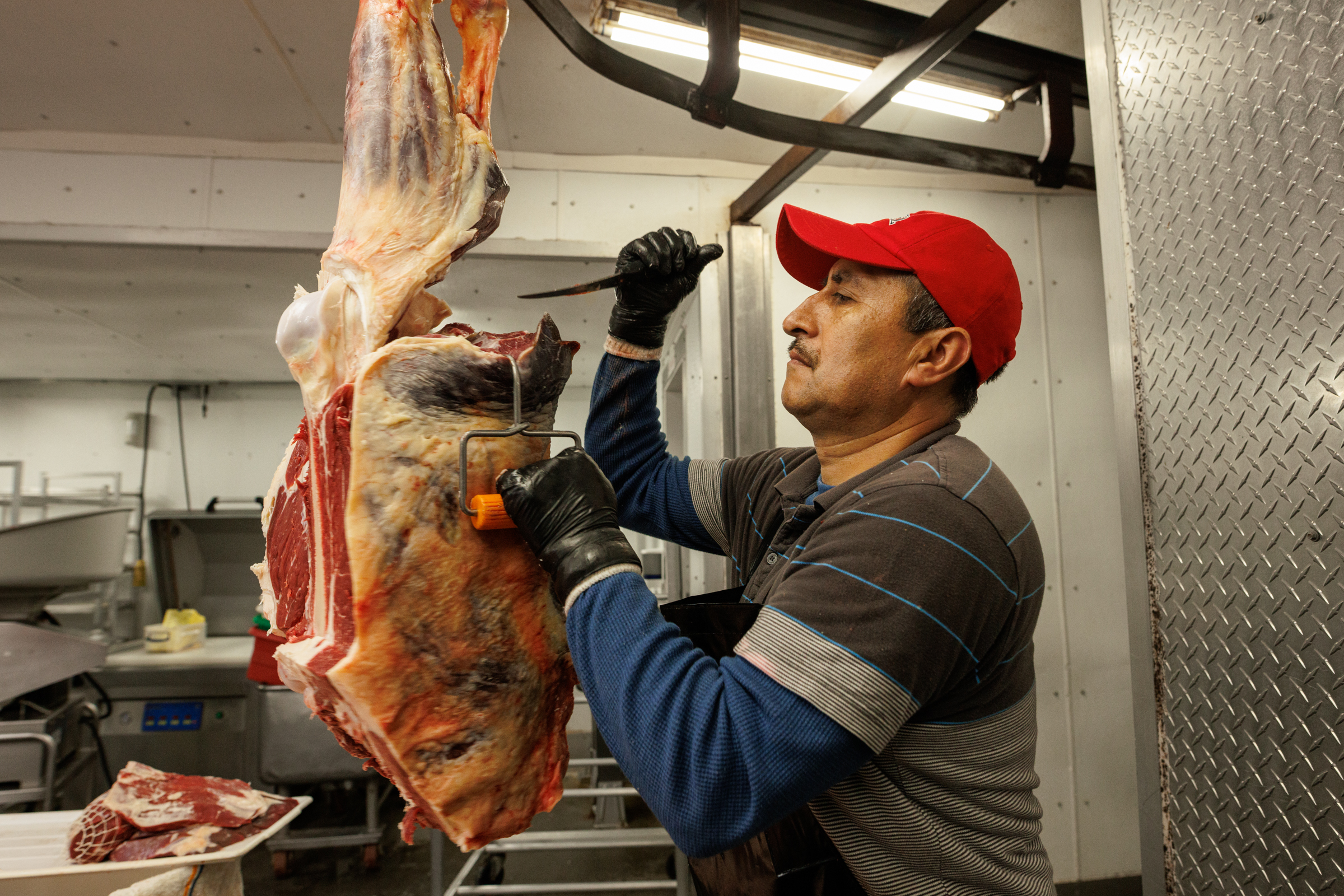
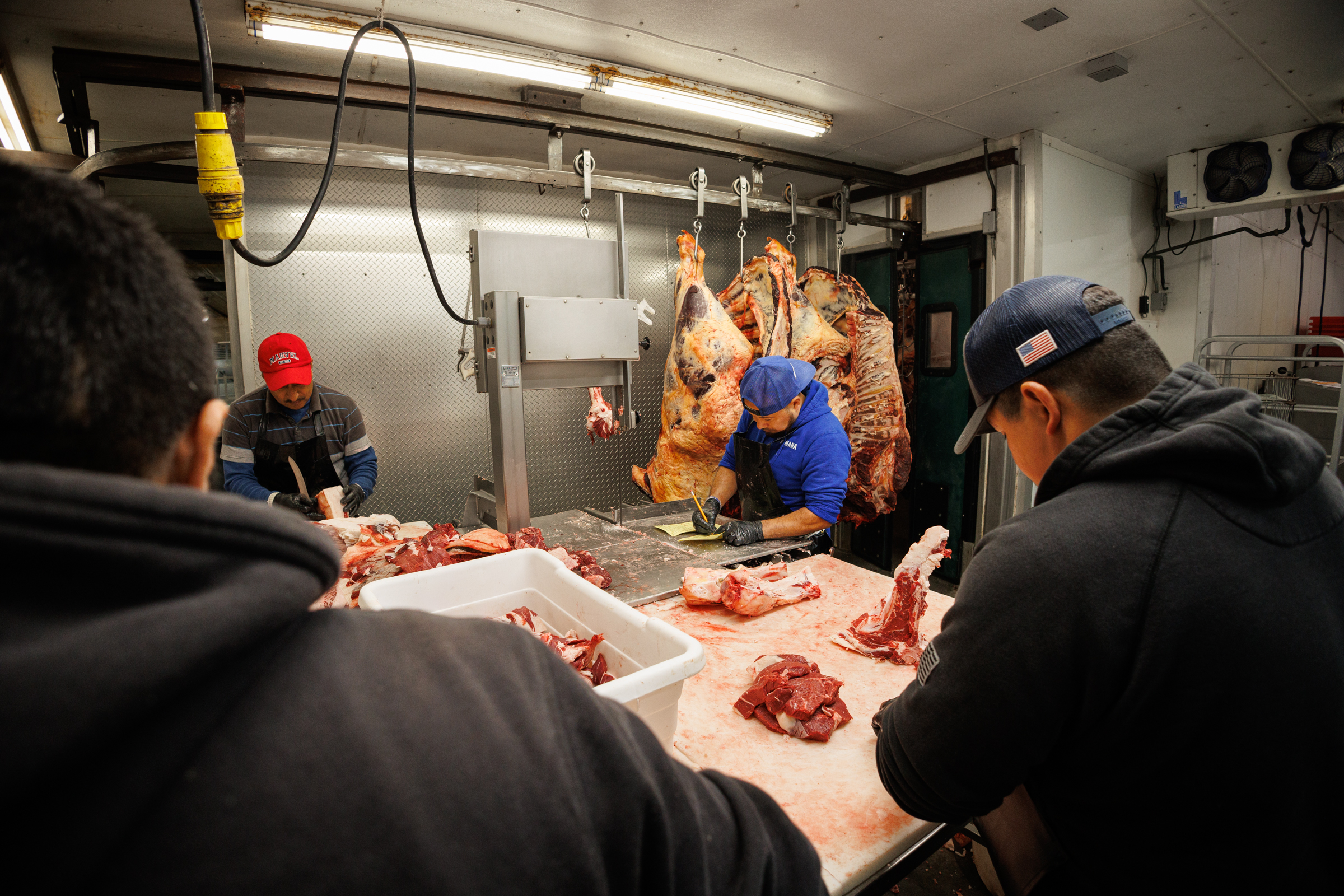
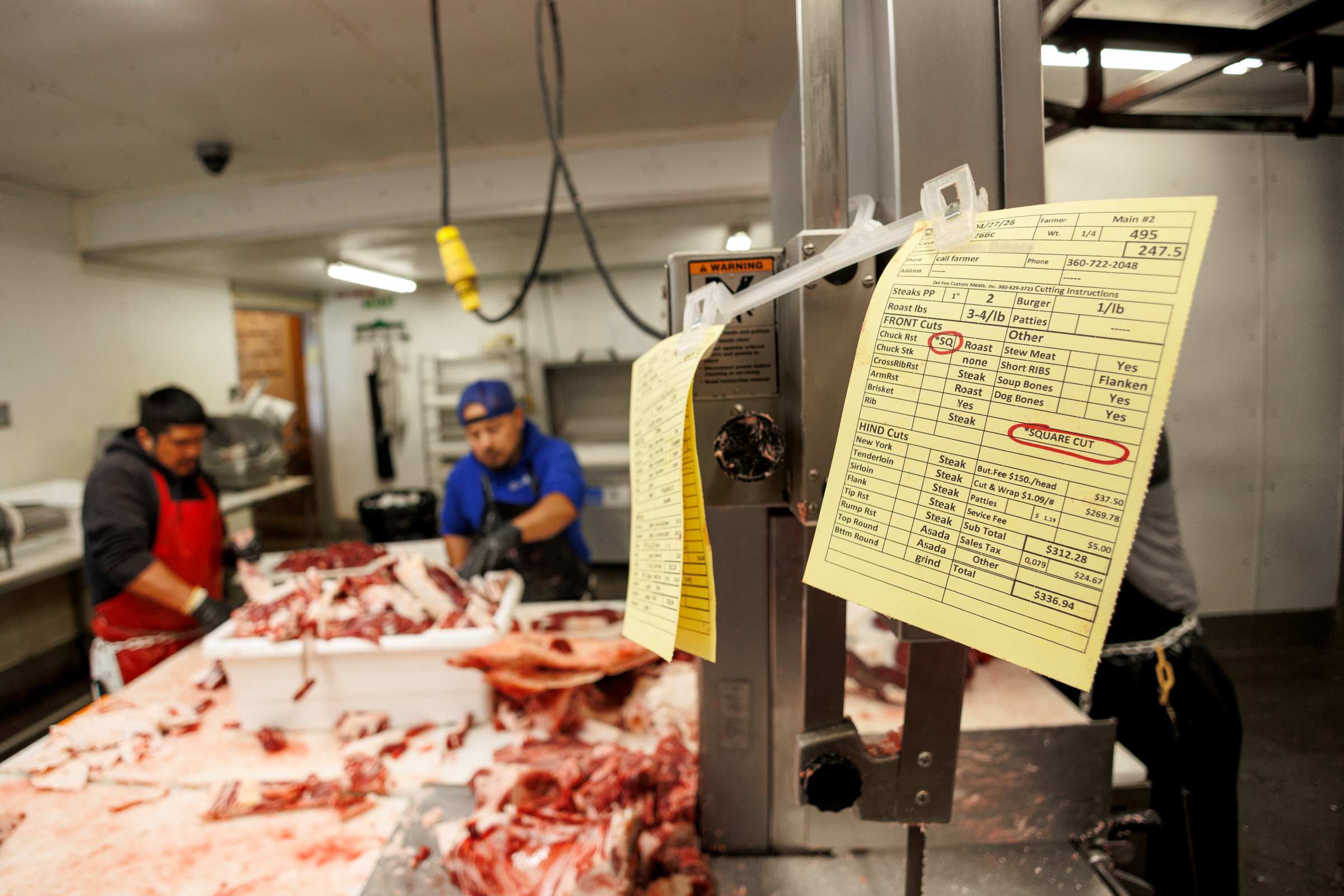
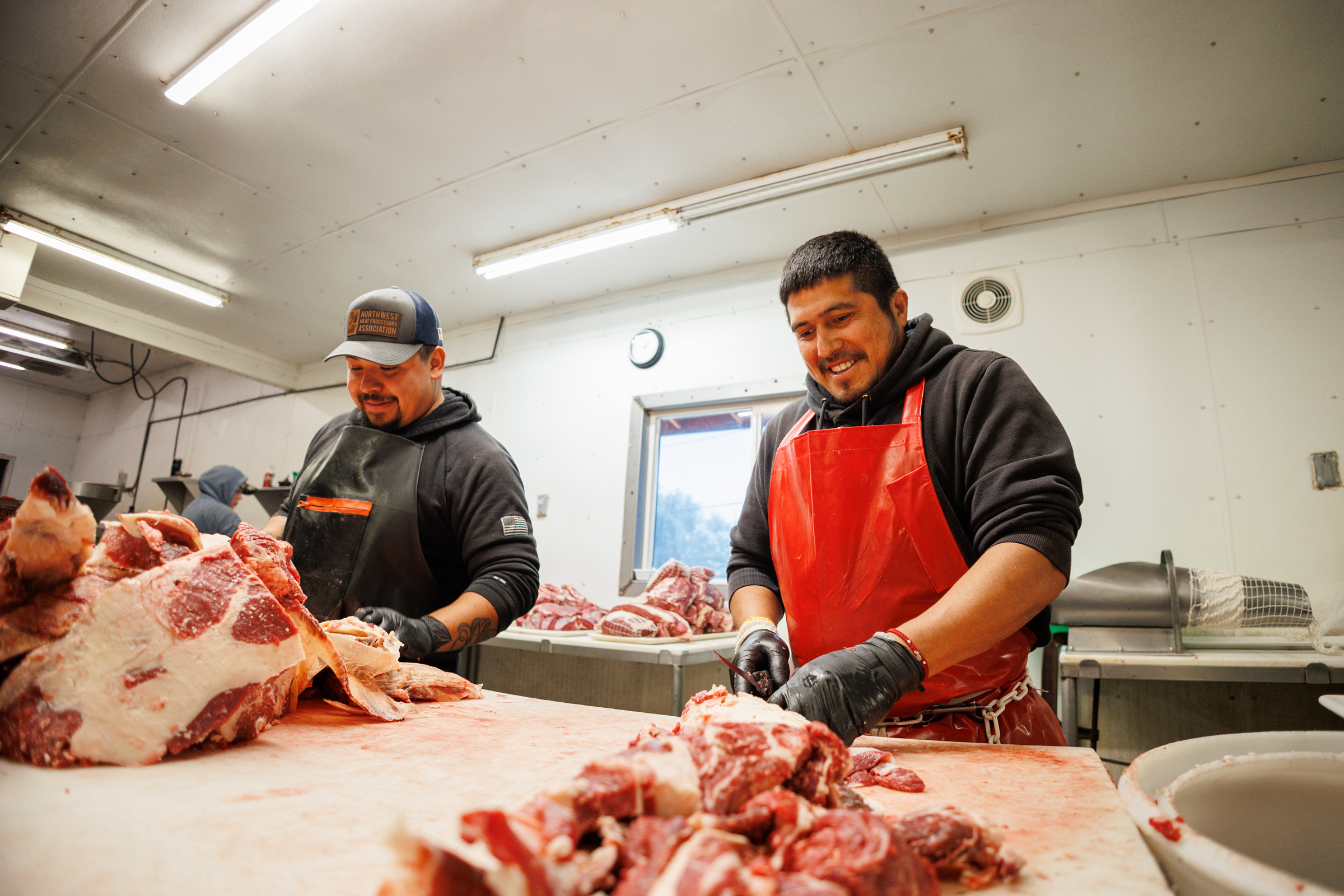
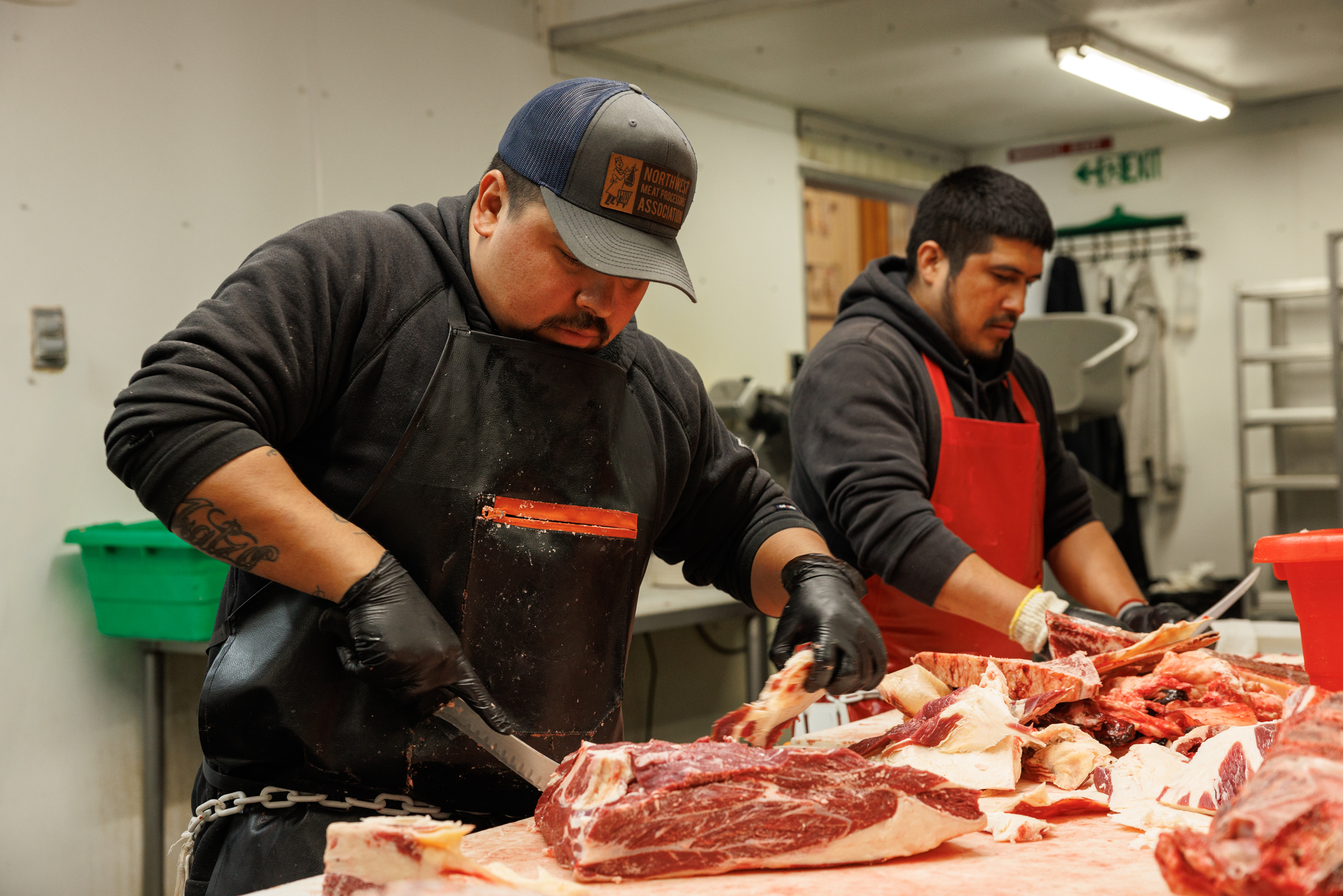
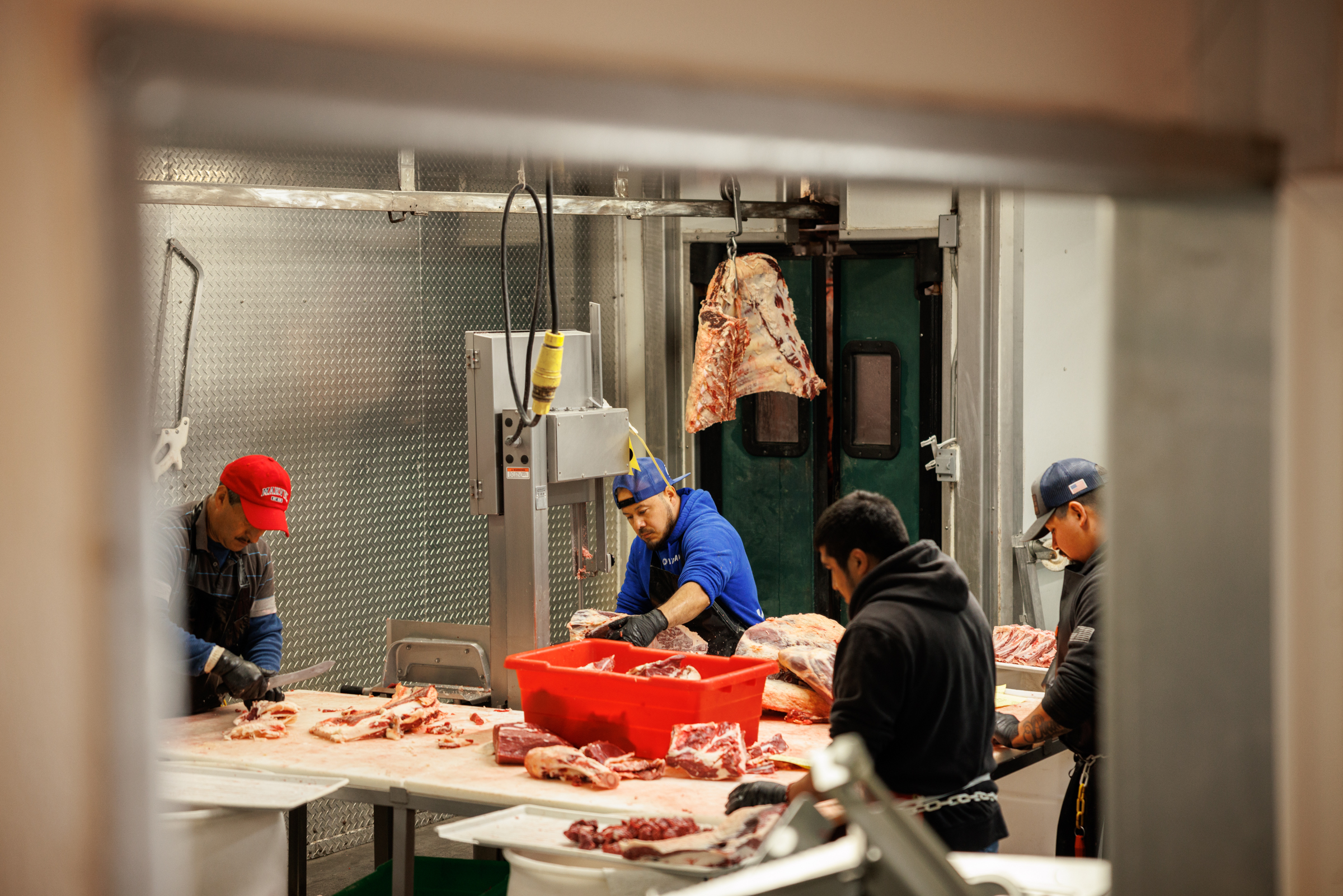
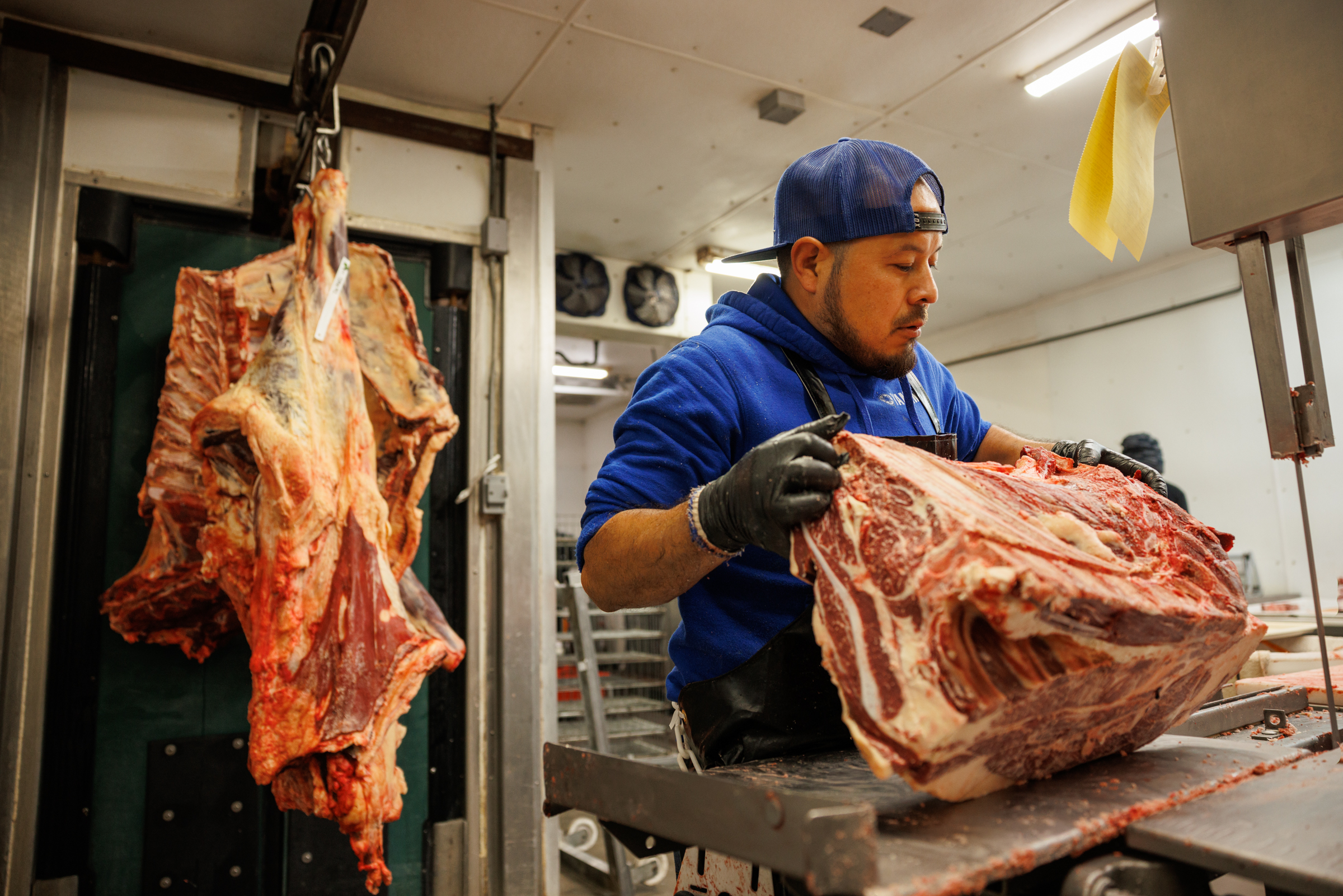
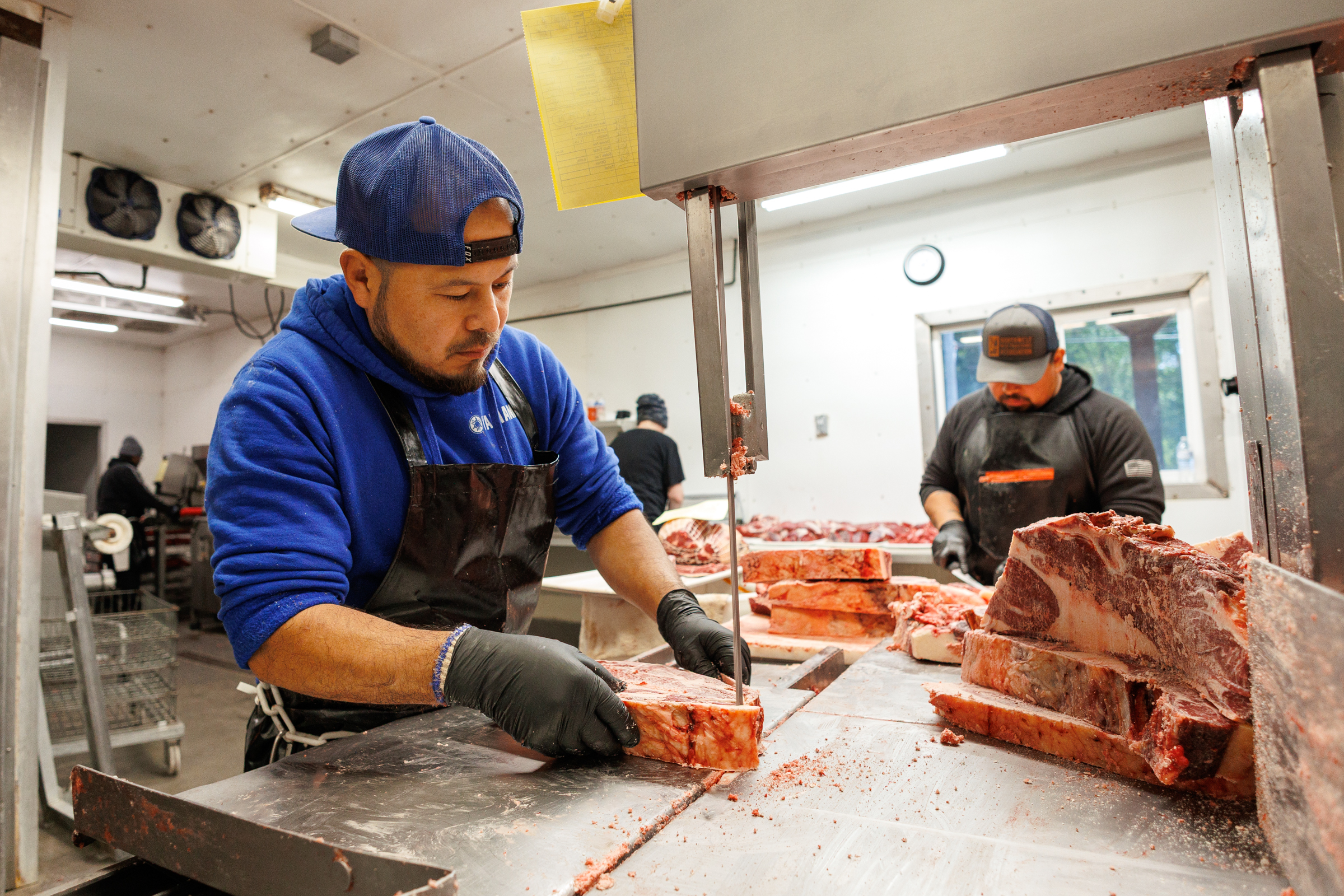
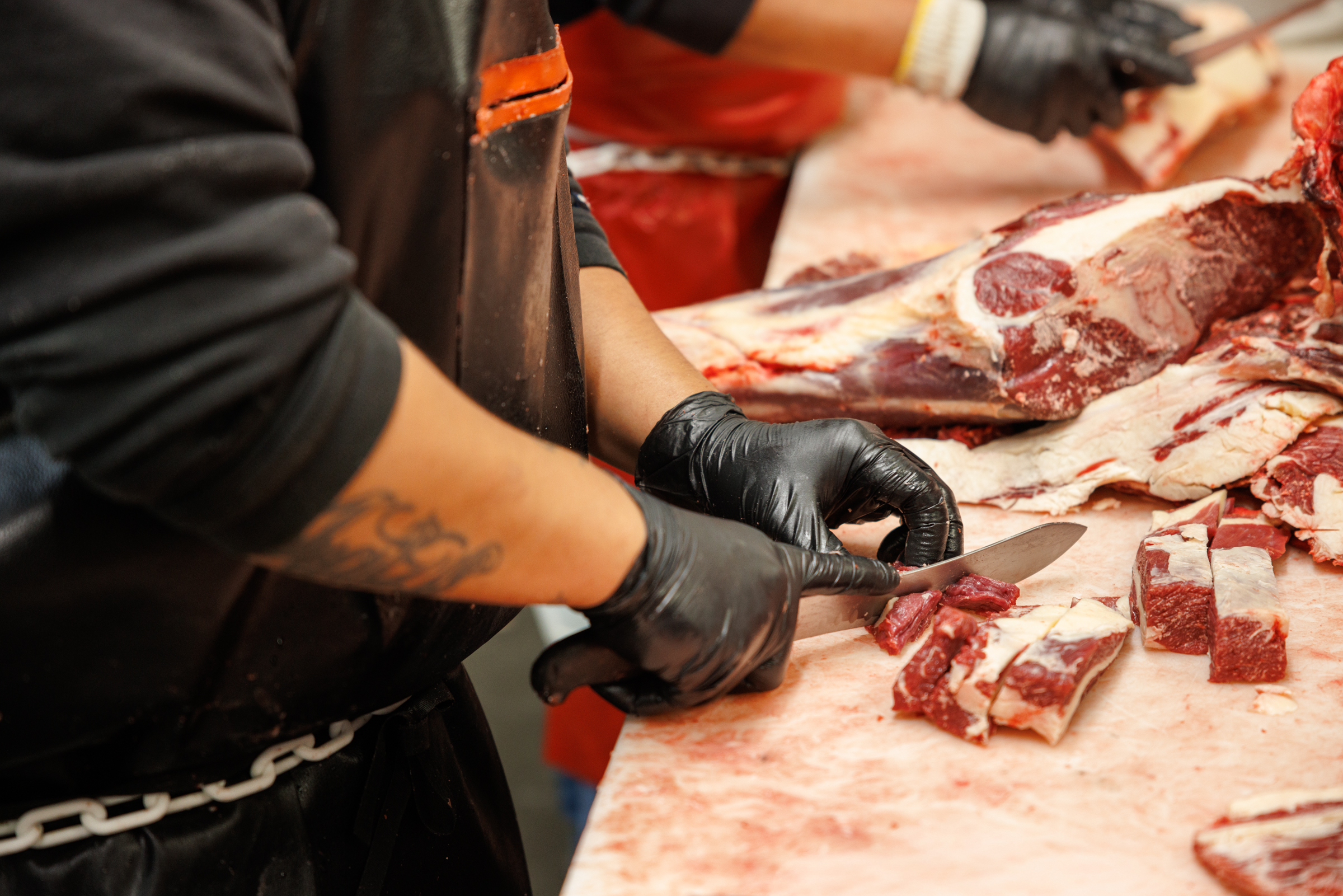
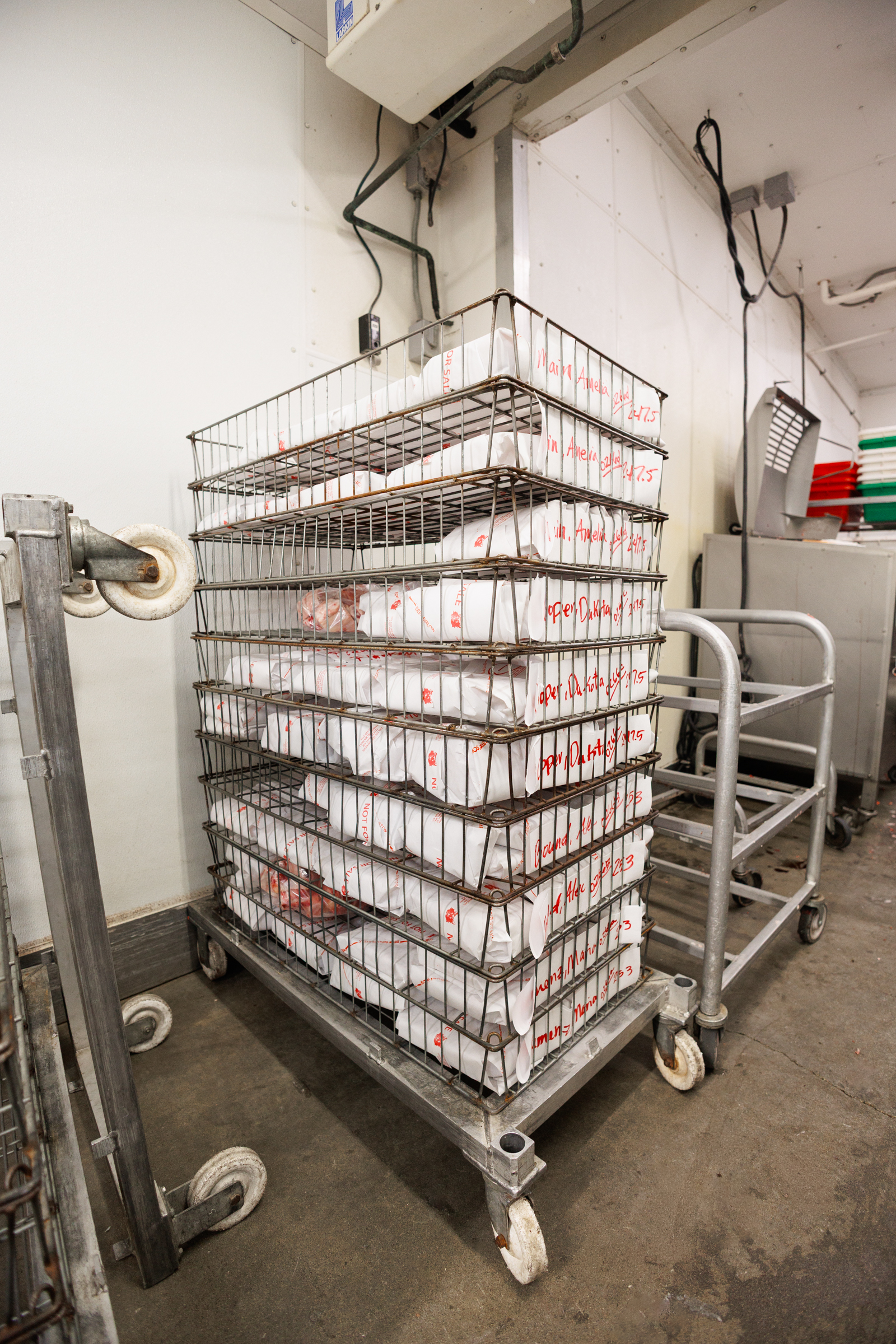
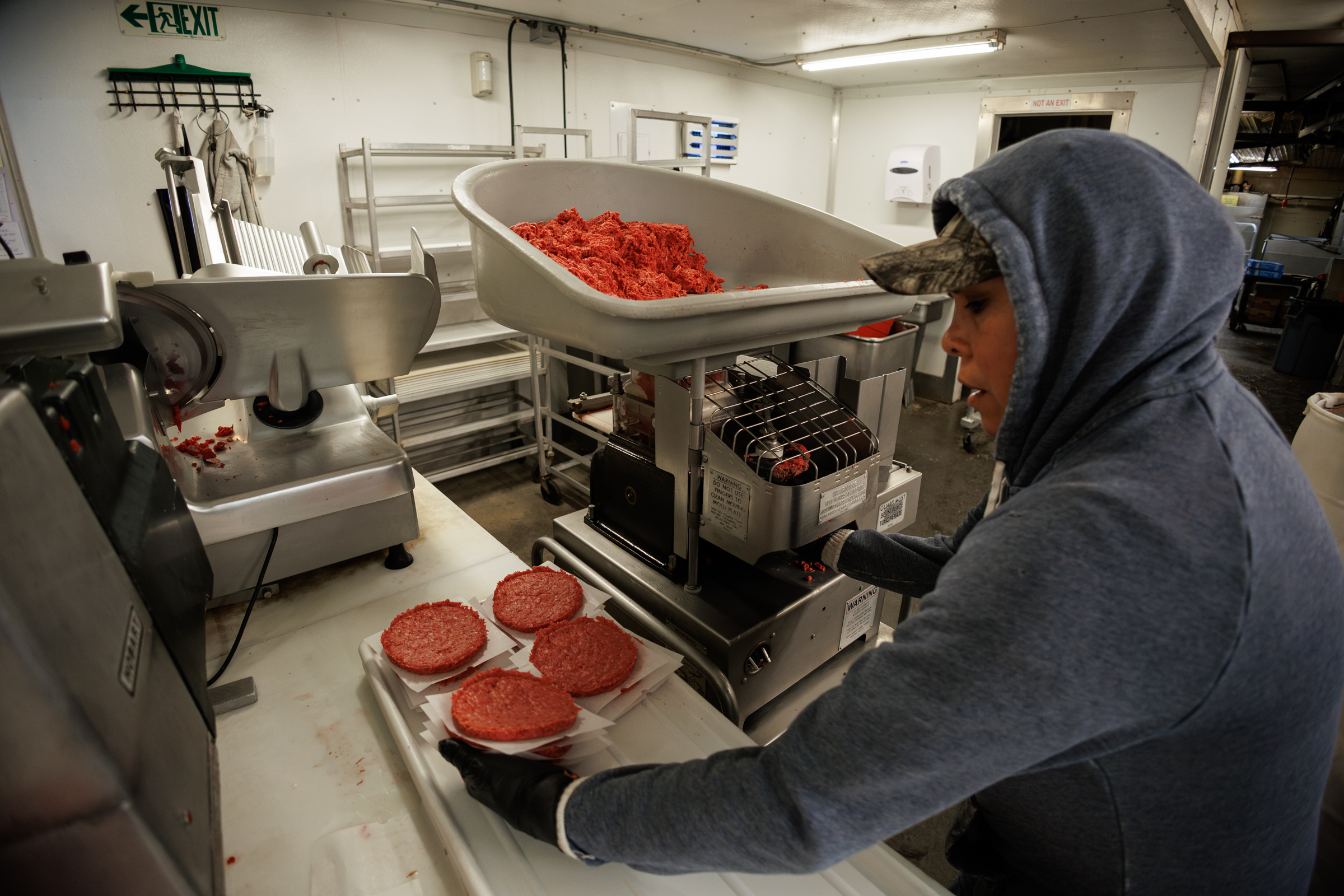
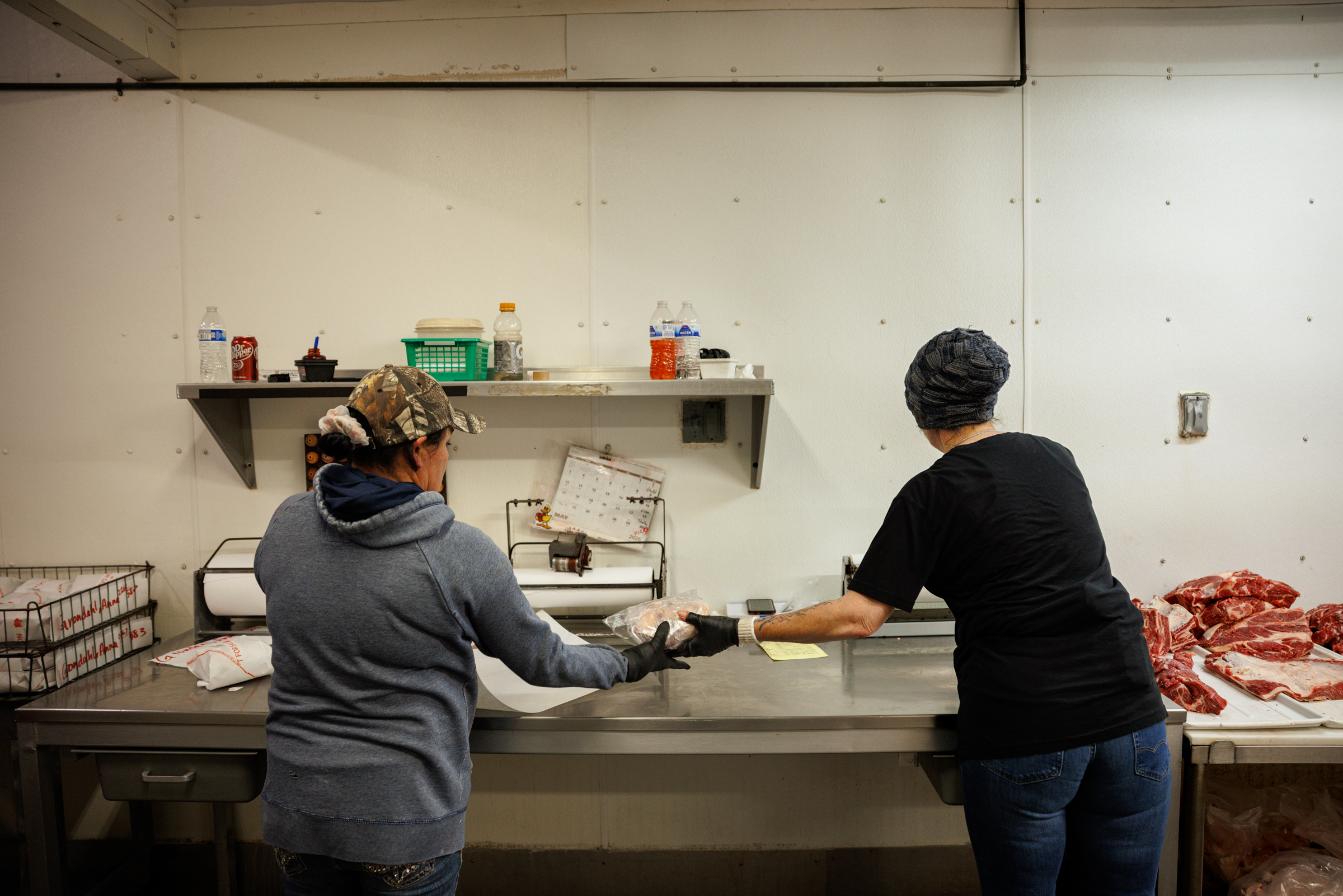
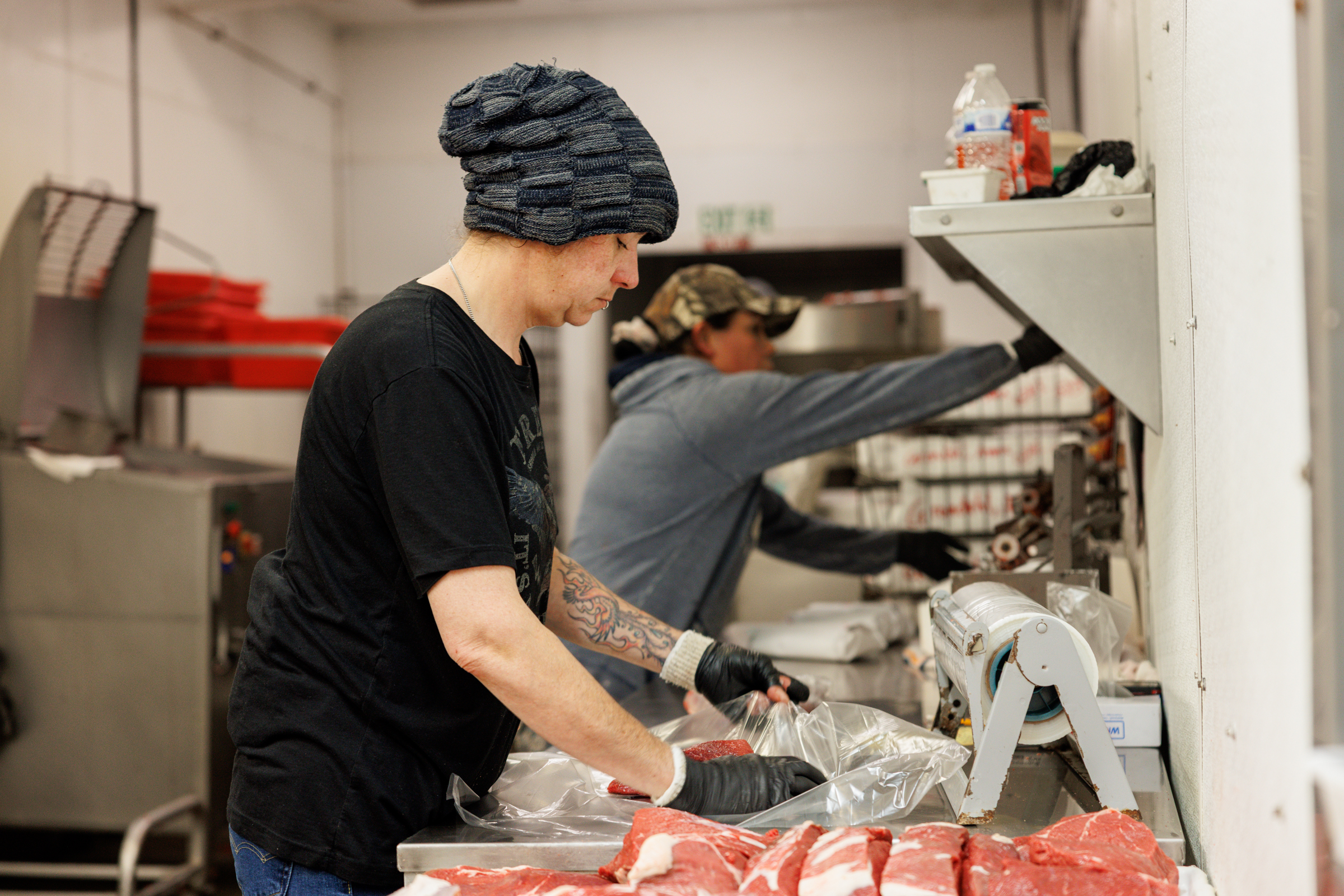
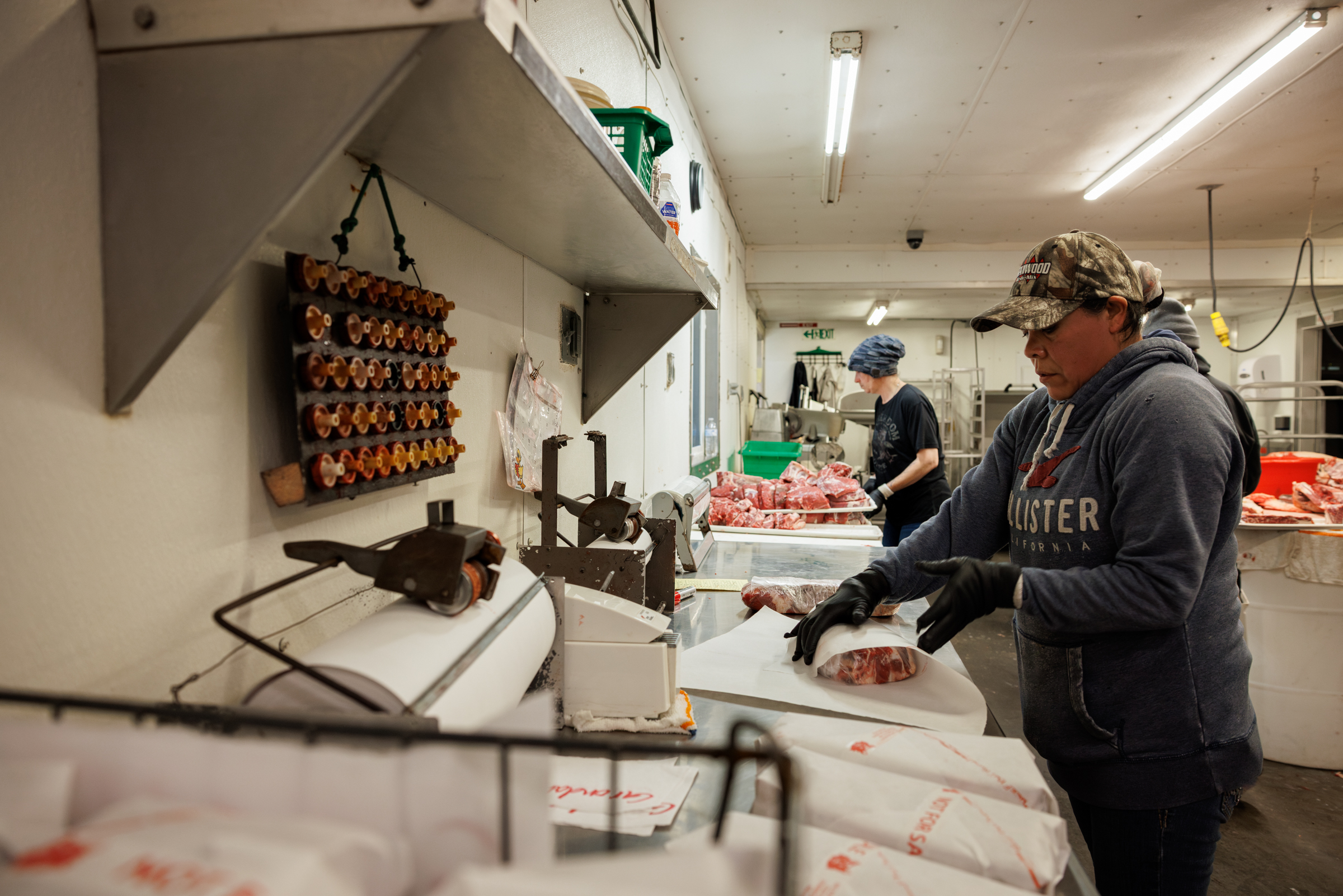
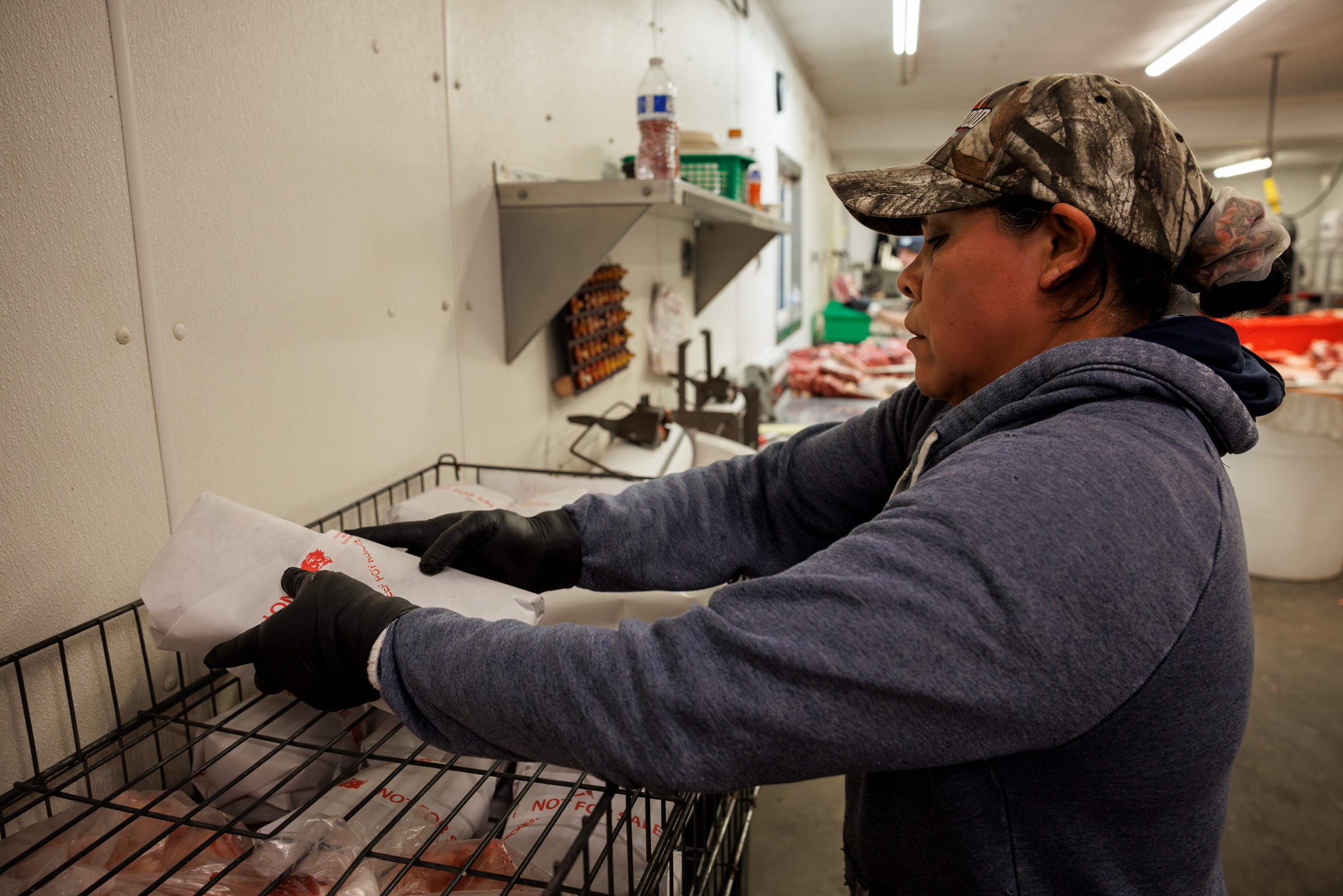
“We tried to build a new building, larger than what we had in Stanwood,” Pat recalled. “We went through all the traffic studies and wetland studies only to get told we were in a water moratorium.”
By the time the facility plans and required studies were complete, his facility budget was $15 million, Pat said. The water moratorium and rising costs brought the project to a halt. “Now, it’s $30–35 million to do that same structure. In my meat cutter mind, I don’t know if I could pay for that anymore.”
Enter Friesla.
FLOW AND FUNCTION
From 2017 to 2024, Pat operated a USDA-inspected Mobile Harvest Unit for the North Cascades Meat Producers Cooperative while also running Del Fox Meats. He and Friesla’s founder, Bob Lodder, regularly crossed paths as Bob brought visitors out to watch Pat operate the MHU.
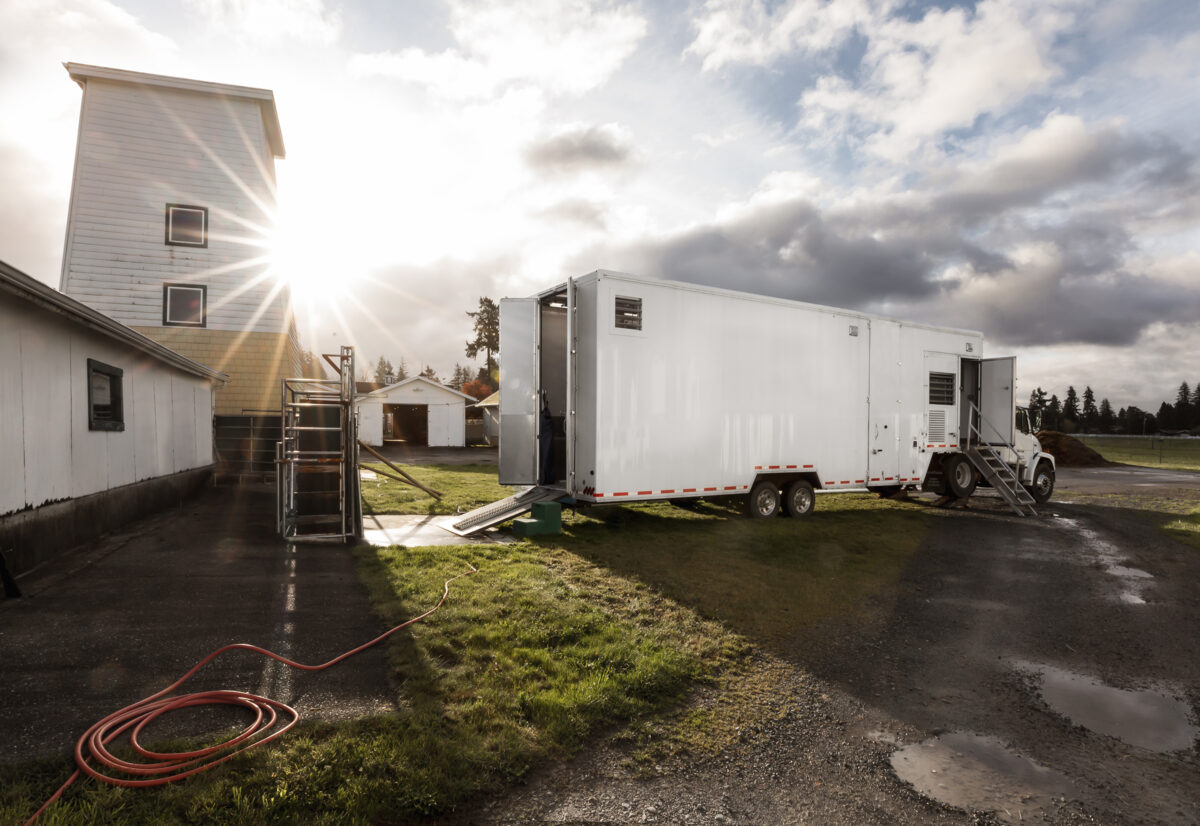
Bob valued two things about Pat: his expertise and his honesty. When Friesla expanded from Mobile Harvest Units to complete modular meat processing plants, Bob asked Pat for his opinion on the new design. Pat saw the value right away: the modules created a “linear workflow” that always “moved forward and never back,” he shared with Bob.
“Live at one end and frozen at the other is the smartest thing you can do. You should never go backward to go forward, [which is] what we do every day in Stanwood.”
Pat Cairus, Co-Owner of Del Fox Meats

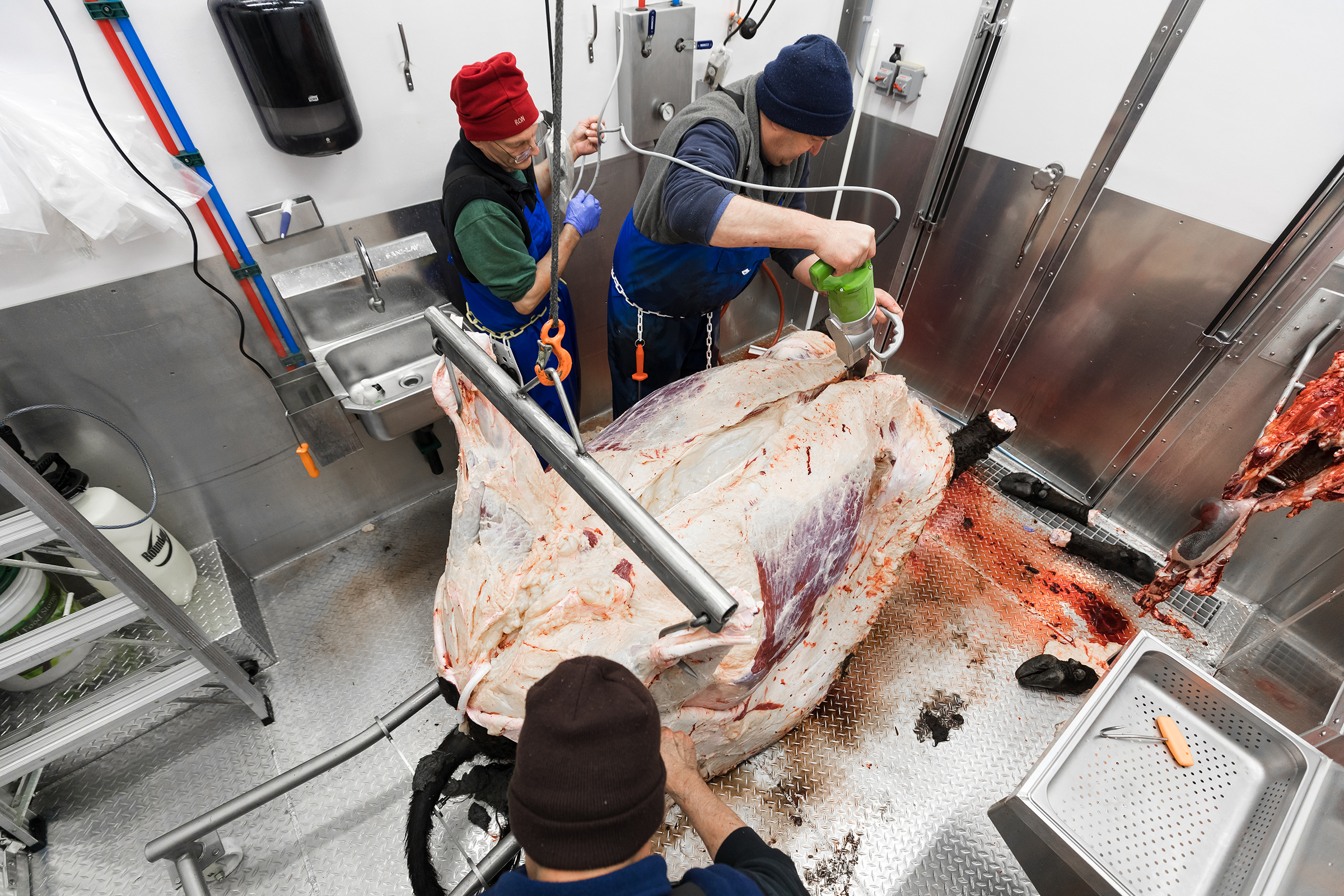
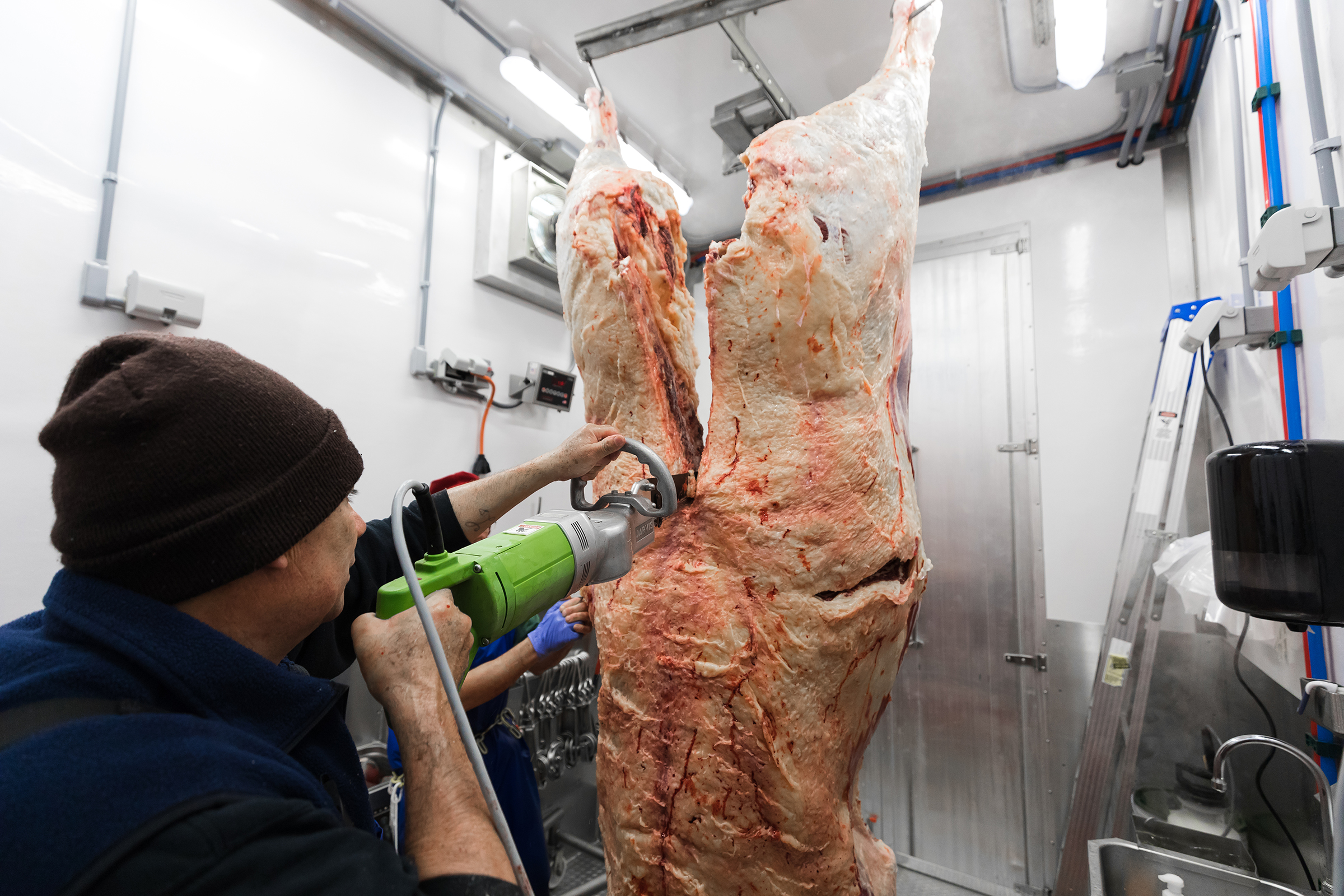
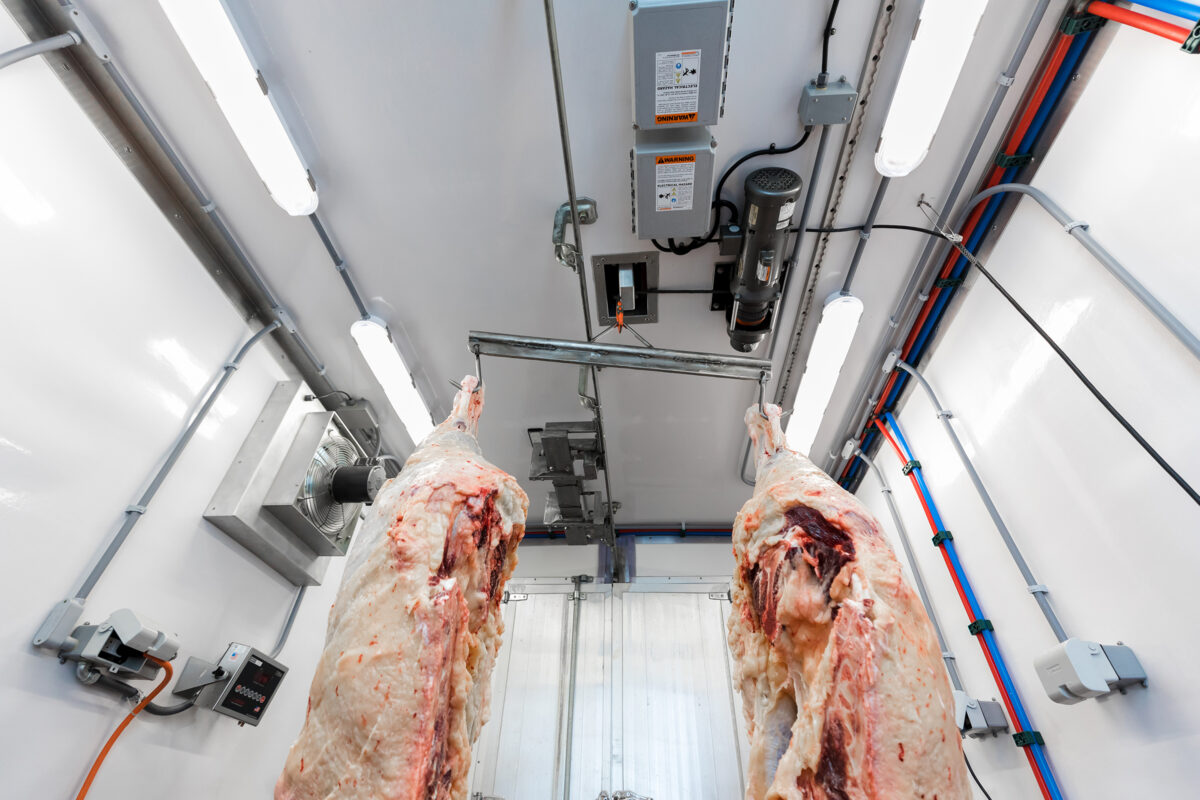

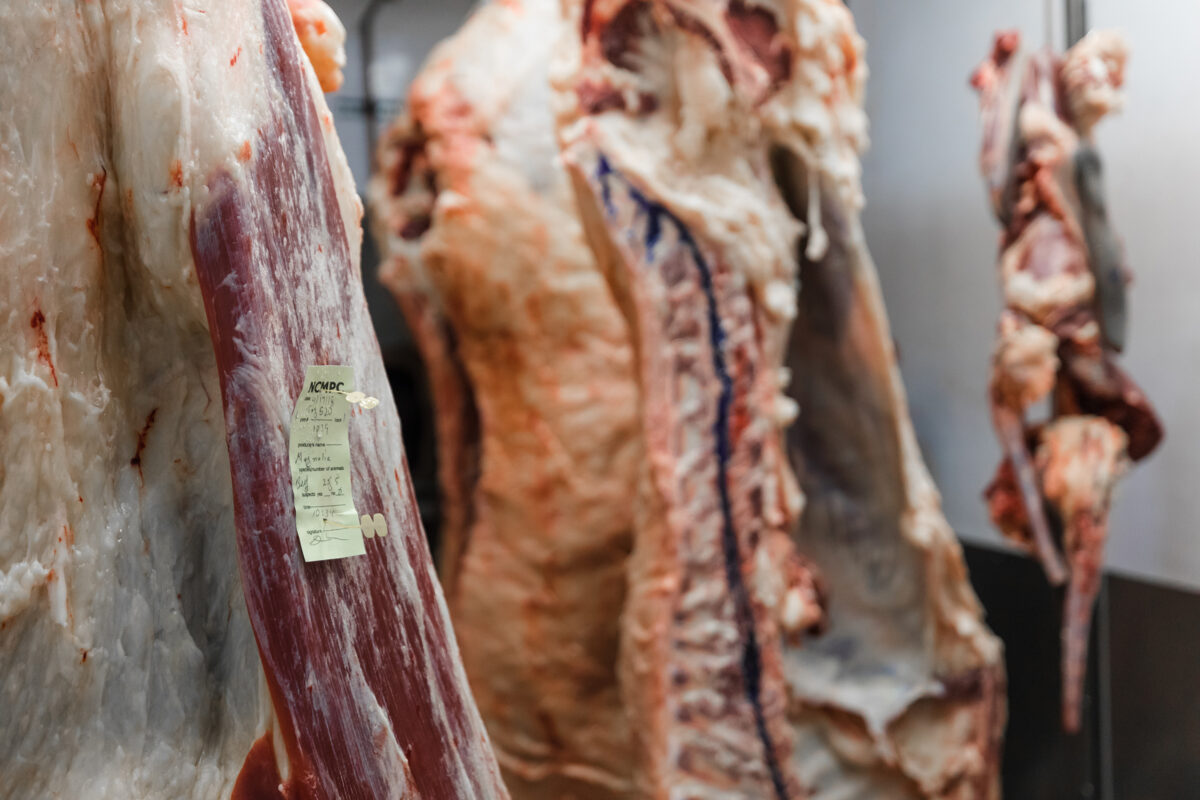
“Live at one end and frozen at the other is the smartest thing you can do,” Pat said. “You should never go backward to go forward, [which is] what we do every day in Stanwood.”
Rather than add on to the aging Stanwood facility, Pat saw an opportunity to use Friesla’s modular approach to expand Del Fox Meats at a new location.
BOW: ADDING USDA-INSPECTED SLAUGHTER
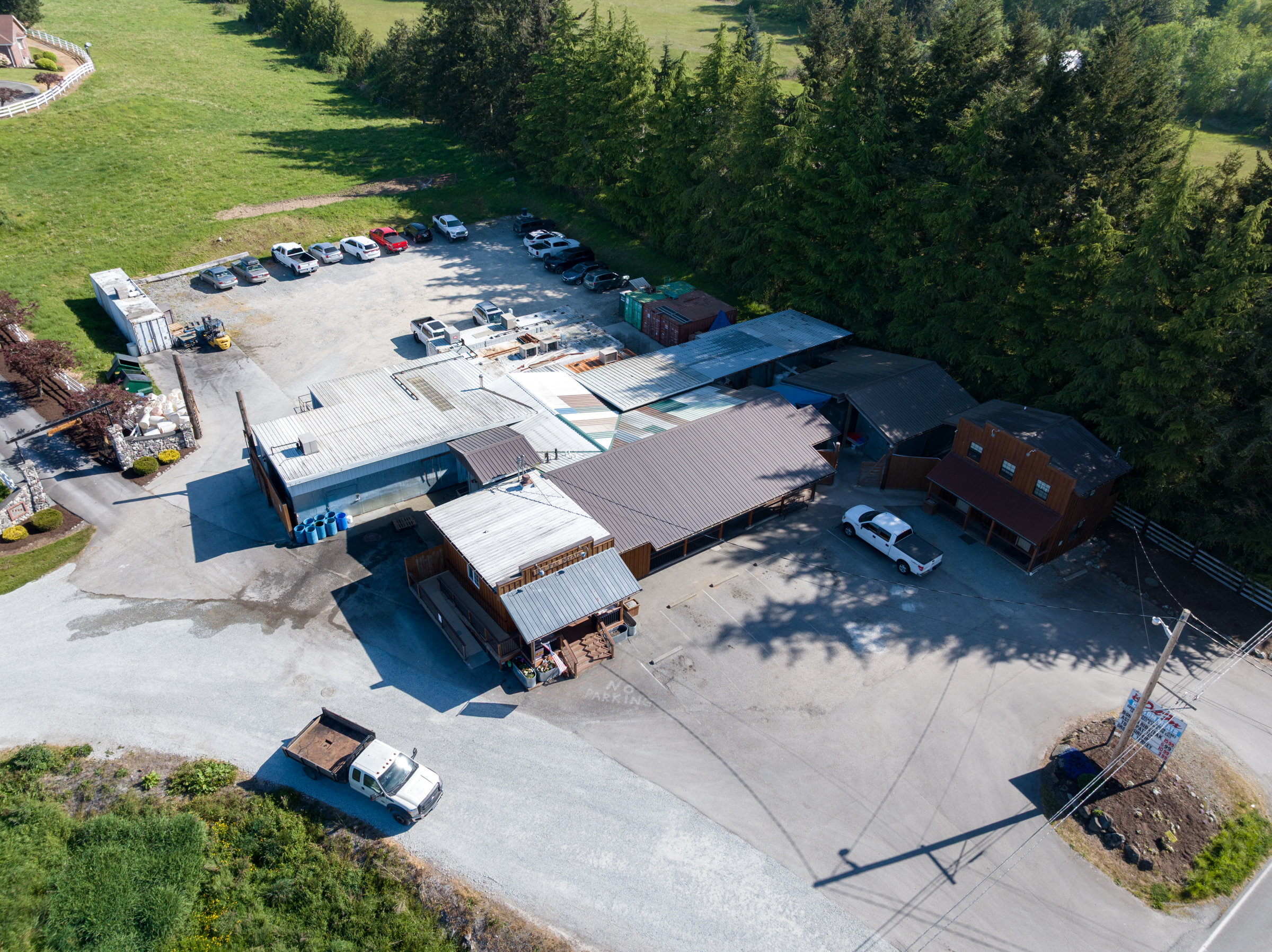
When the North Cascades co-op eventually closed in 2024, it left a gap in local USDA slaughter capacity. Around the same time, a building with a retail store became available just down I-5 from Stanwood in Bow, Washington. With the addition of Friesla modules, it could be exactly what Pat and Byron were looking for.
“In any business, what do you do to get better and grow? You have to look at opportunities that other people aren’t taking advantage of.”
Byron Hill, Co-Owner of Del Fox Meats
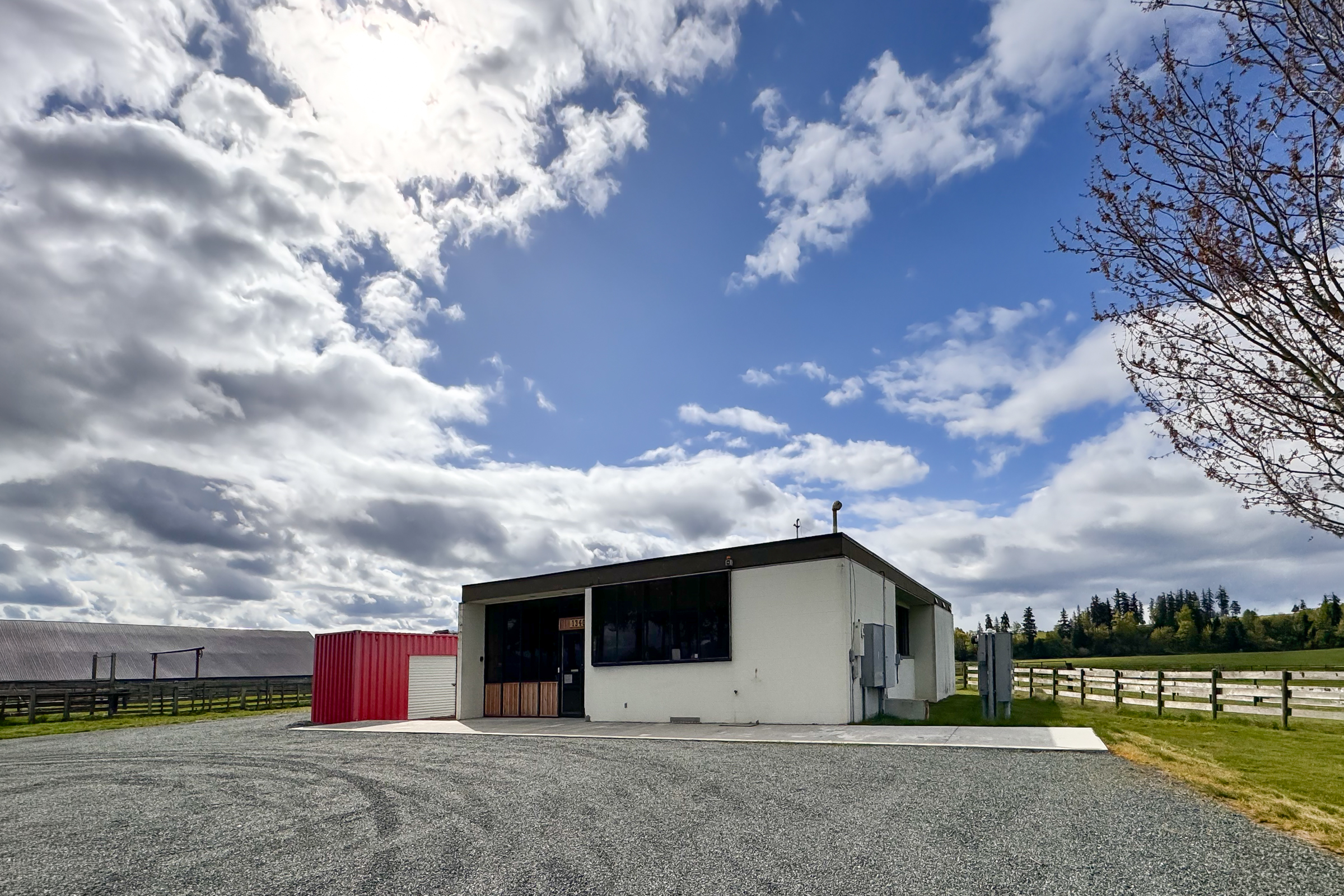
“In any business, what do you do to get better and grow?” Byron said. “You have to look at opportunities that other people aren’t taking advantage of.”
The Bow building was a 1970s cinder block shell. Though it had previously operated under USDA inspection, it was set up for further processing, not slaughter. To provide USDA-inspected slaughter to Del Fox Meats’ customers, Pat would need to add on to the facility.
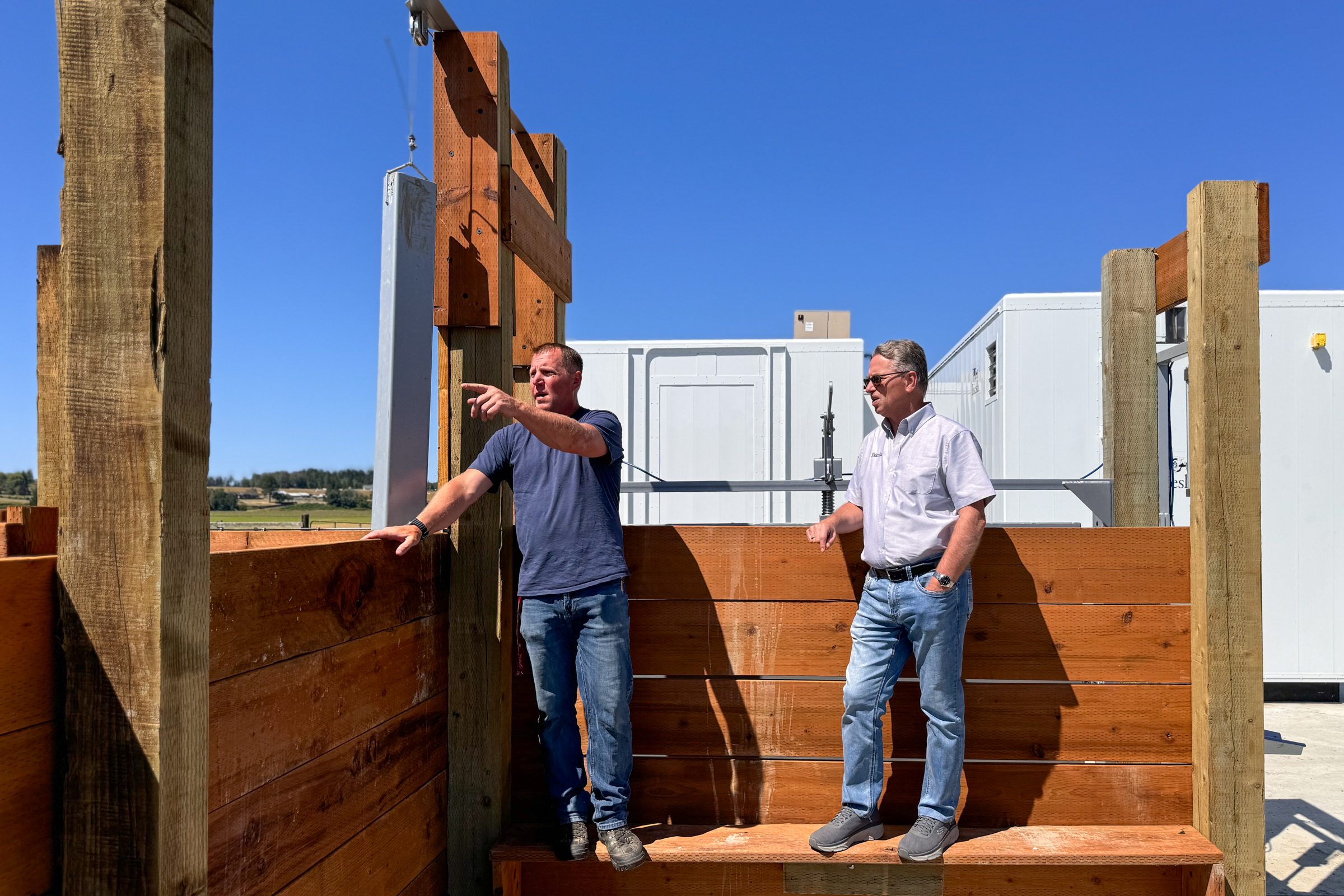
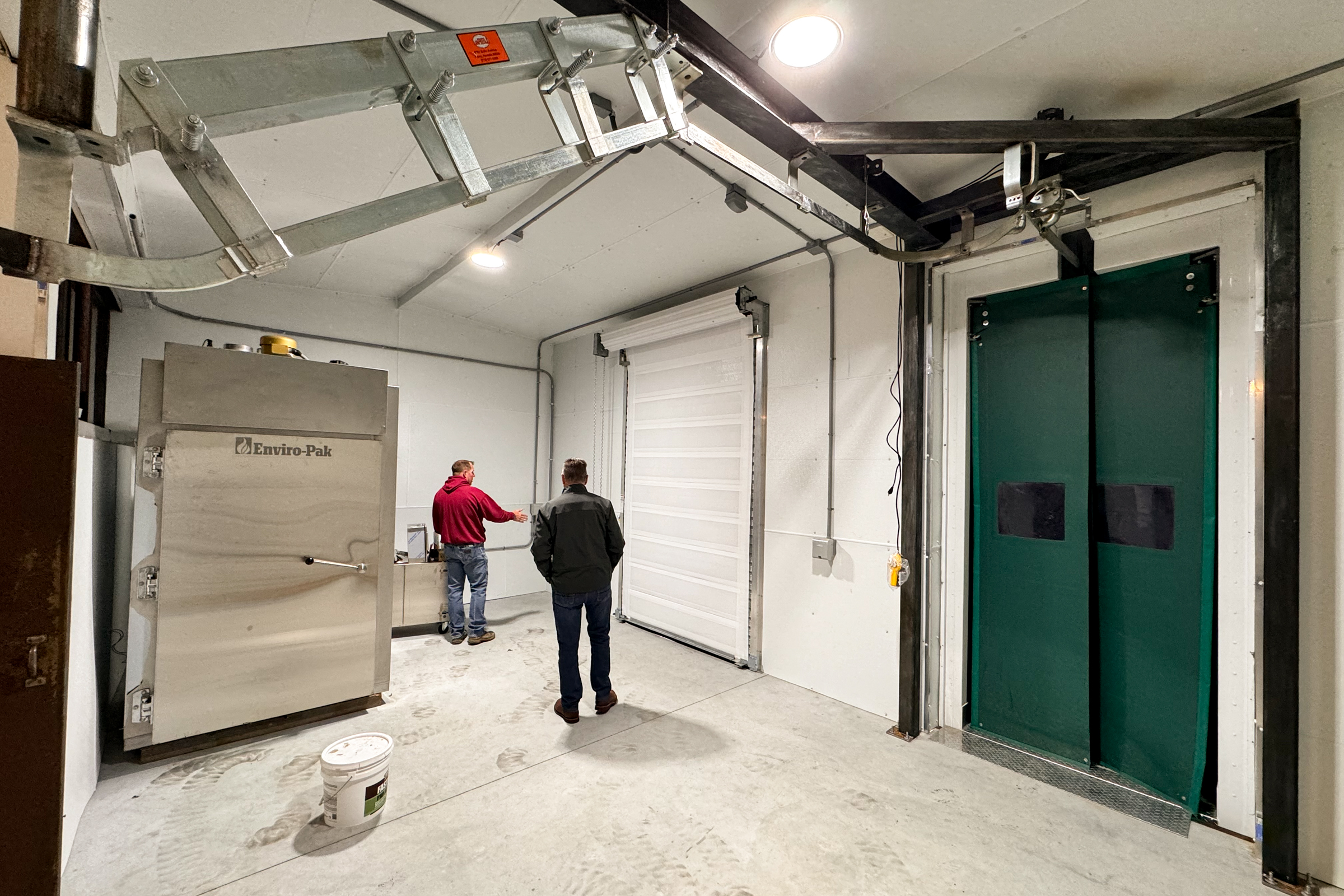
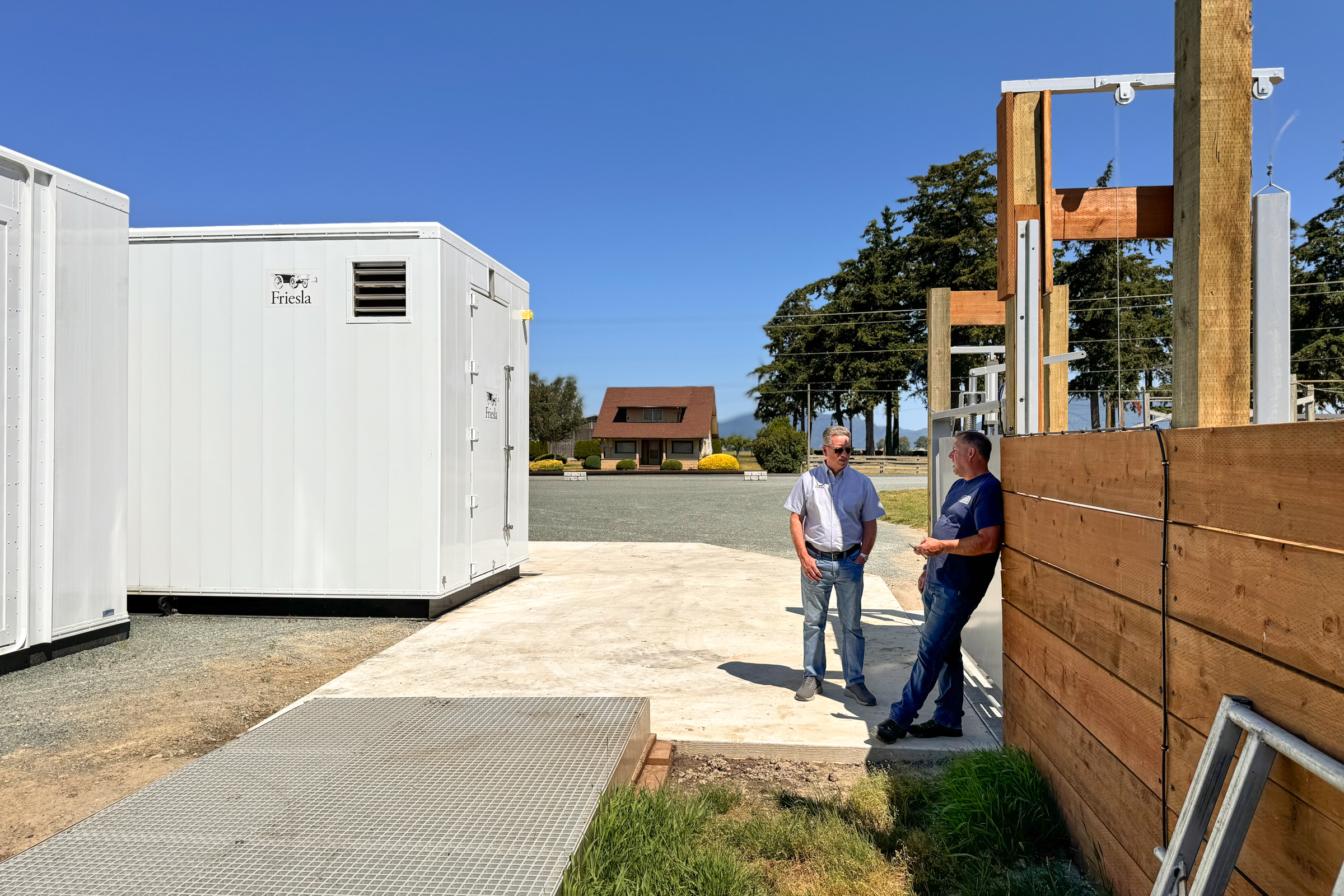
He consulted with Bob, and they devised a two-module solution: a Friesla Harvest Module for multi-species slaughter and hot carcass drawdown, and a Friesla Carcass Aging Cooler for extended cooling and dry aging before processing.
Remembering his conversations with Bob and the linear workflow of the modular system, Pat saw a way to build on the existing facility. He consulted with Bob, and they devised a two-module solution: a Friesla Harvest Module for multi-species slaughter and hot carcass drawdown, and a Friesla Carcass Aging Cooler for extended cooling and dry aging before processing.
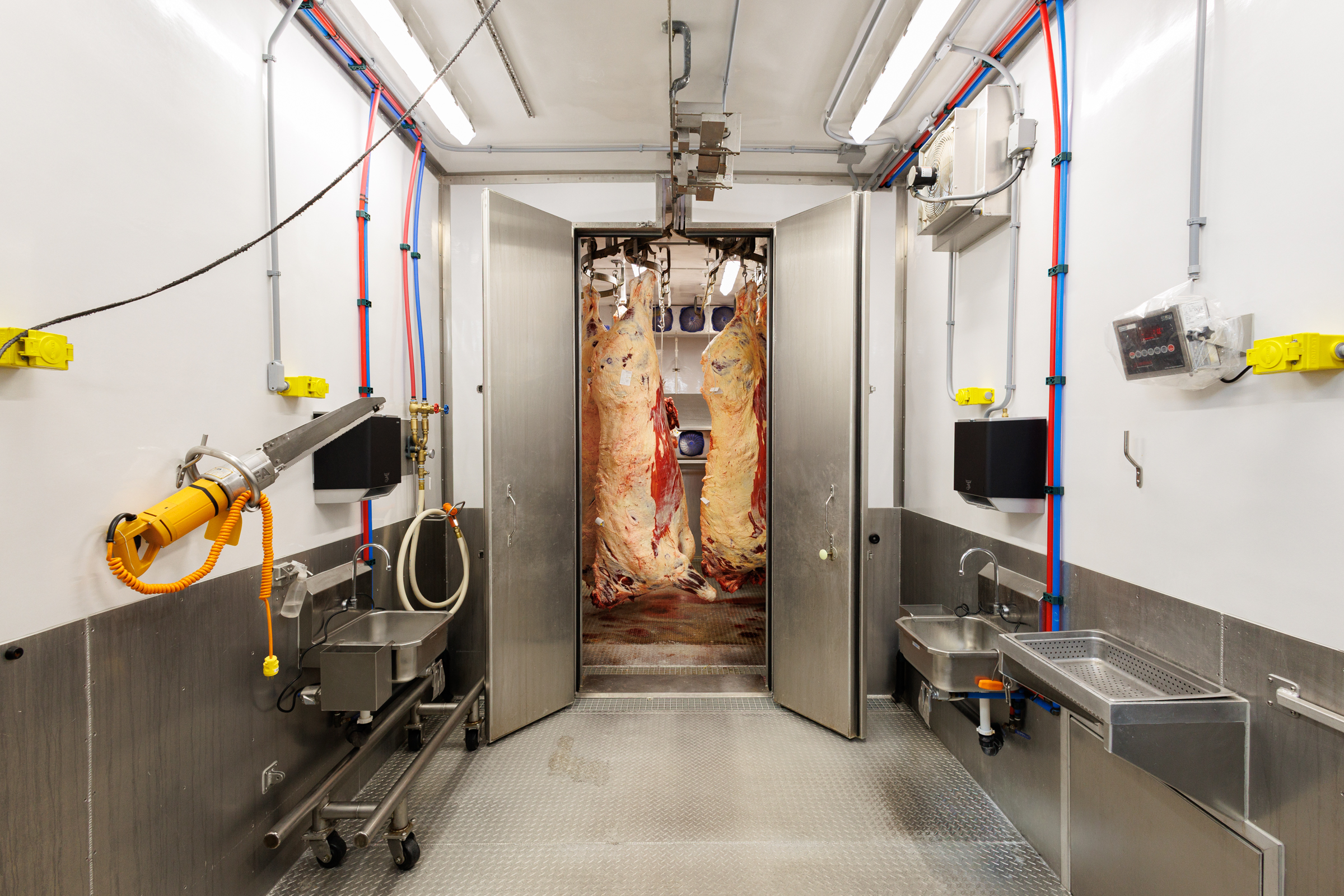
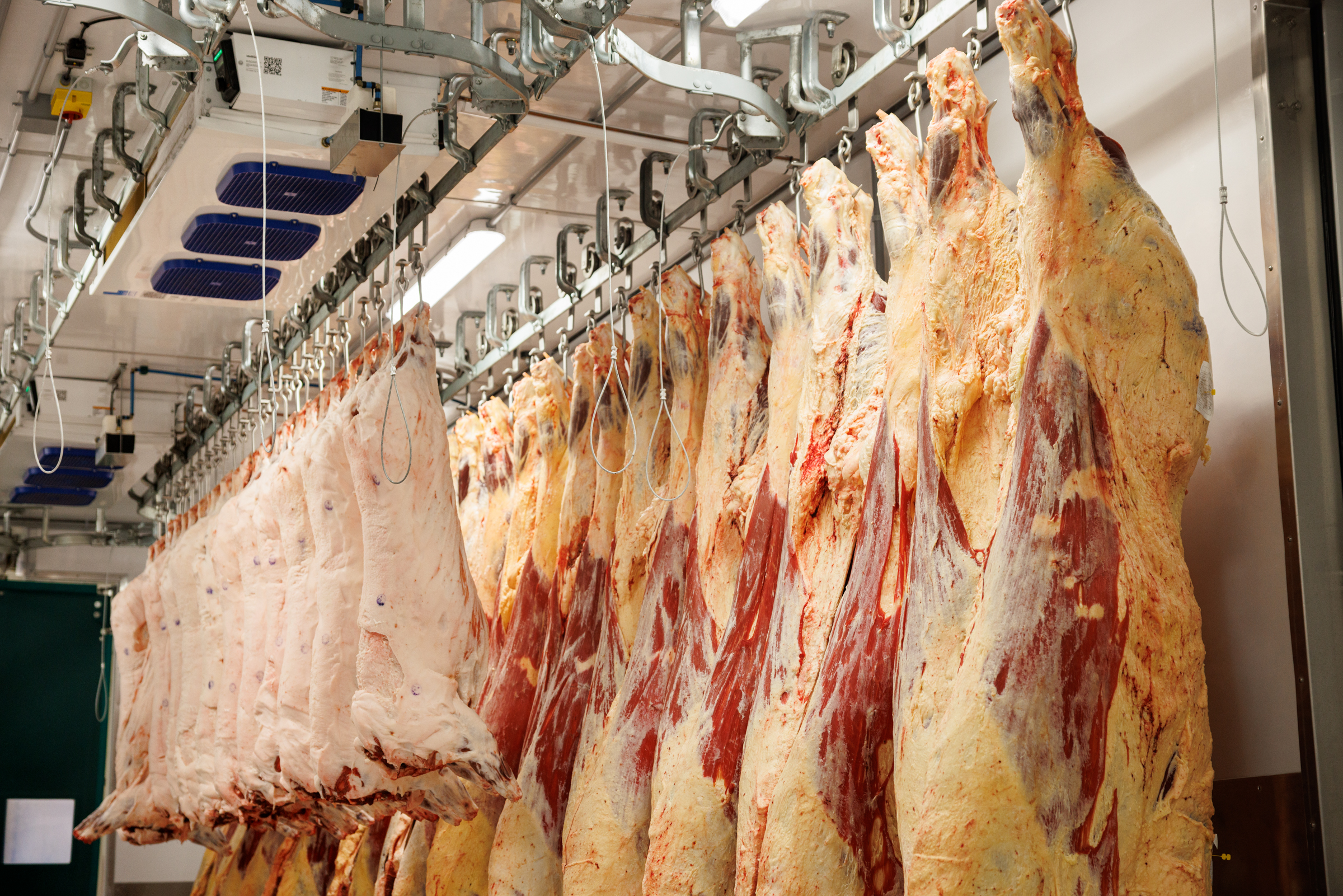
In preparation for installing the modules, Pat worked with the facility’s owner to add 35–40 inches of fill and level the ground behind the building, so the modular units could tie directly into it. Once the ground was level, the modules fit right in, Pat said. “I think [Friesla’s team] set them both in a day, to tell you the truth.”
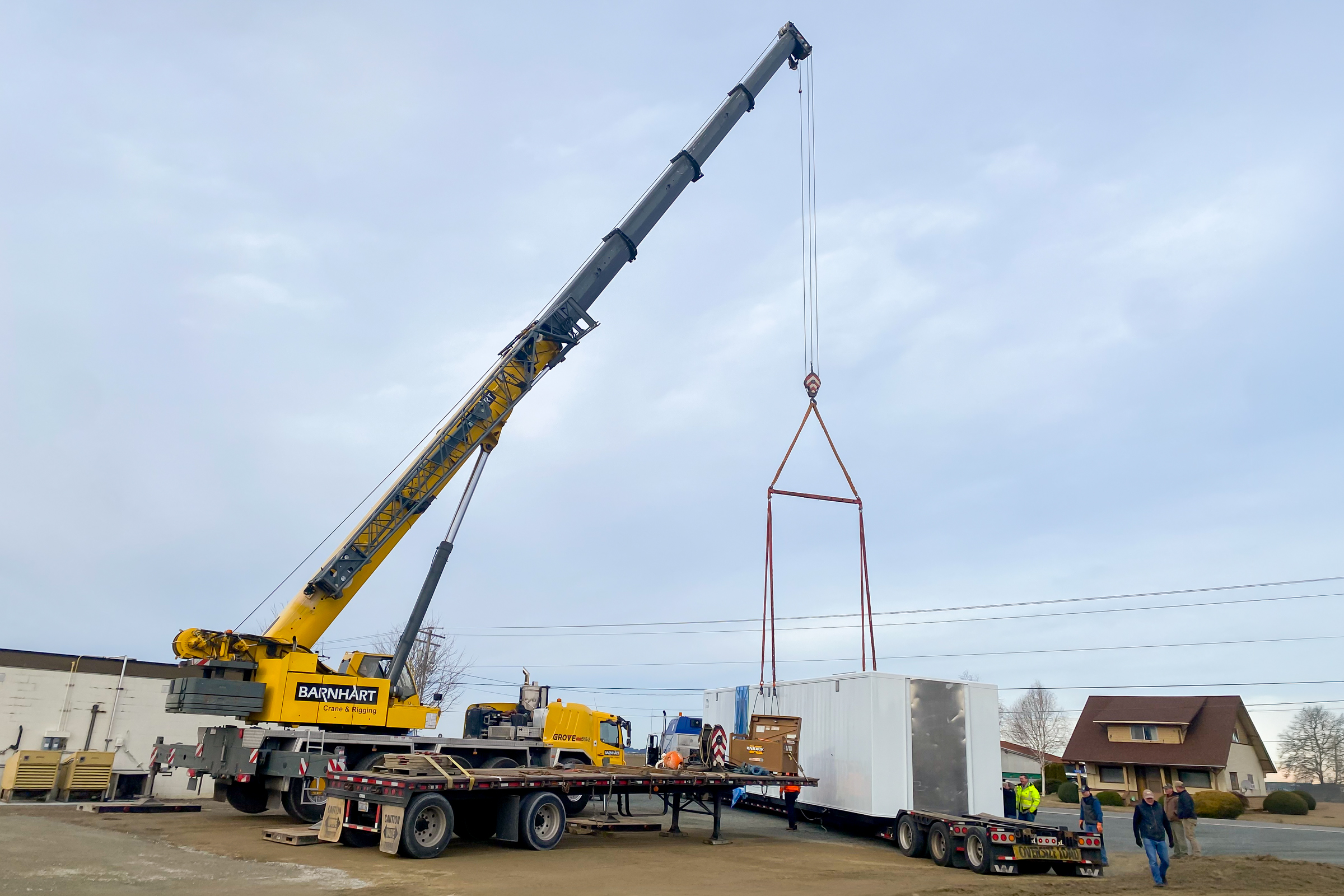
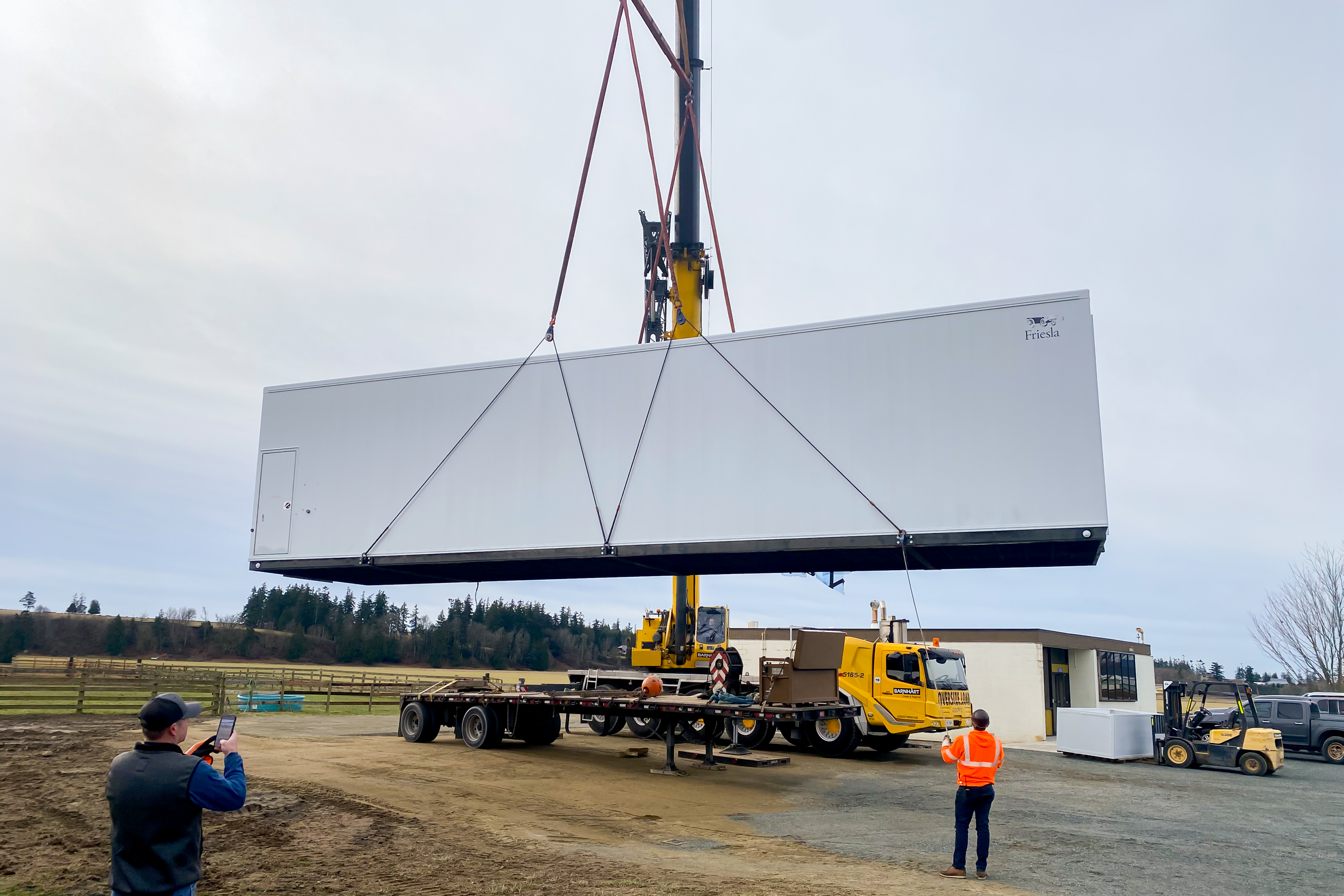
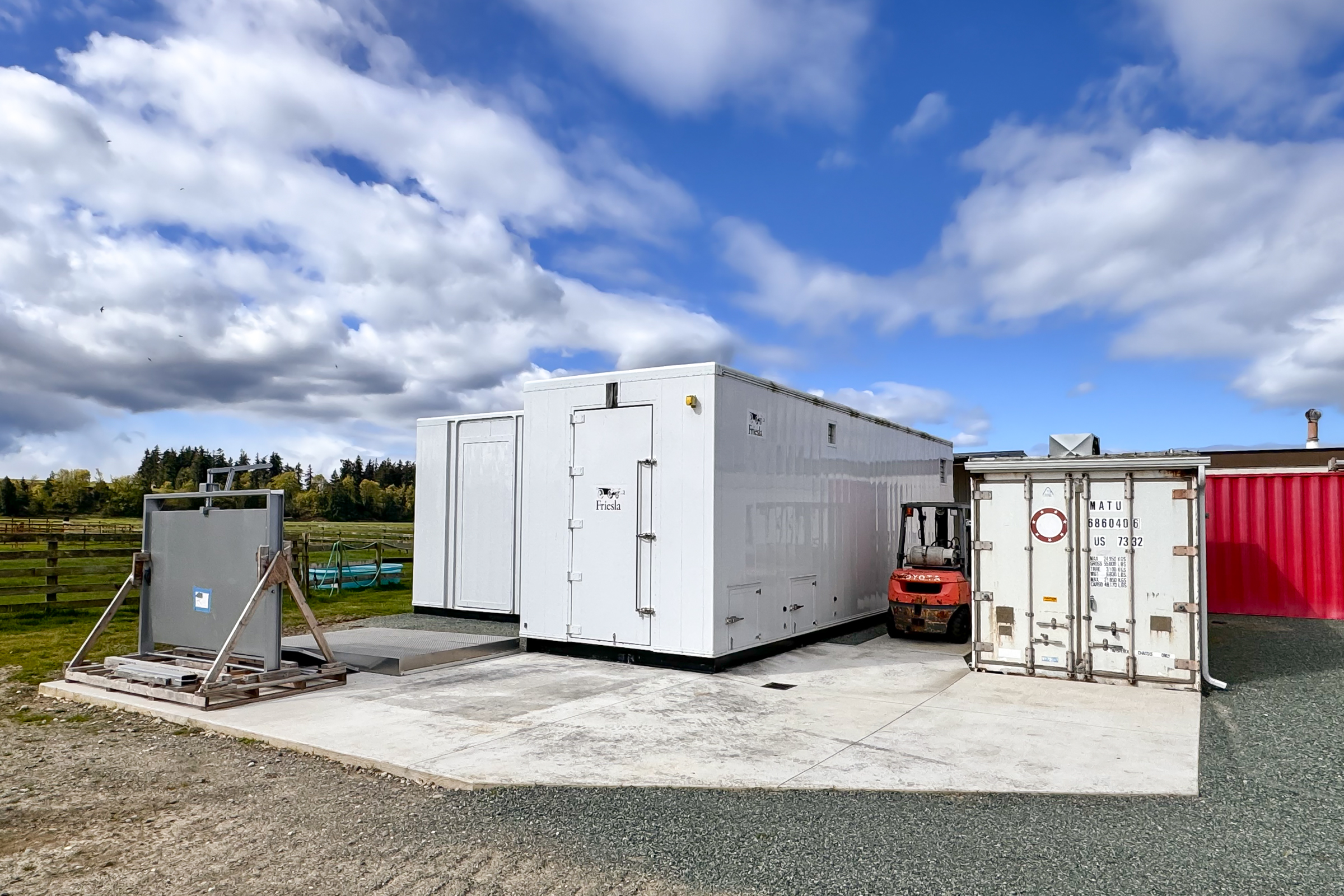
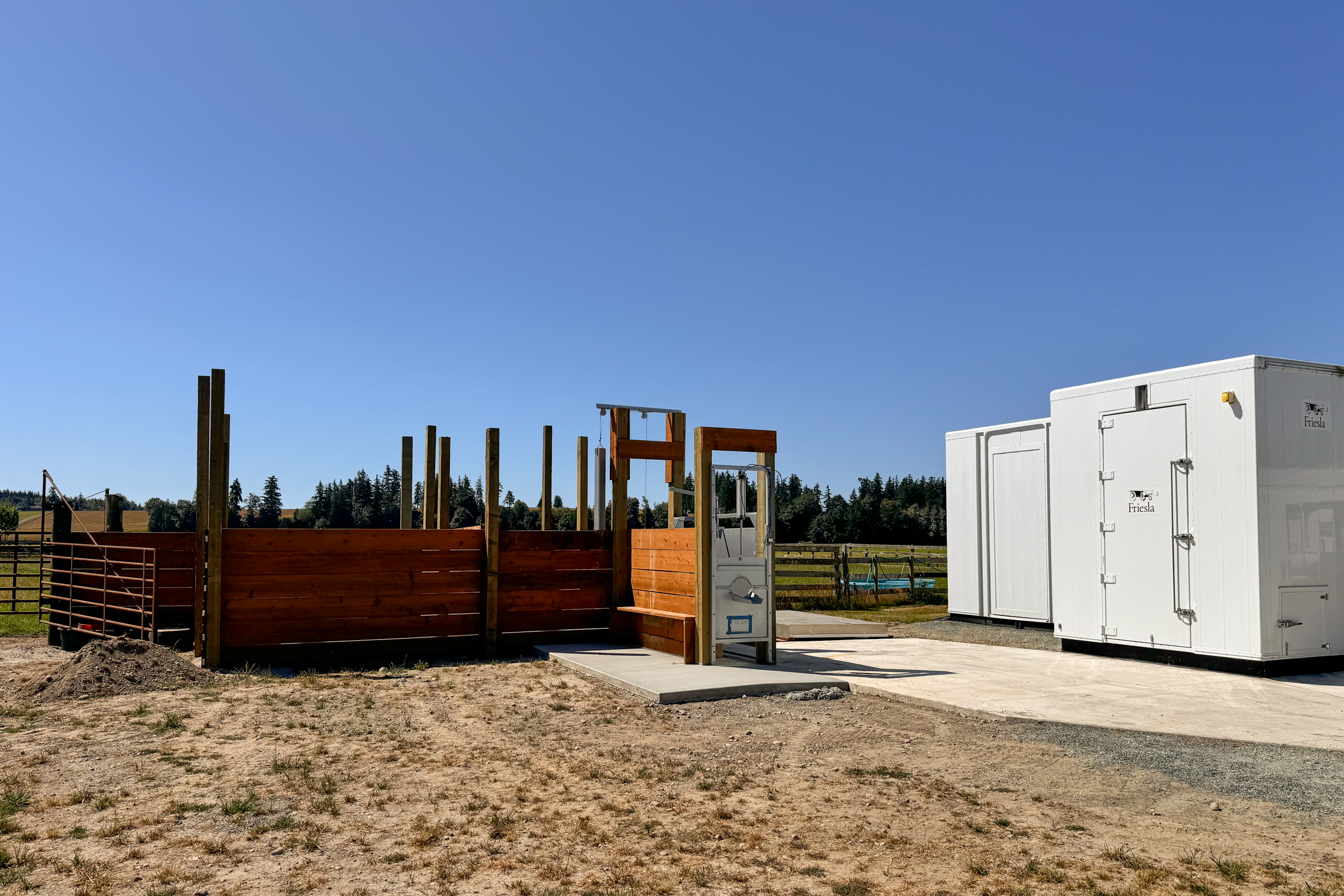
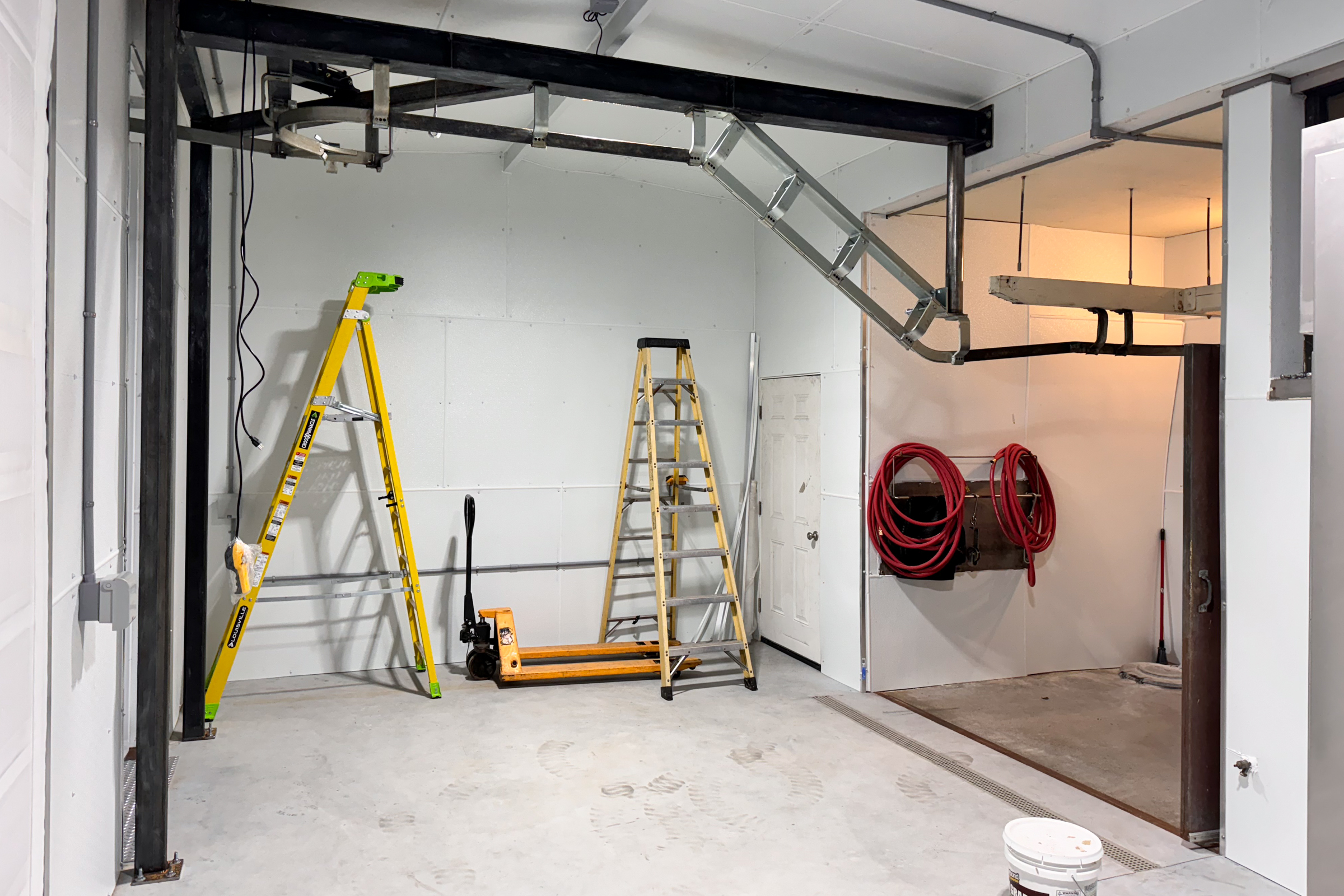
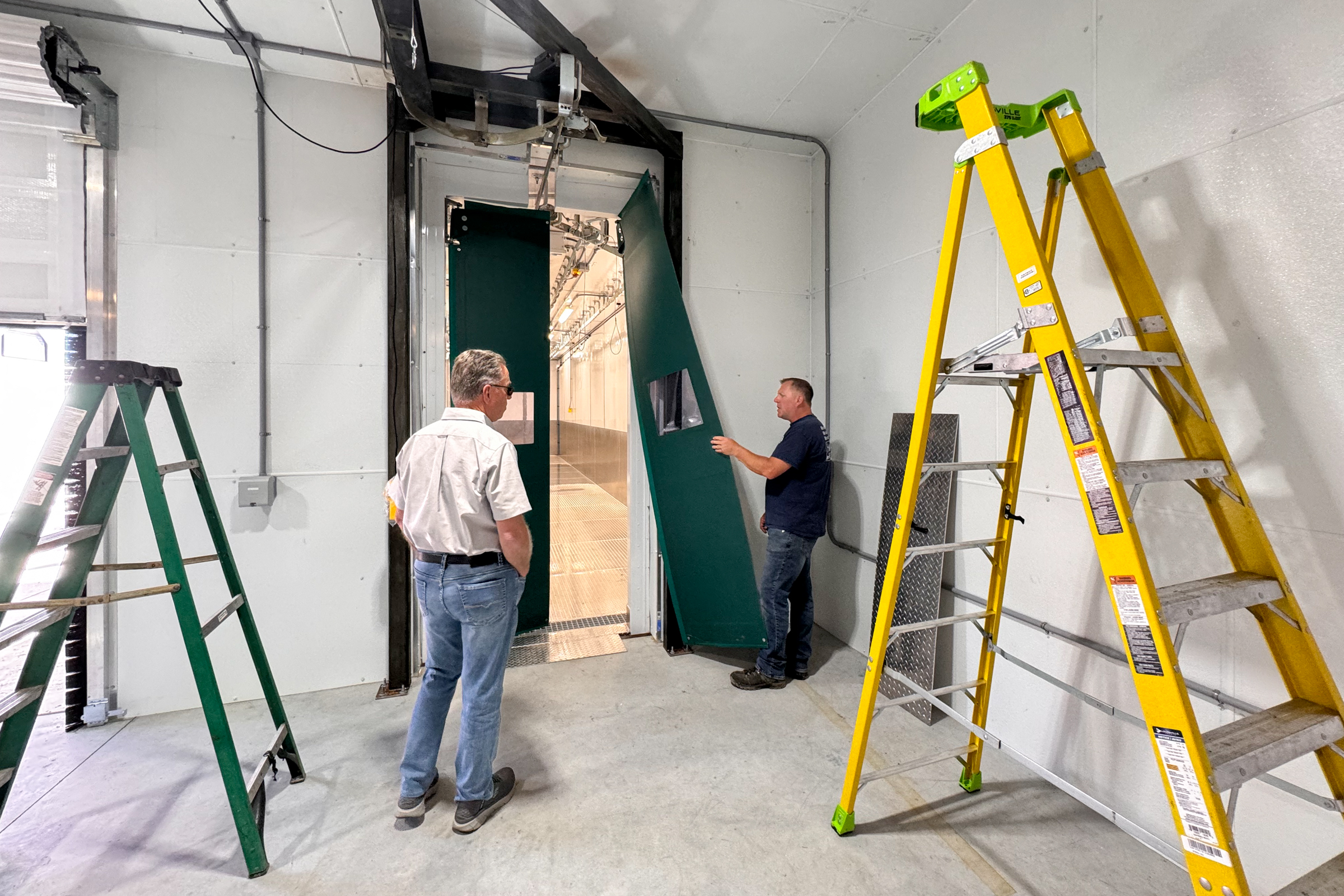
For Pat, the comparison with a new build was simple. The Bow facility was “already built, already there, faster to open and operate, and a heck of a lot less overhead.” Adding the Friesla System gave Del Fox Meats harvest capability and space to dry age full-length carcass halves, which neither the existing Bow plant nor the Stanwood facility could accommodate.
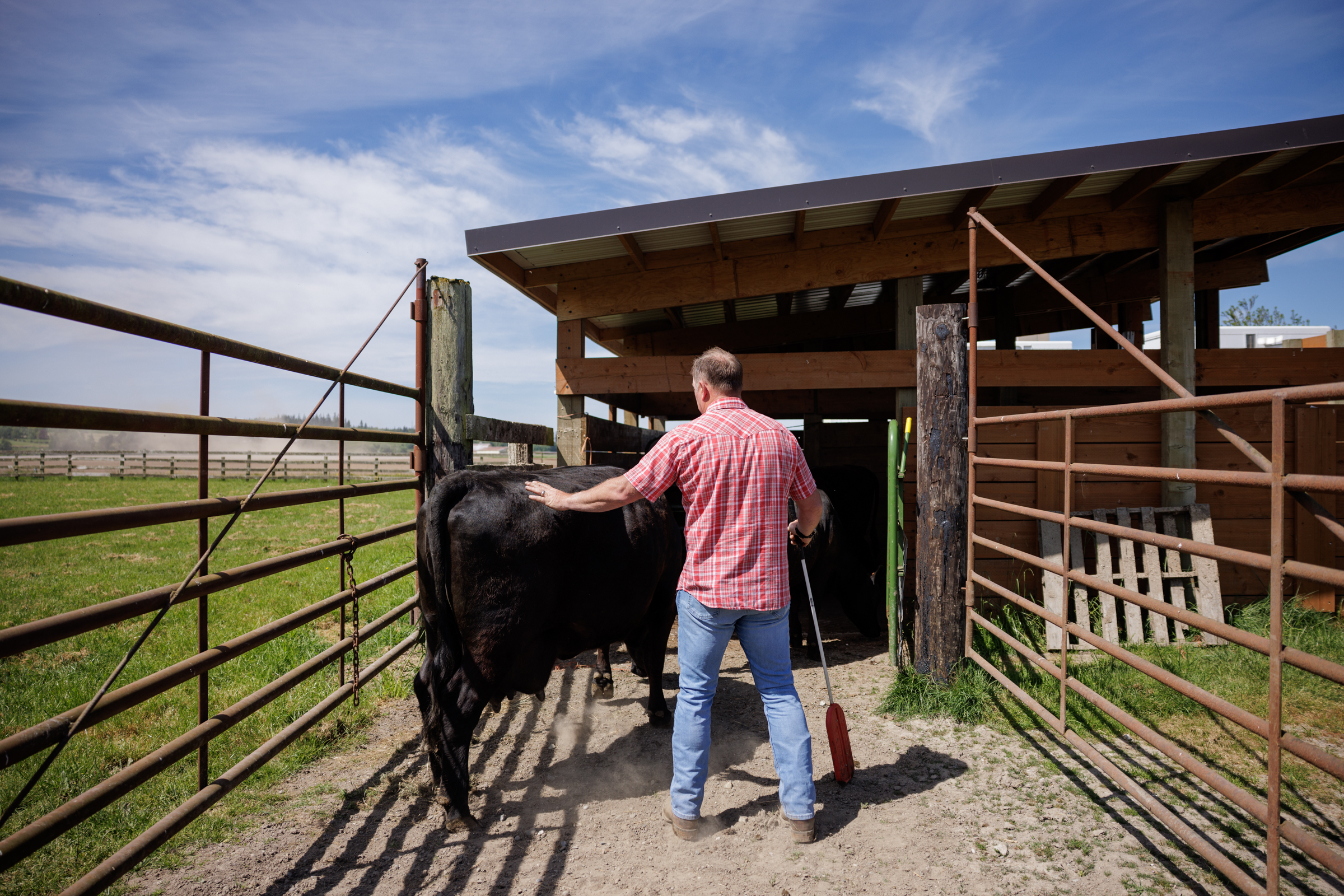
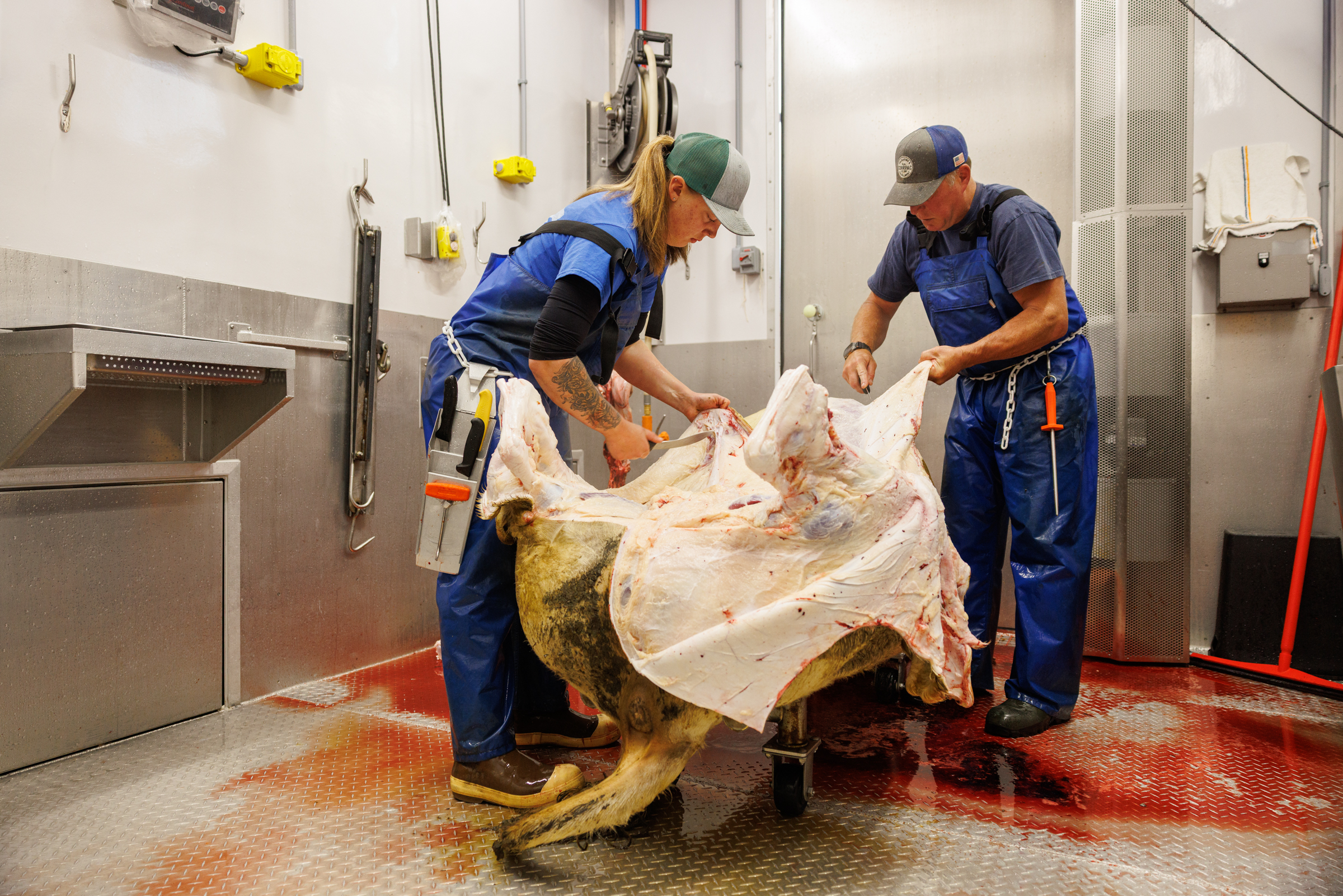

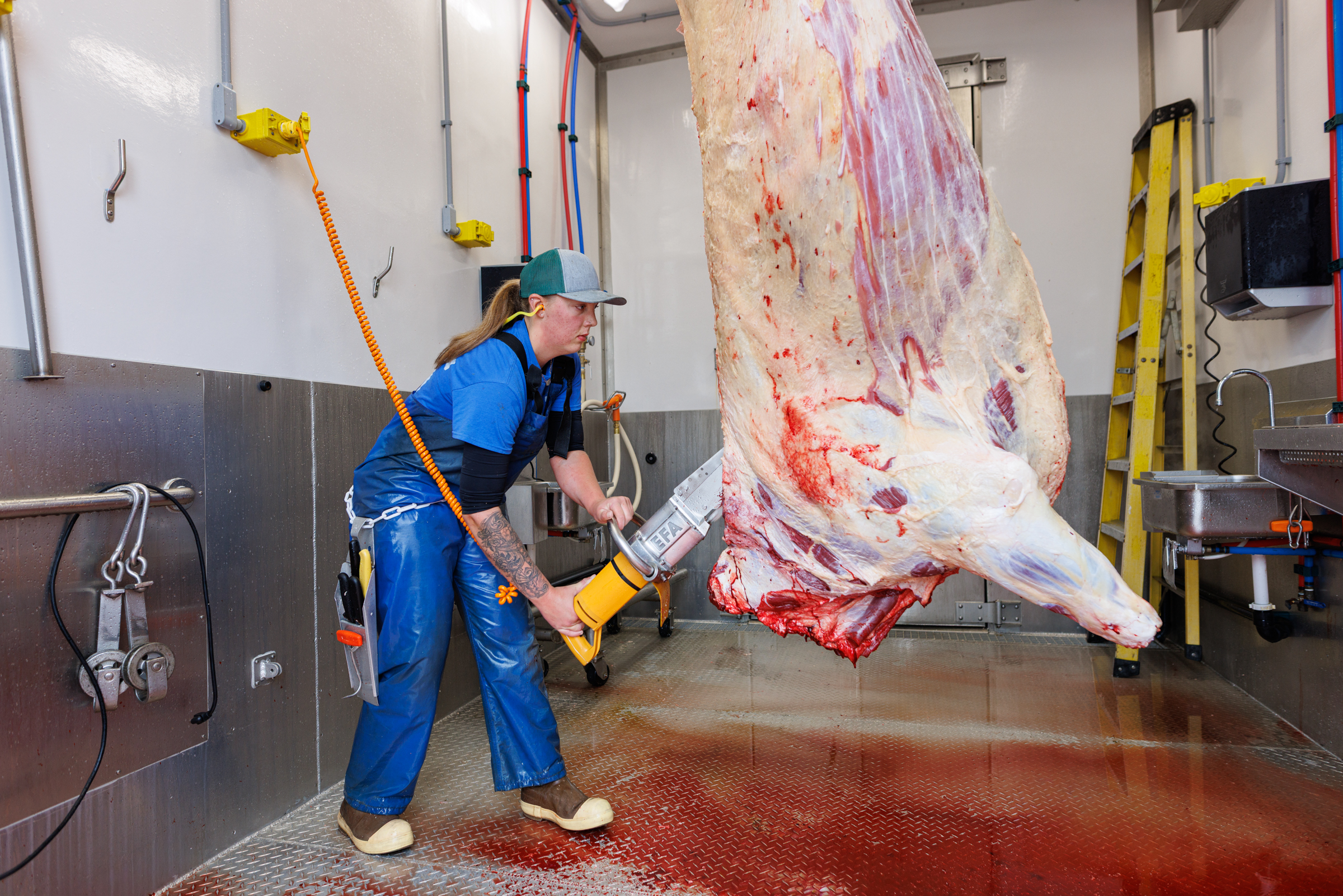
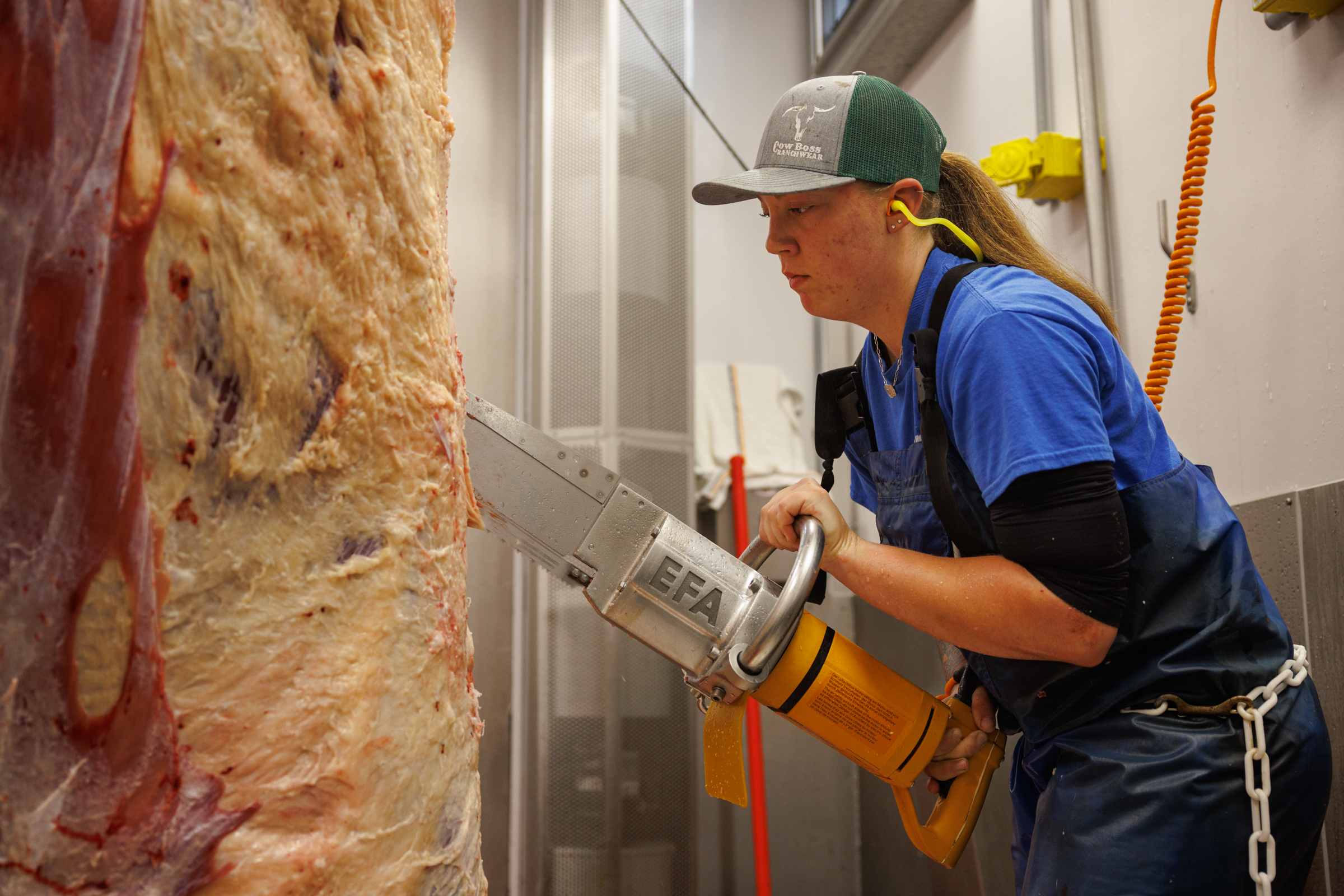
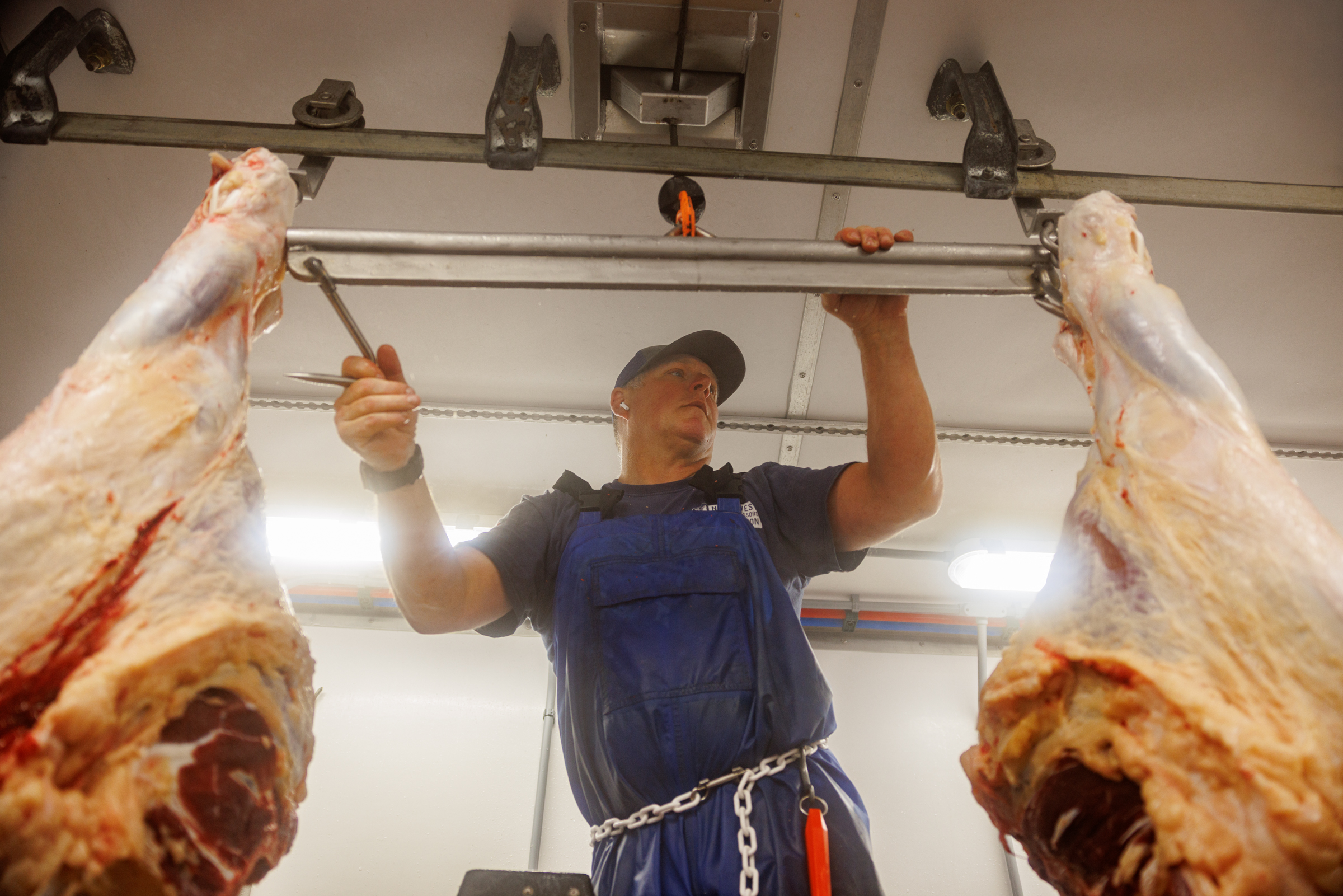
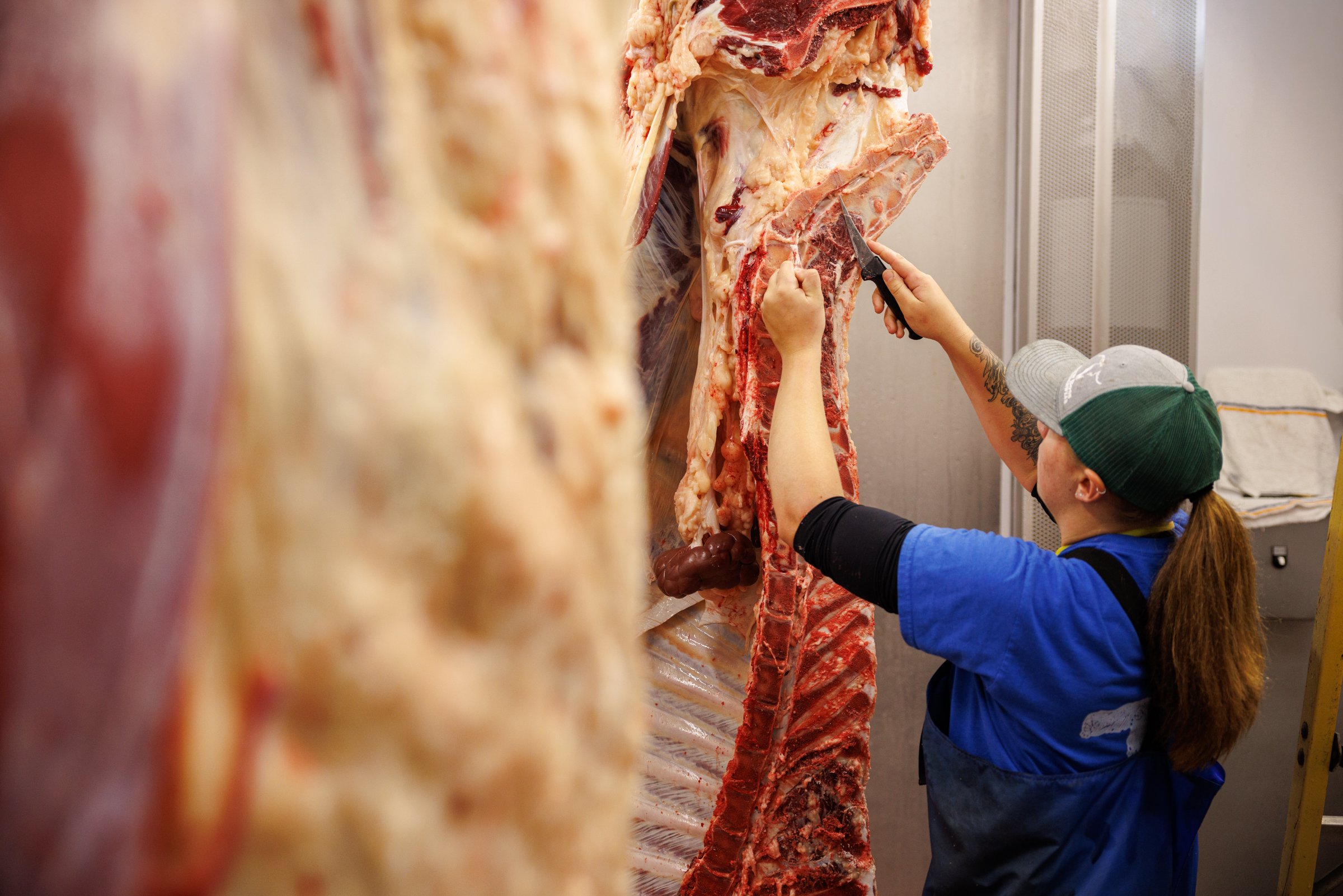

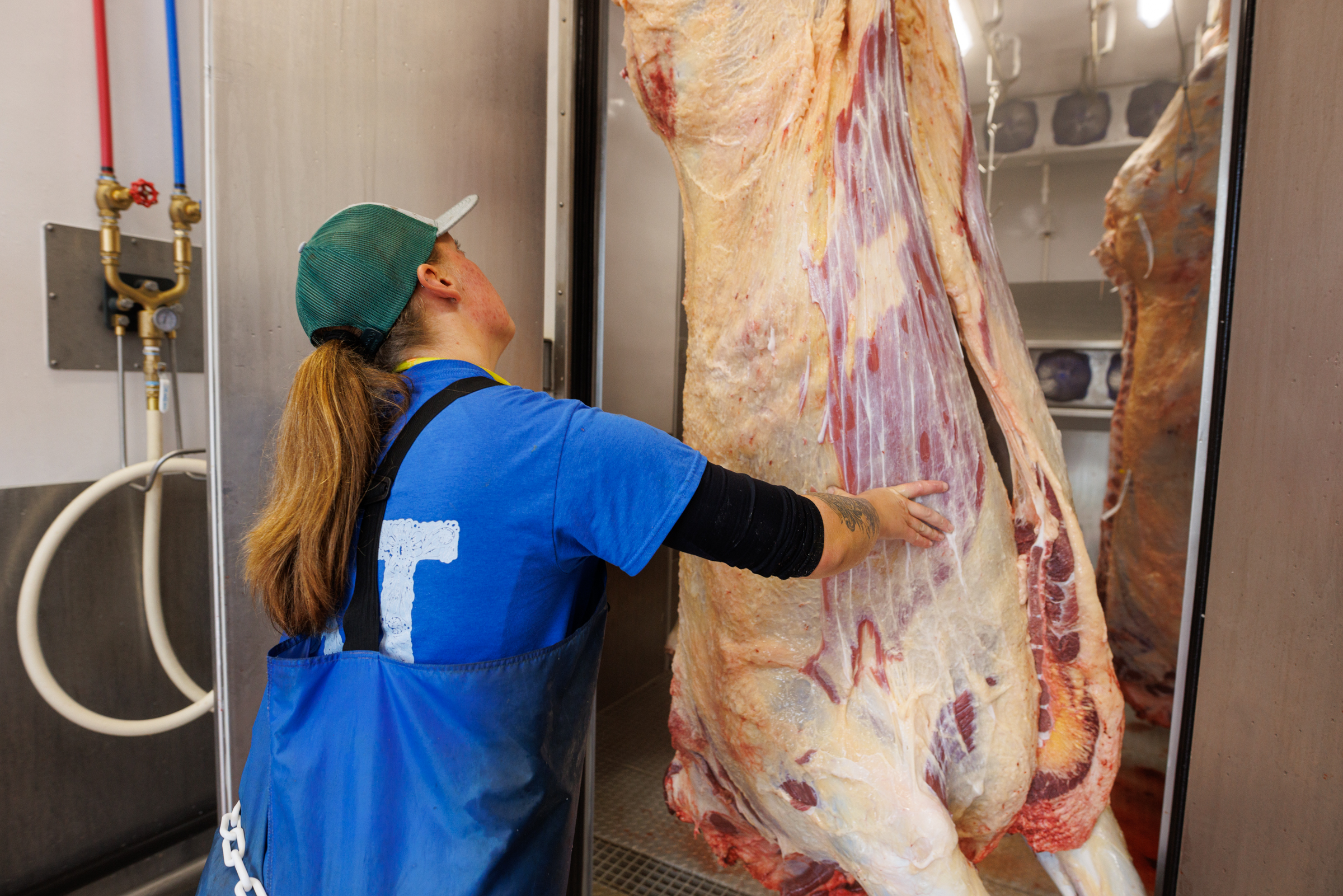
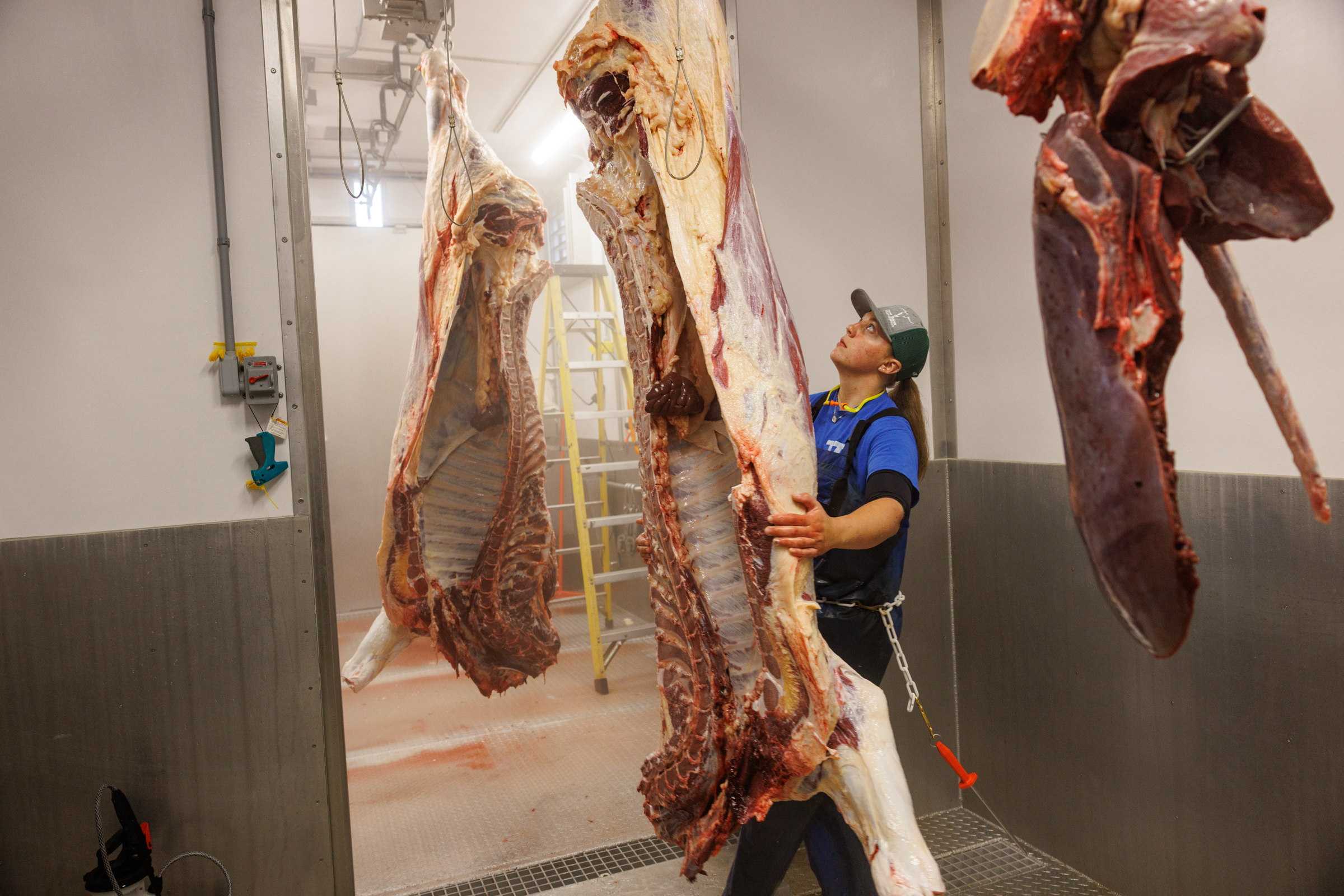
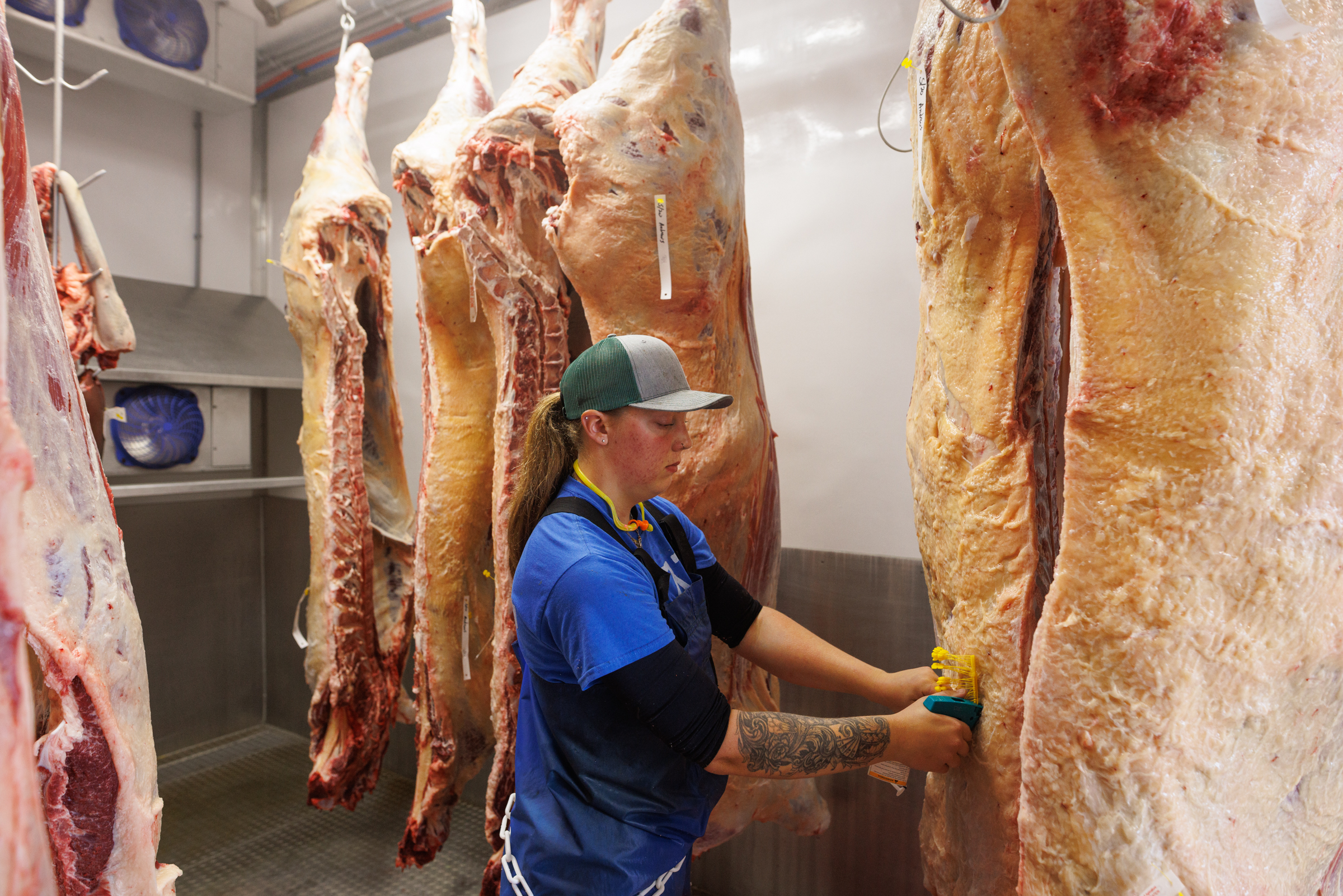
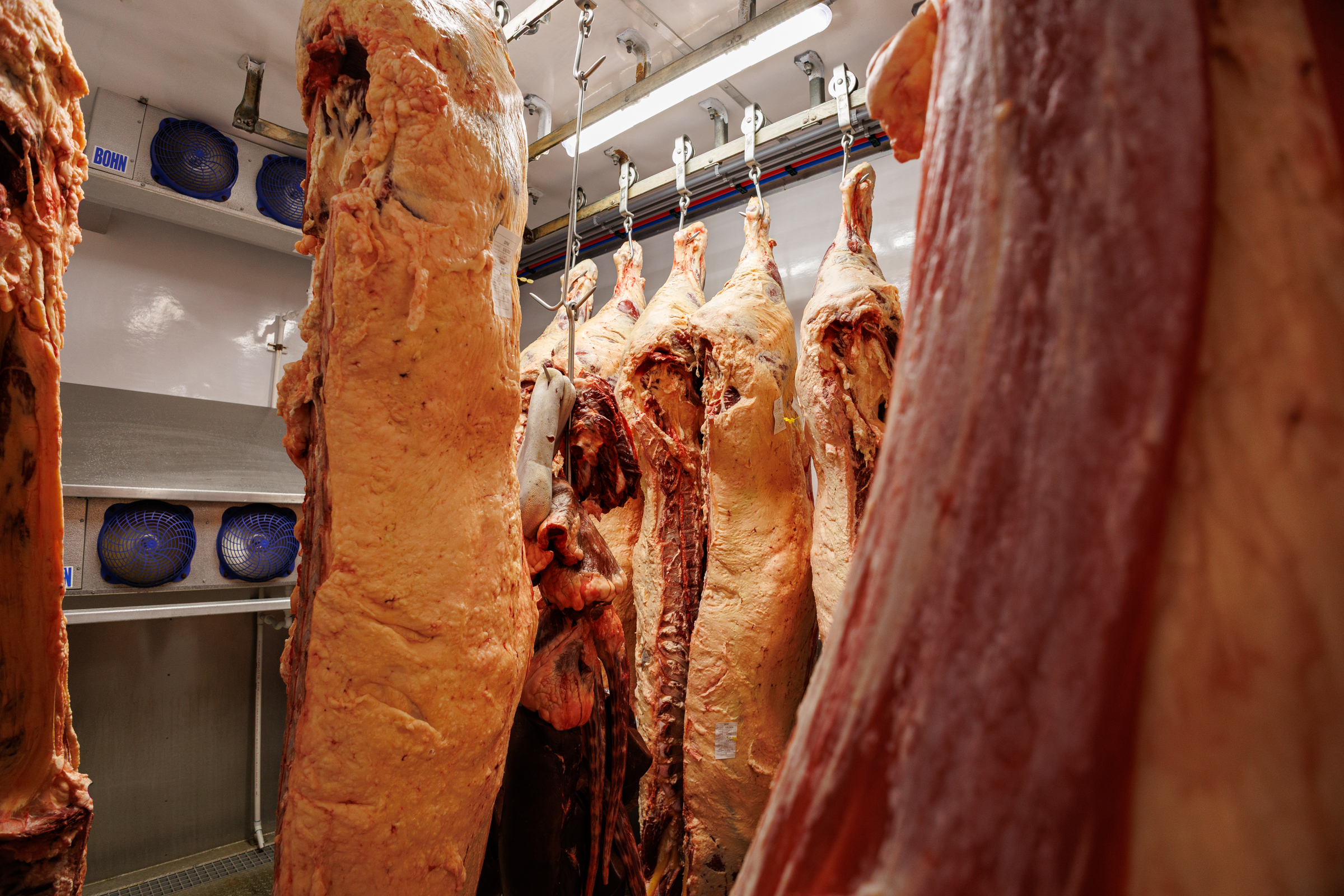
The result is the linear workflow the Stanwood facility lacks. After slaughter, carcasses move from the kill floor to a holding cooler, then down a rail to the cutting room.
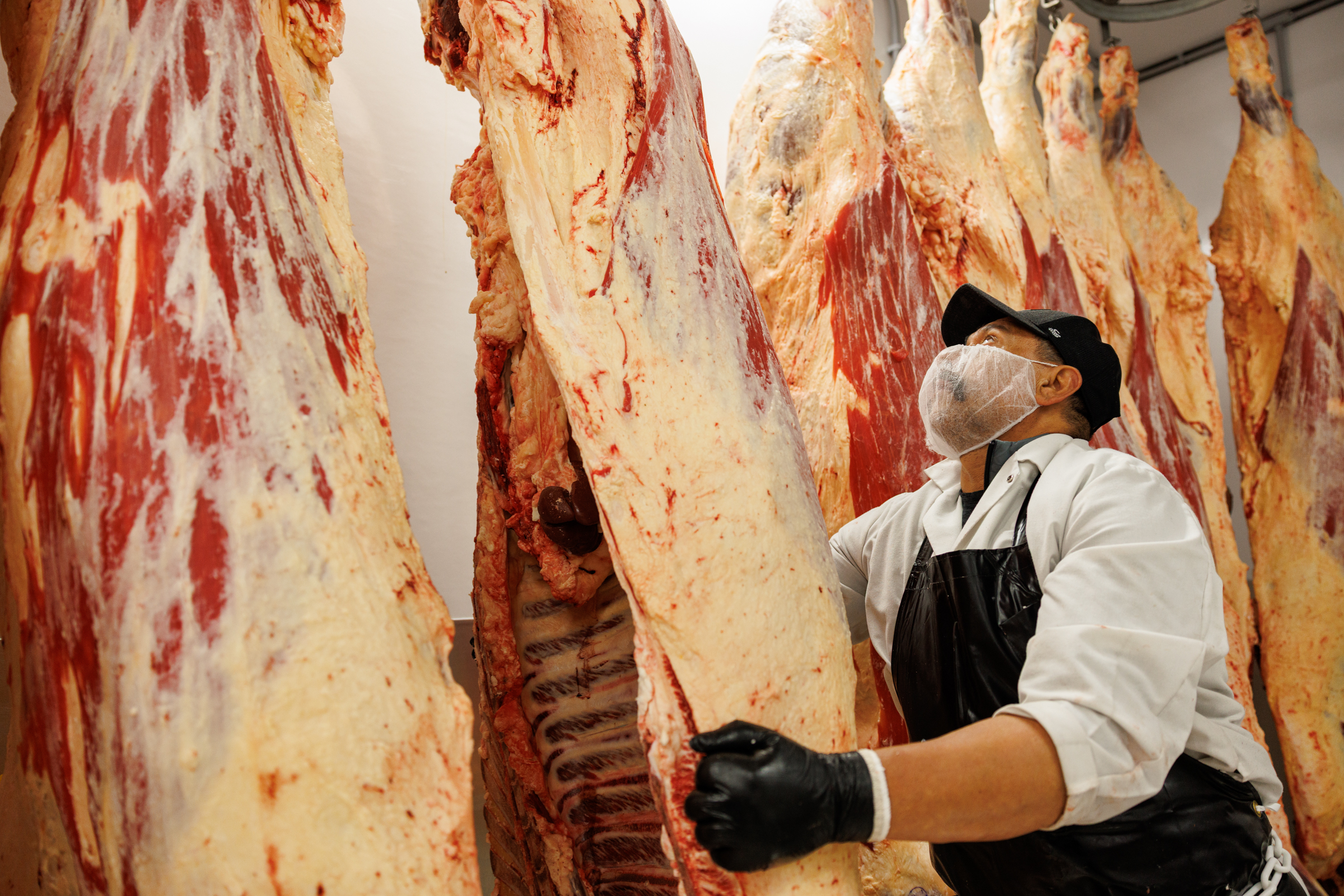
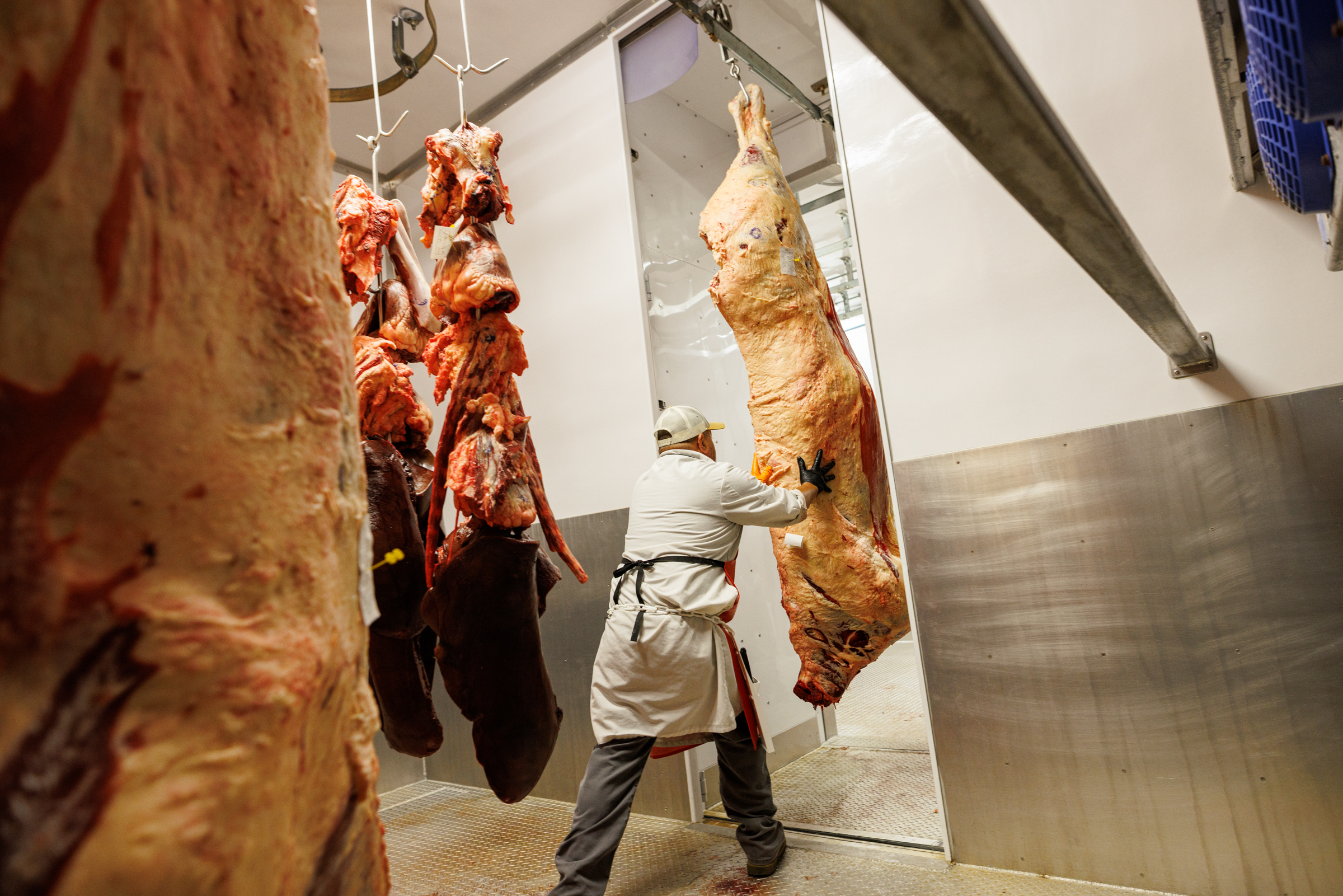

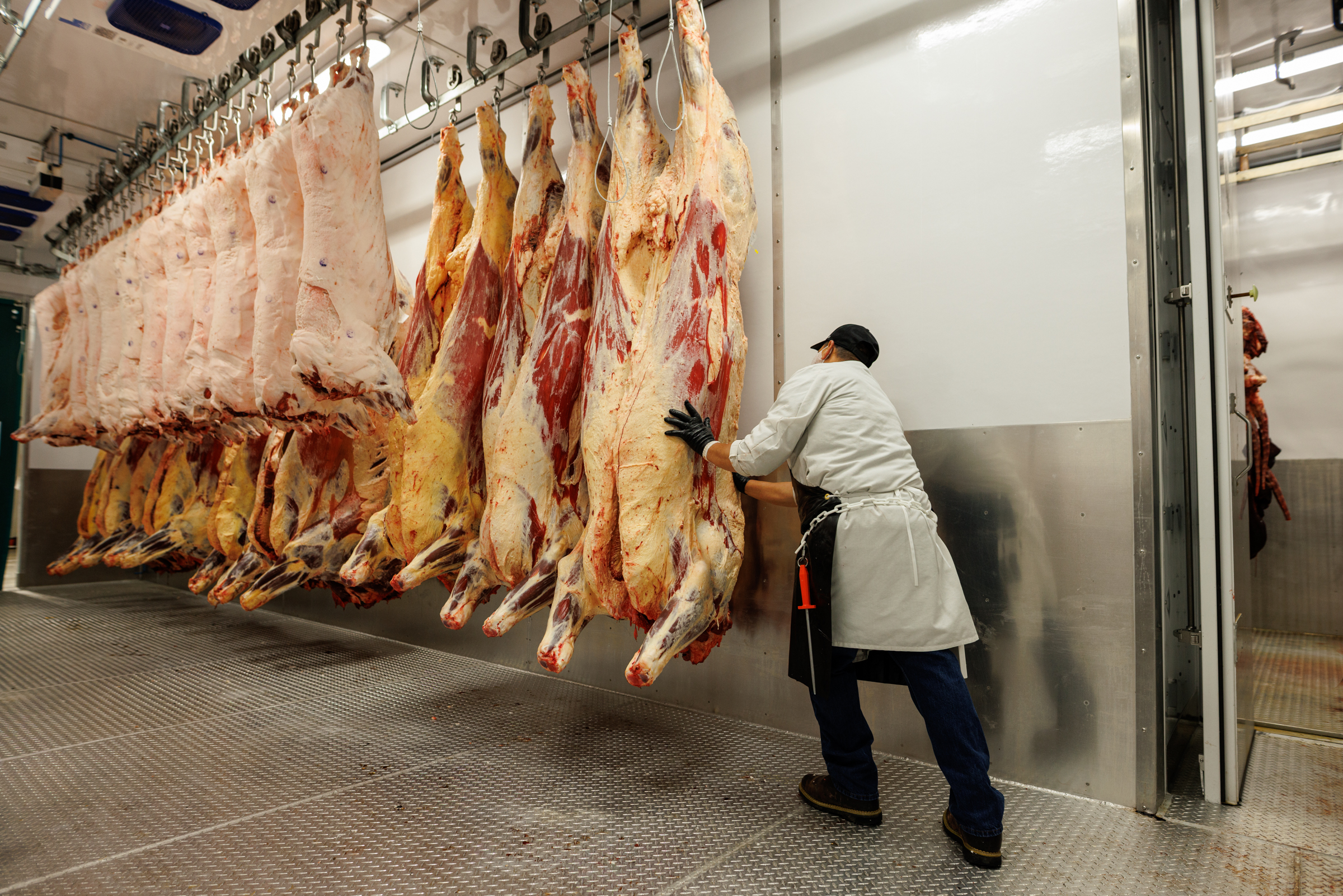
At the Bow facility, the team’s daily operations include:
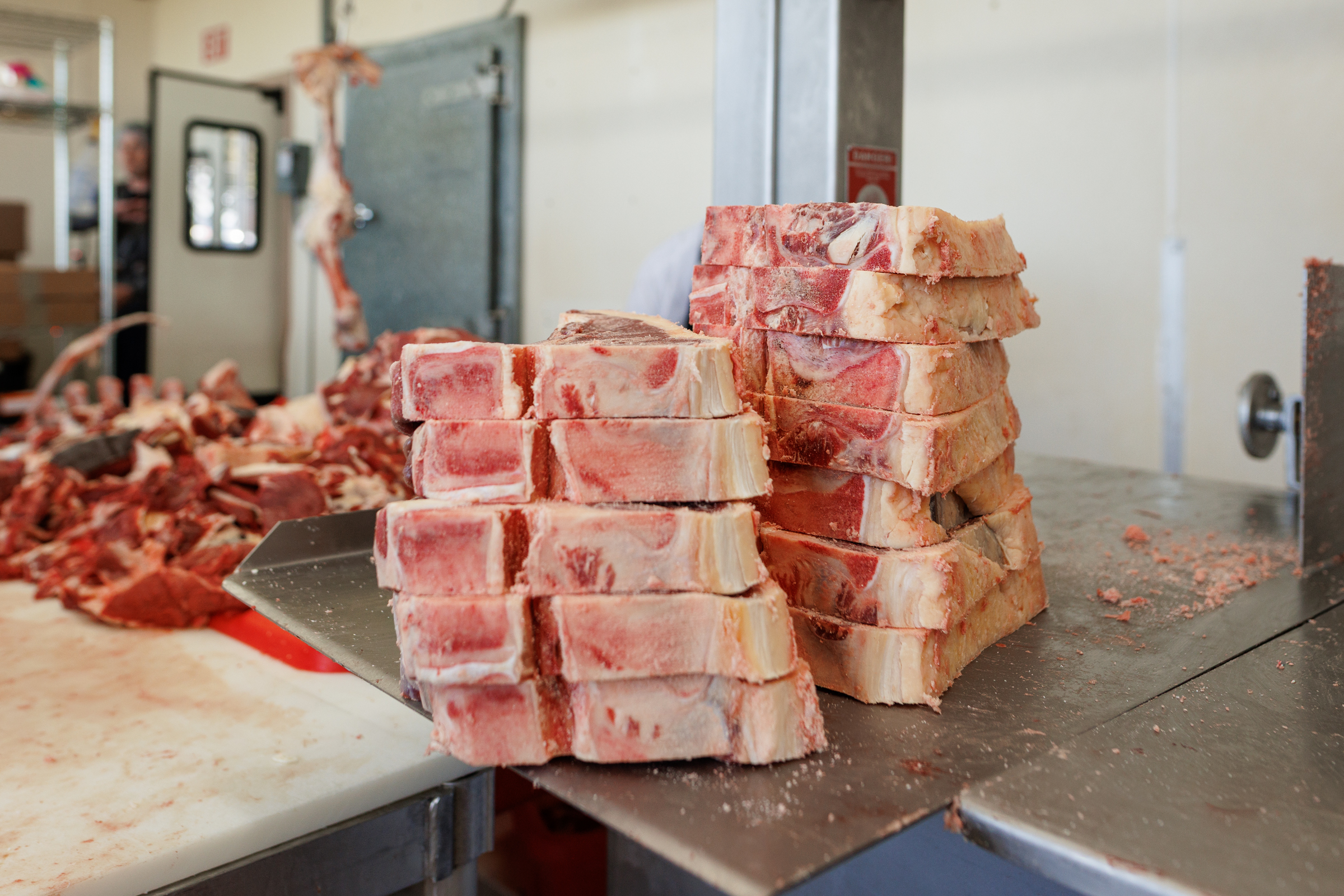
- Harvest: About 40 minutes per beef from the knock box to the hanging cooler
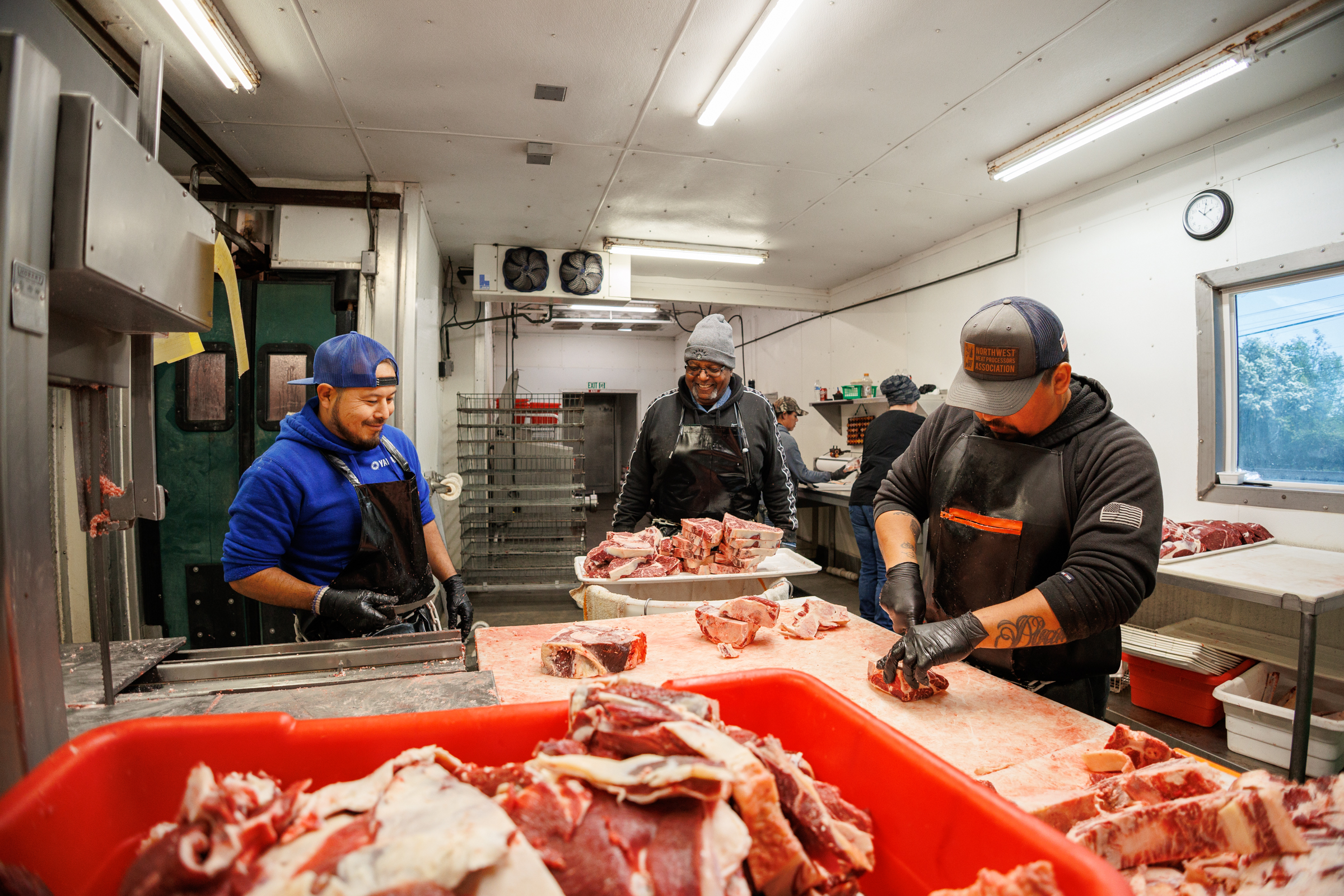
- Processing: About 40–50 minutes per beef through the cutting room
- Packaging: Every package labeled with the date, weight, product, and farm name
- Volume: A target of 10 beef a day, four days a week (plus additional pigs, sheep, and goats)
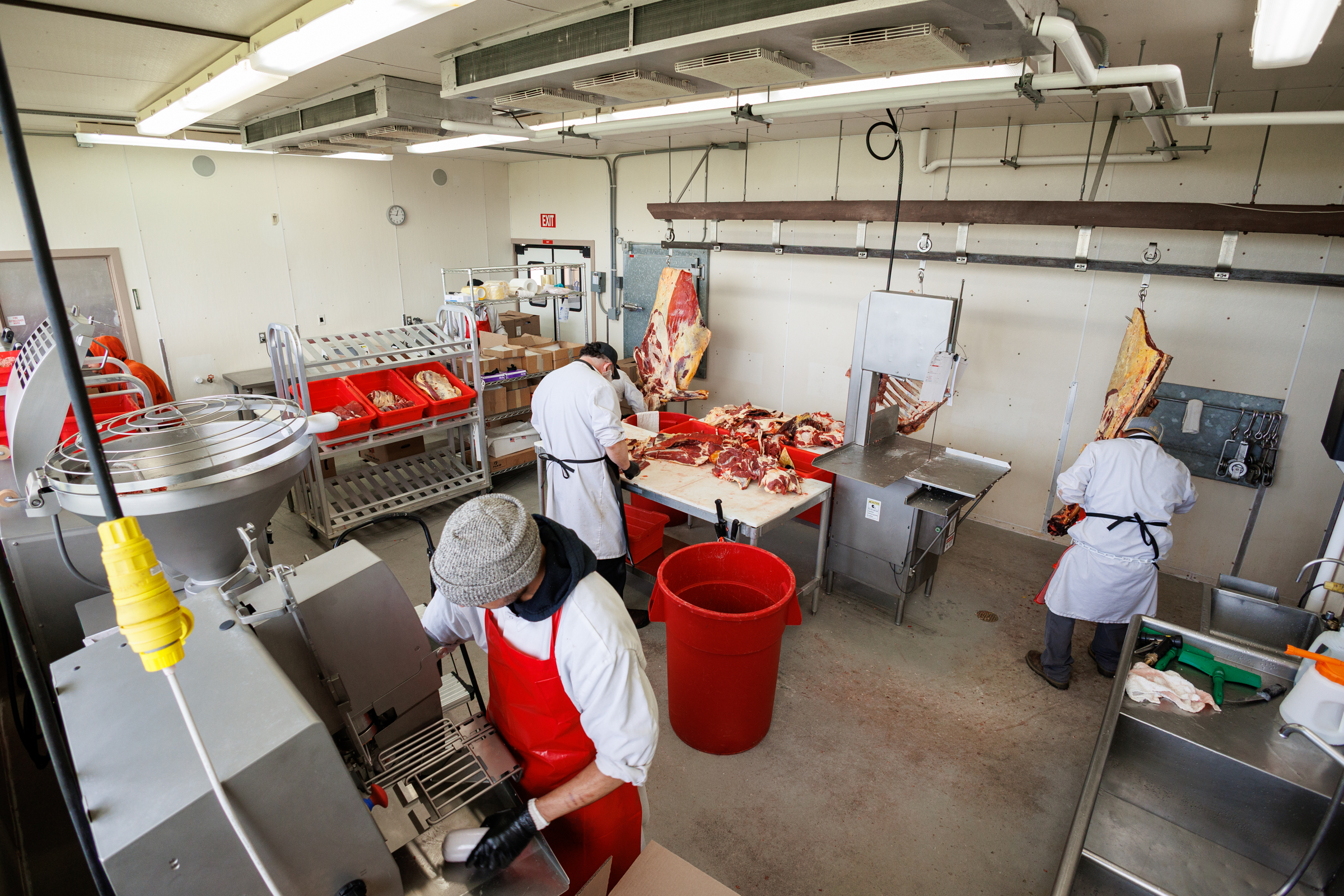
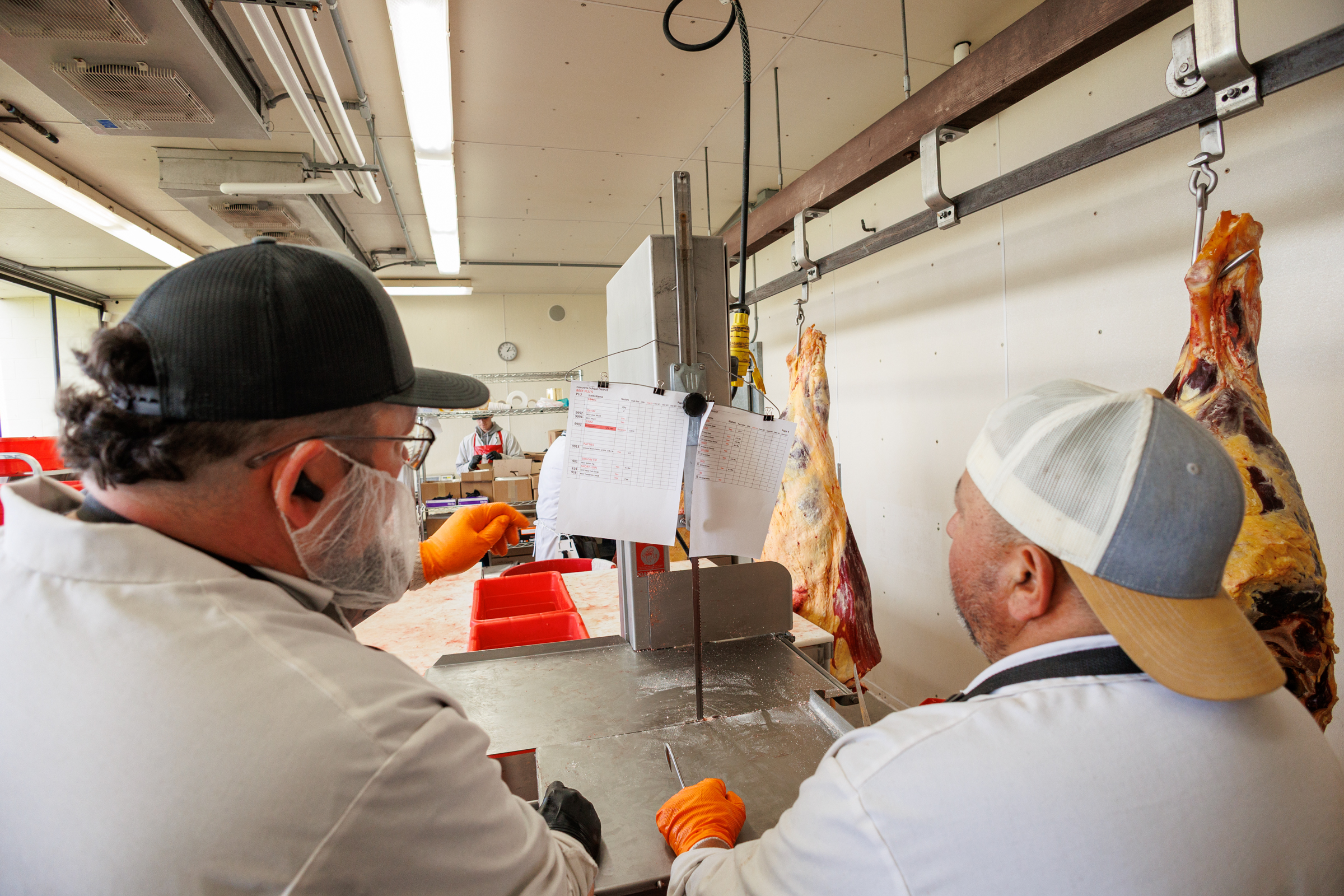
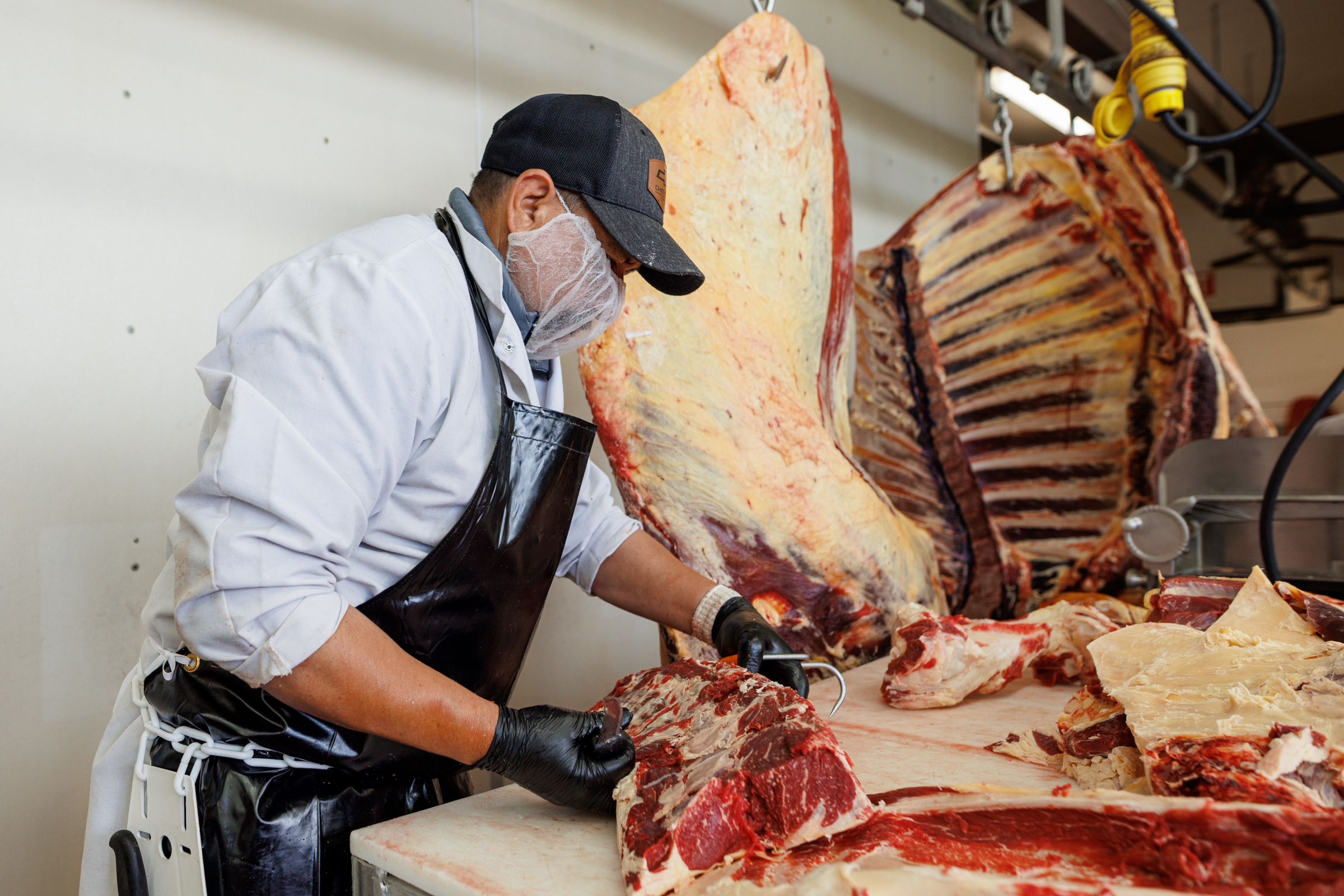
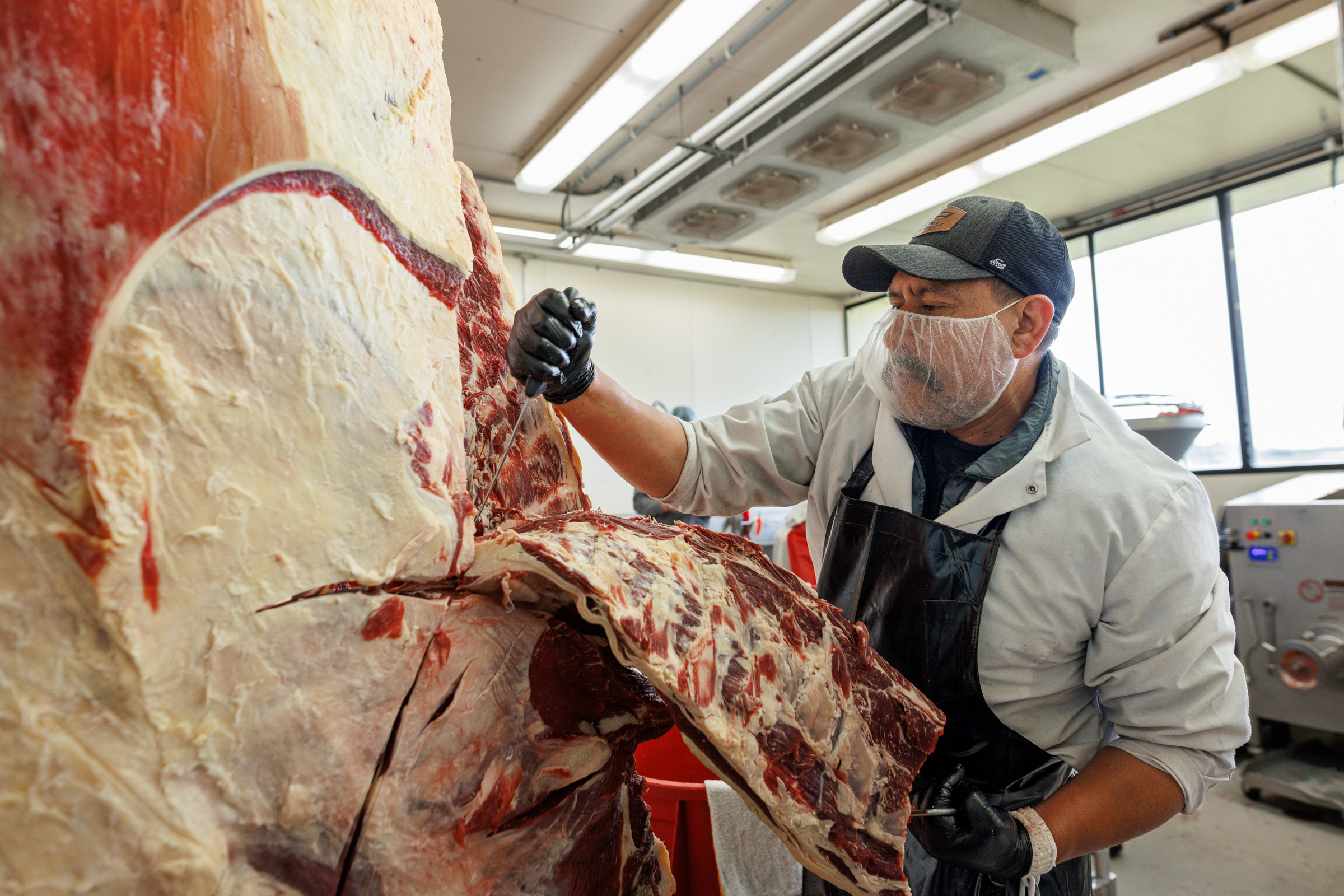
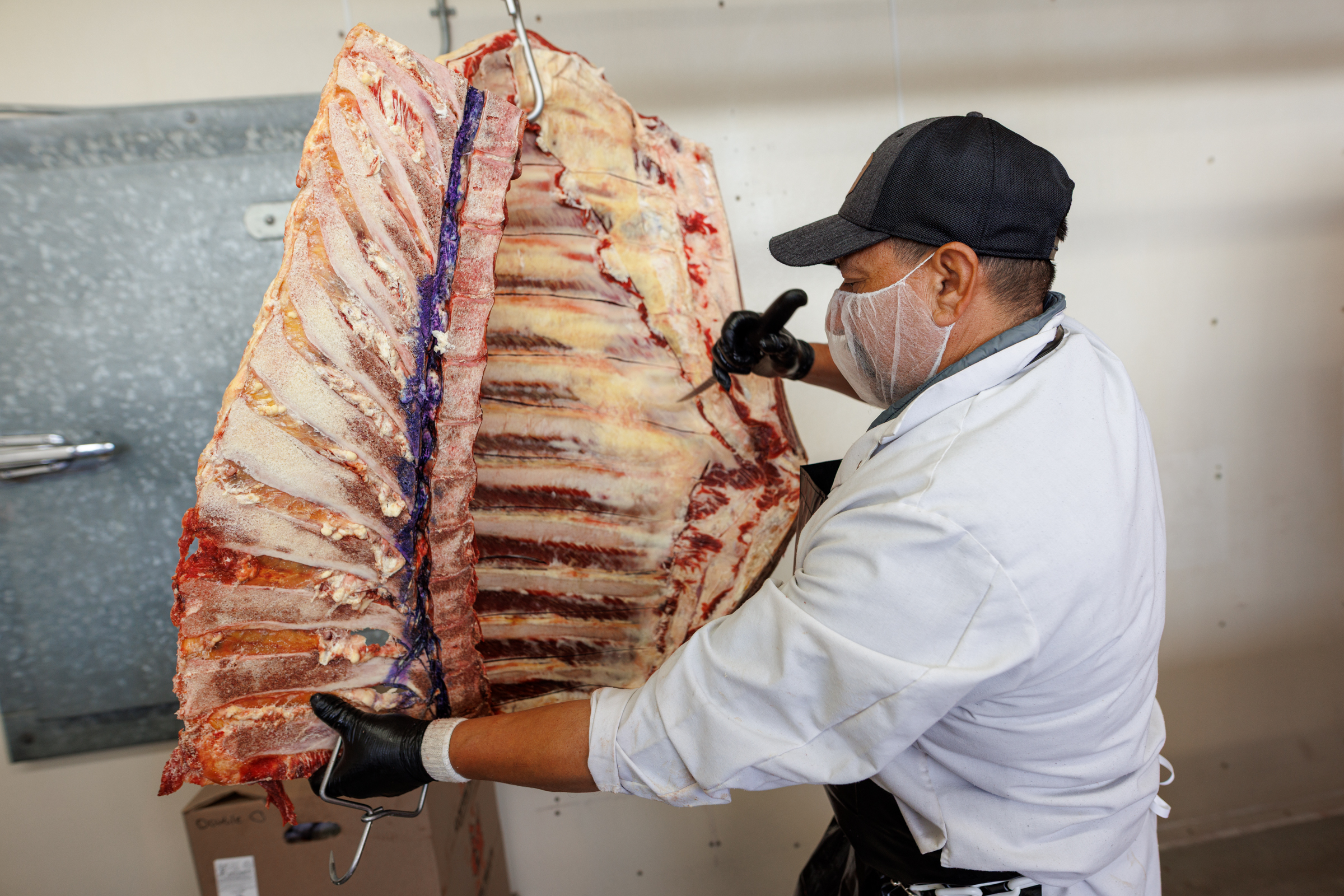
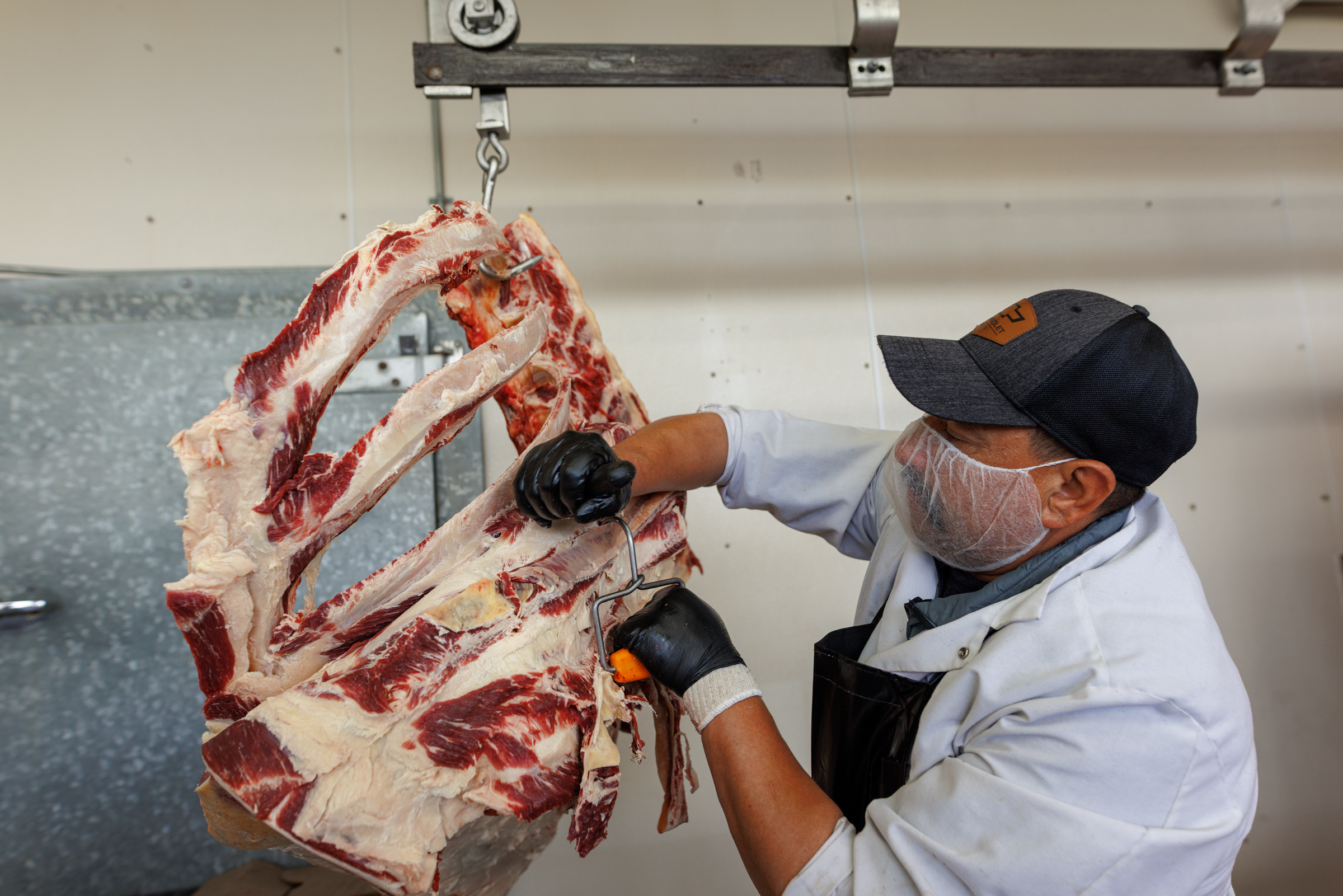
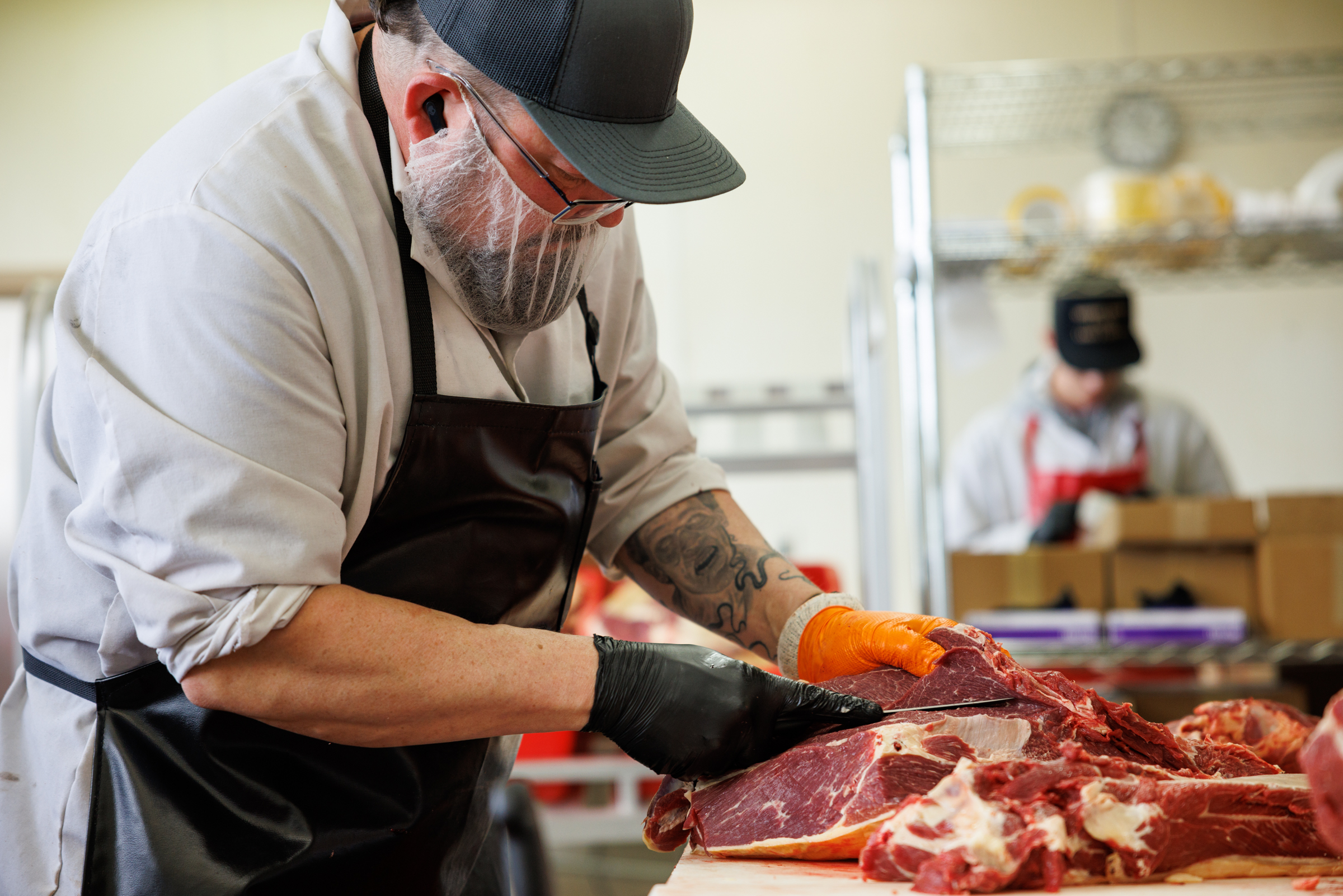
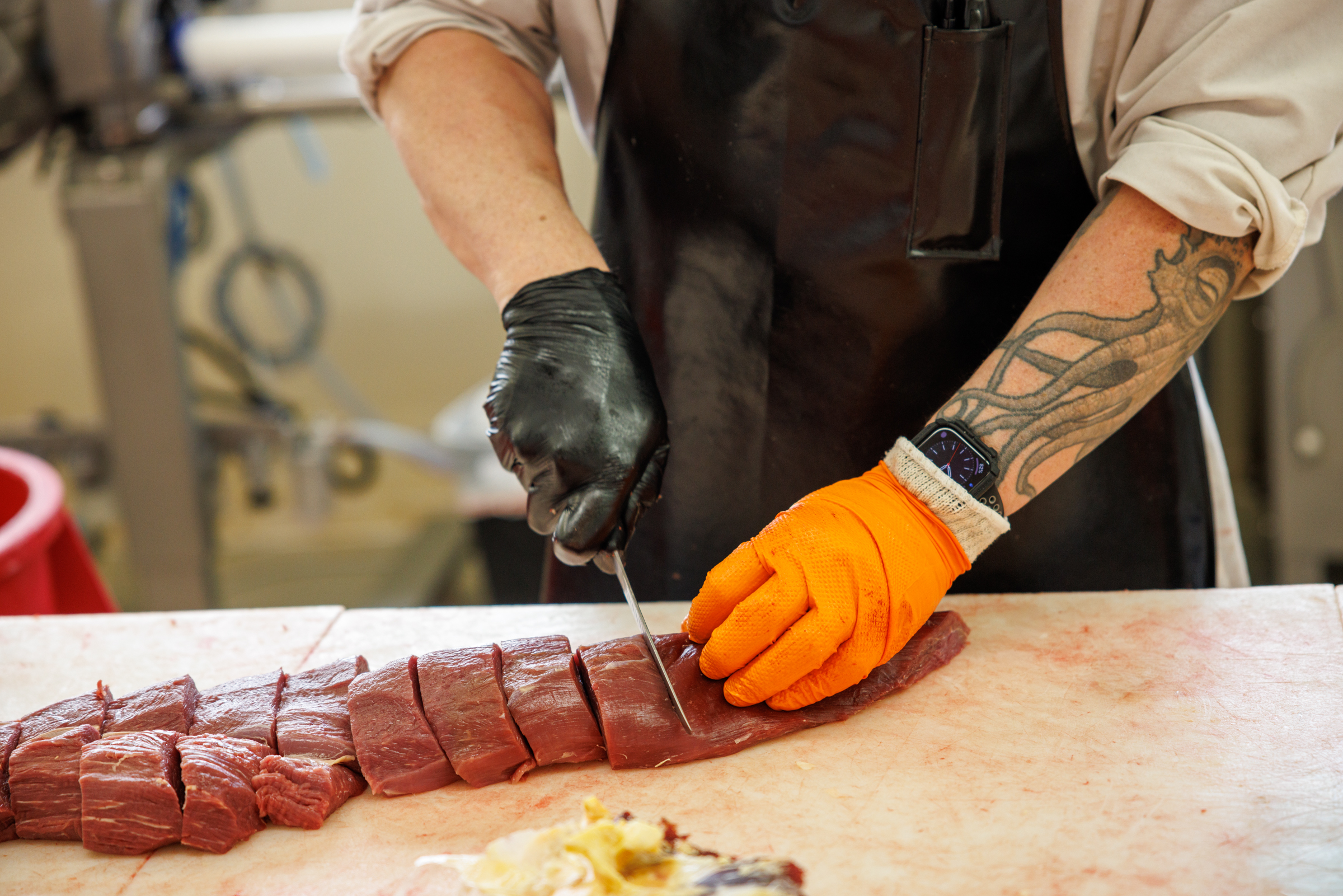
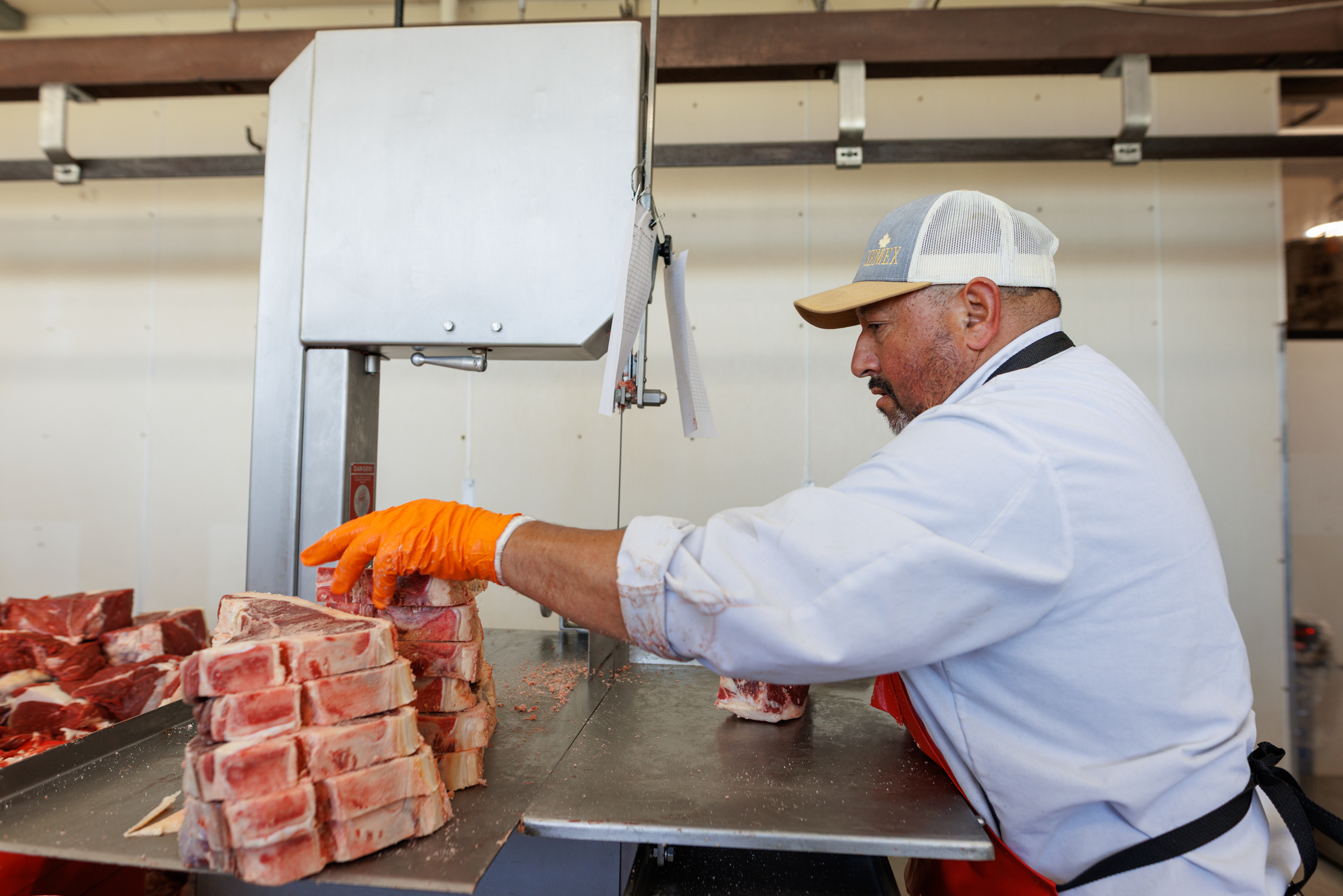


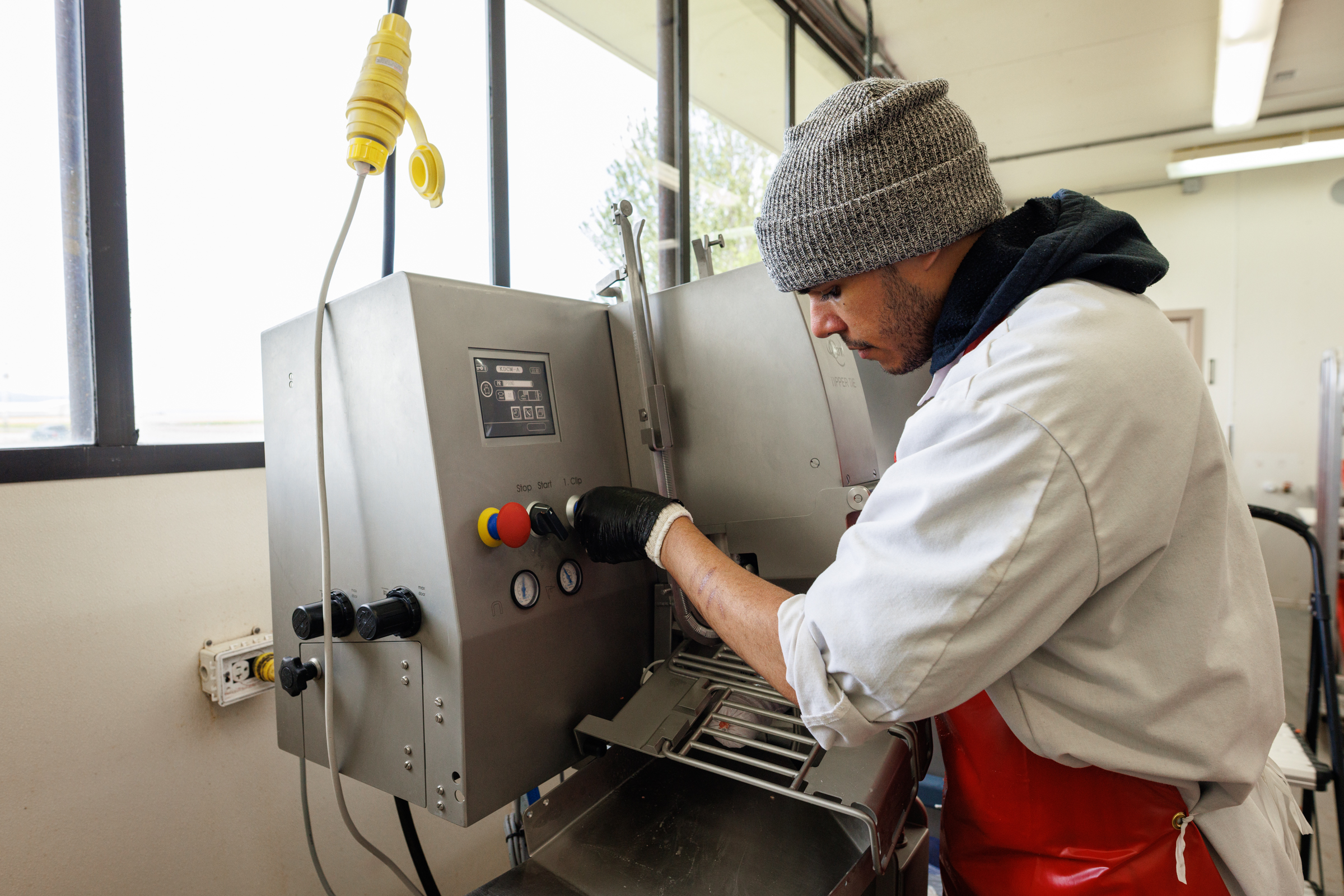
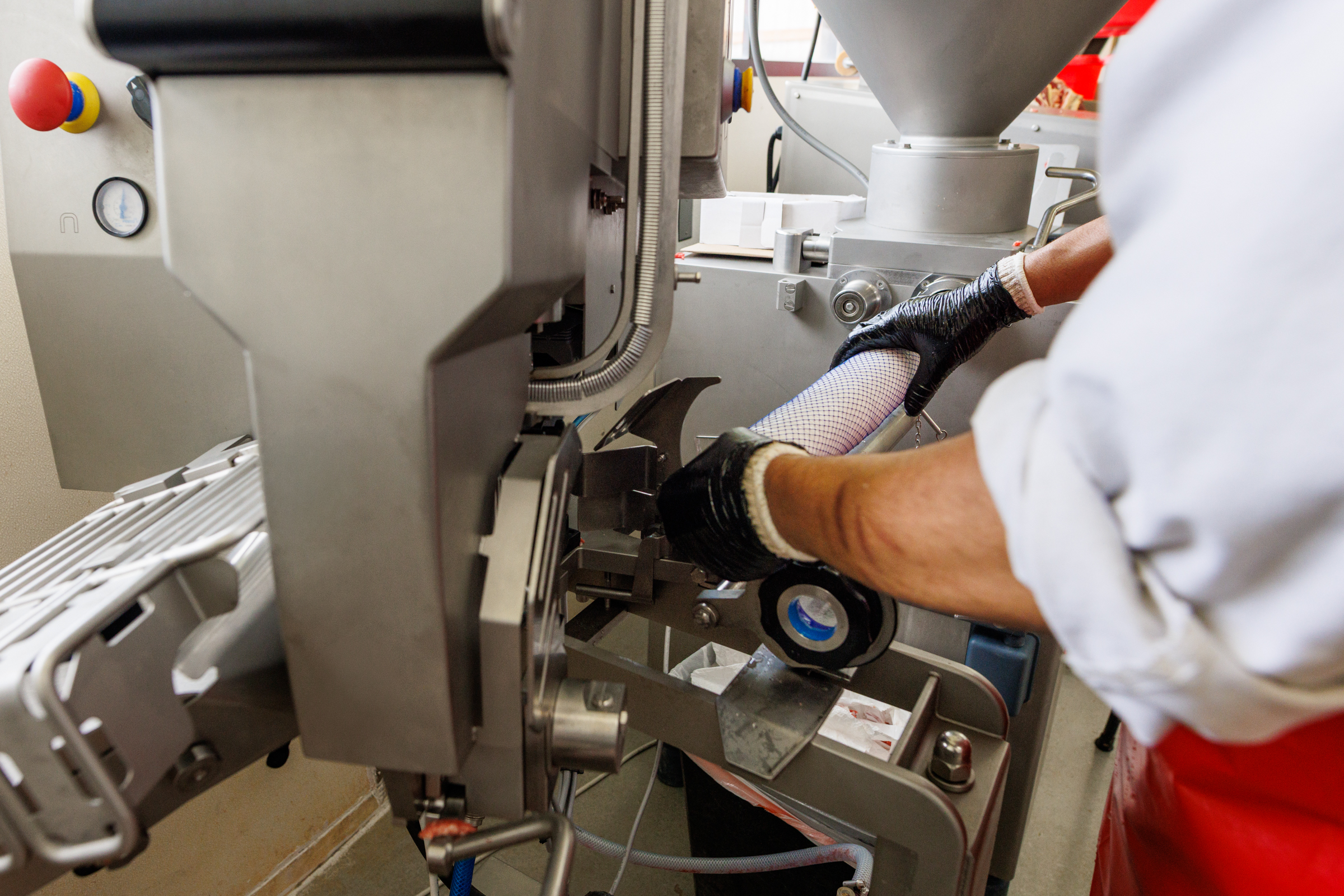
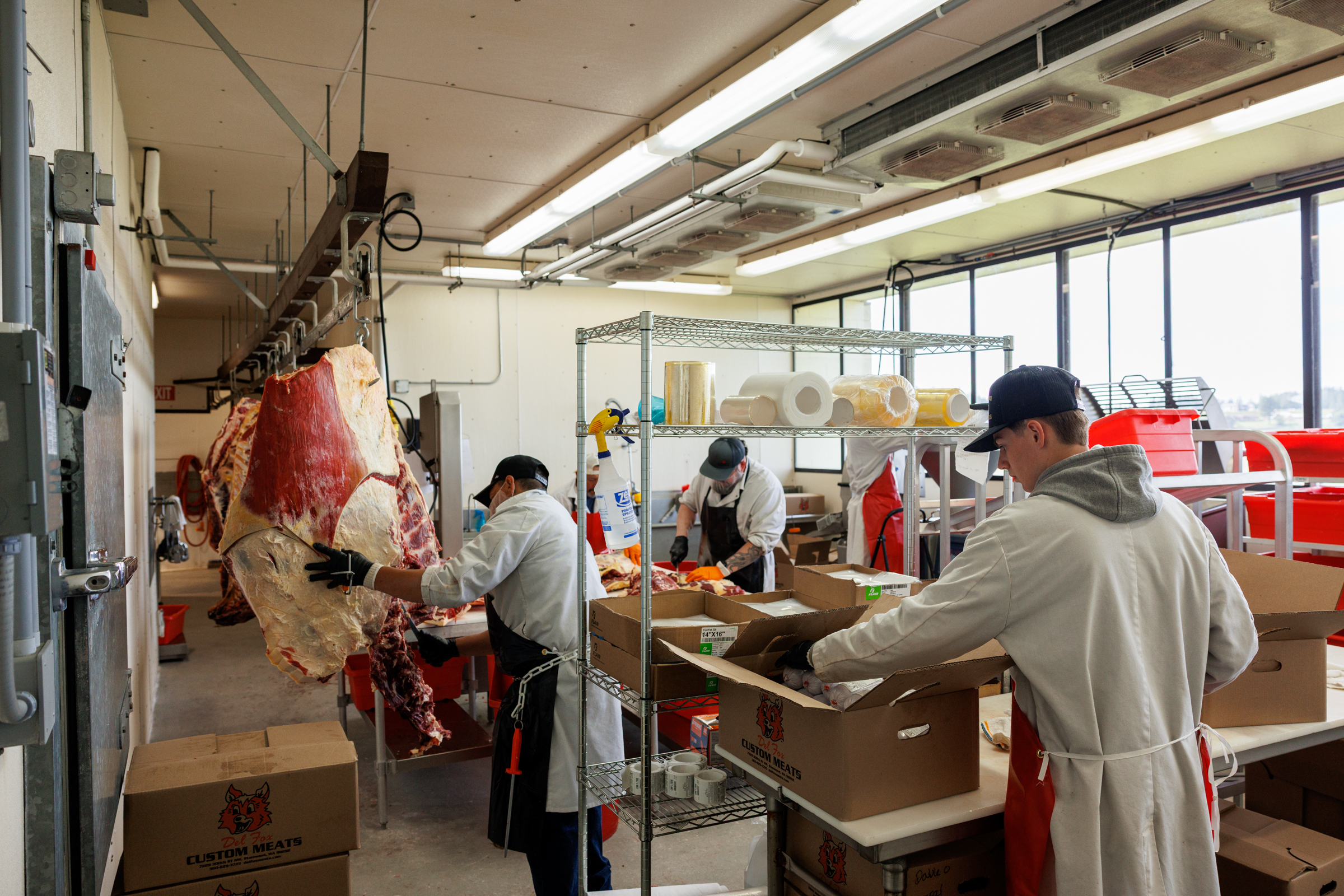


For Byron, the modular kill floor and aging cooler—and Friesla’s hands-on support from design through installation, commissioning, and training—freed up time to help Pat operate the Stanwood facility and get the Bow facility running.
“When you’re trying to schedule your animals and everything else, the last thing you want to be doing is meet with the HVAC guy,” he said. “Friesla took care of that for us. That was a big load off my plate, so I could focus on running the business.”
TWO PLANTS, THREE OWNERS, ONE COMMUNITY
With two facilities, Del Fox Meats has expanded its business model and retail space, diversified its offerings, and found new ways to serve the local community.
The Stanwood facility harvests and processes 20 to 65 beef per week, year-round, under custom exemption. Most weeks, they also harvest and process approximately 20 pigs and sheep combined. Their custom-exempt services in Stanwood provide livestock owners with meat for their household and nonpaying guests—but the meat can’t be sold at retail.
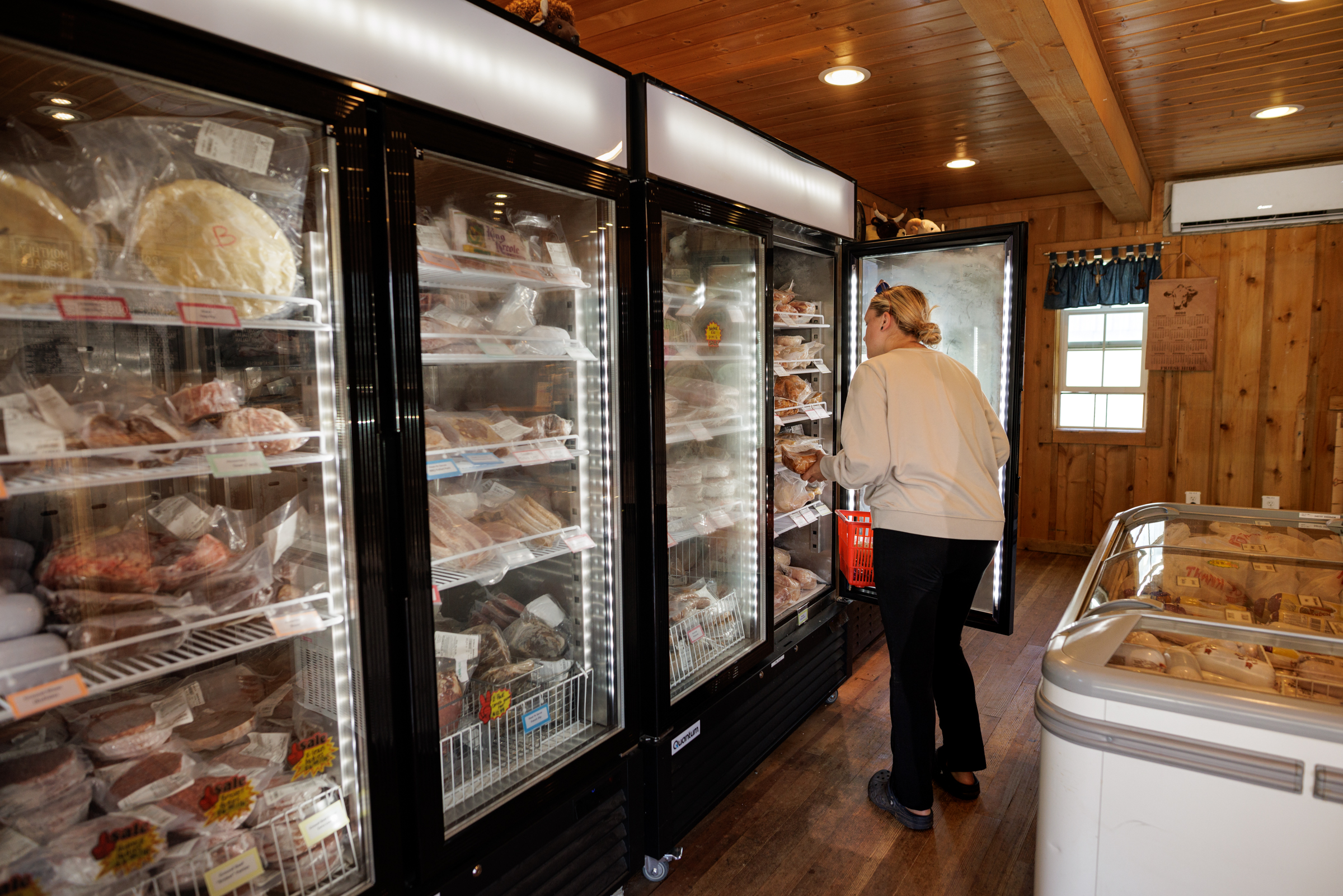

USDA inspection in Bow enables Del Fox Meats and its customers to sell meat by the cut to stores, restaurants, and the public—anywhere in the country.
Adding USDA-inspected processing gave Del Fox Meats’ customers the “golden ticket” to sell their meat in new markets. “A lot of our customers are dealing directly with restaurants and grocery stores and getting local products back into the local markets,” Byron said.
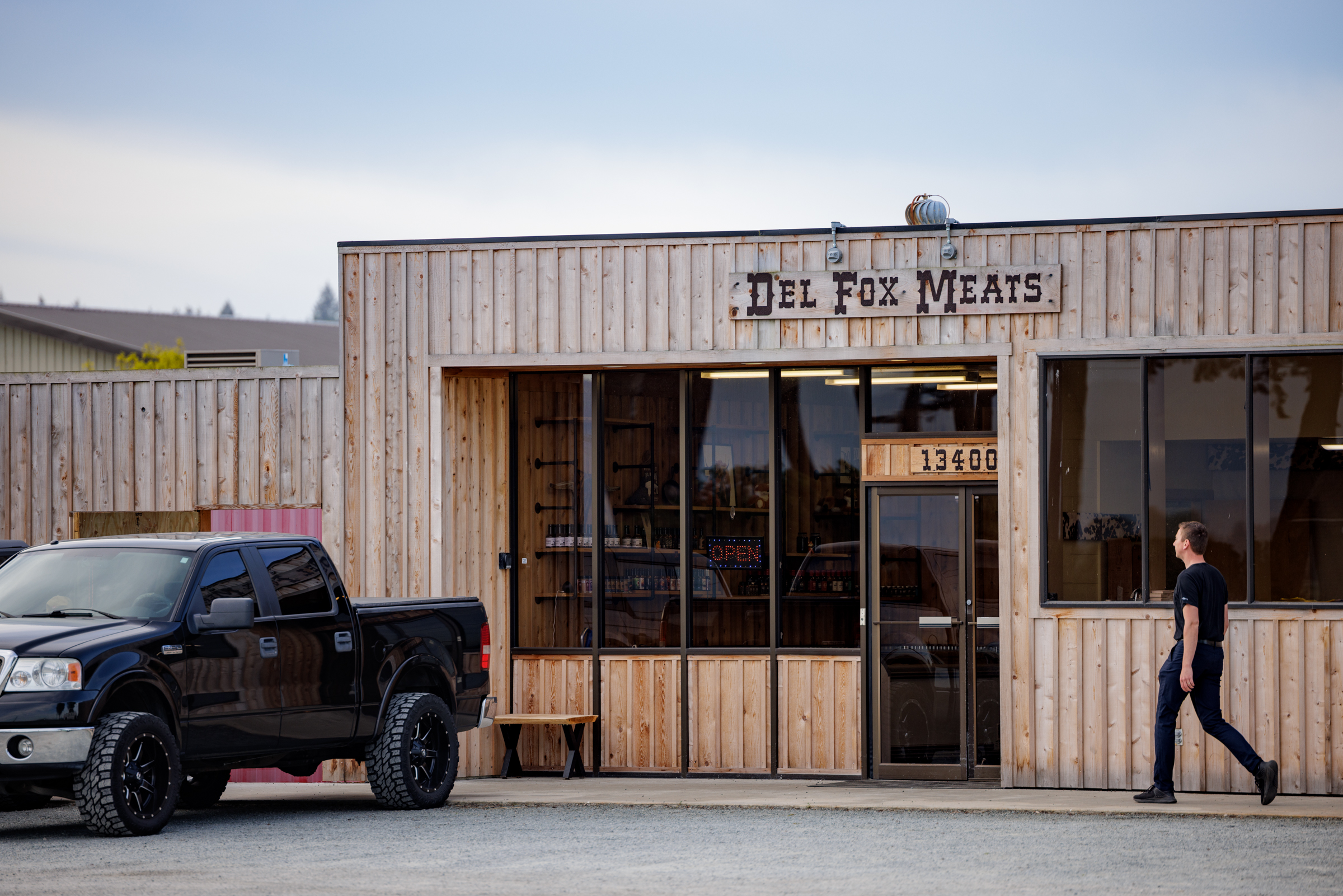
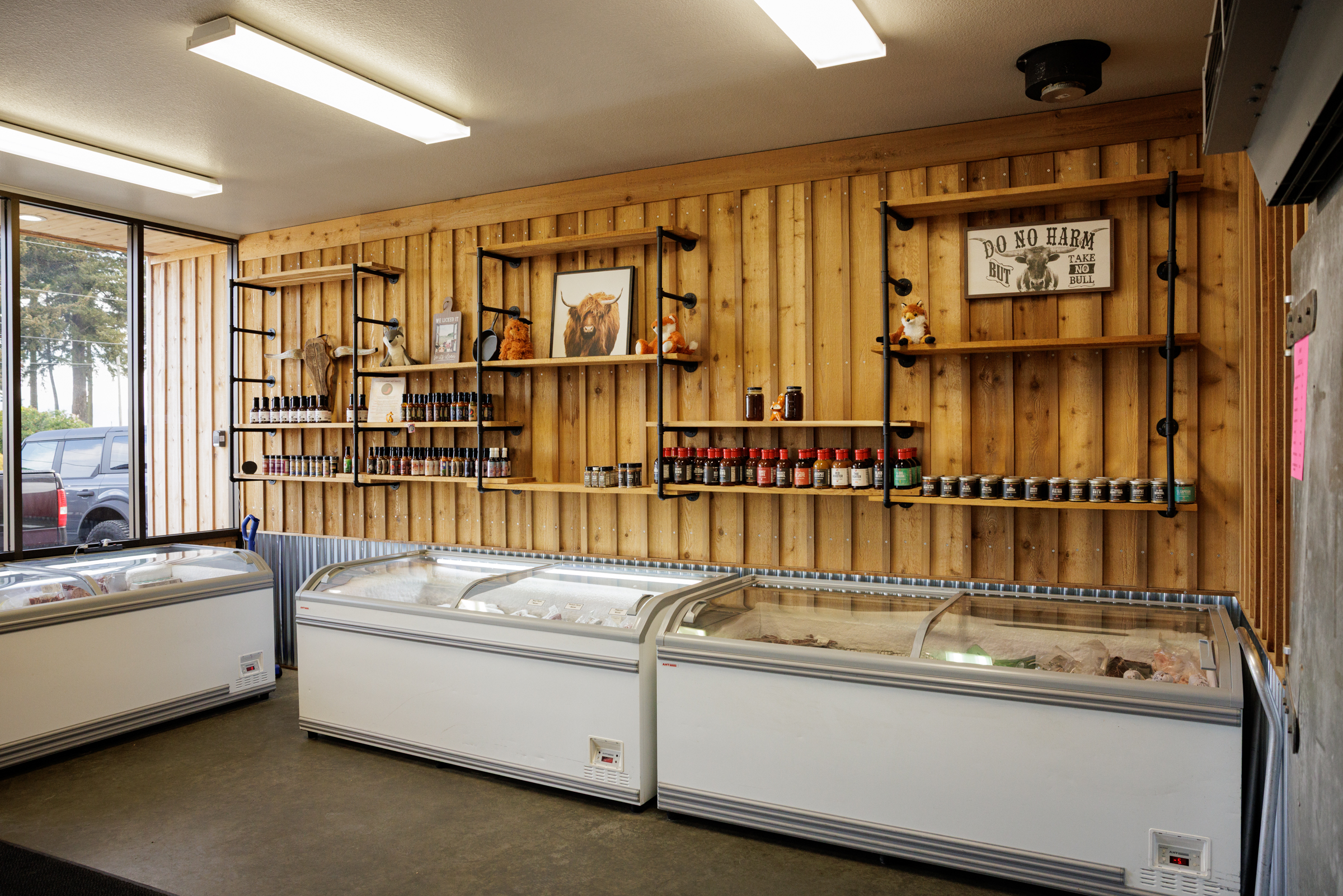
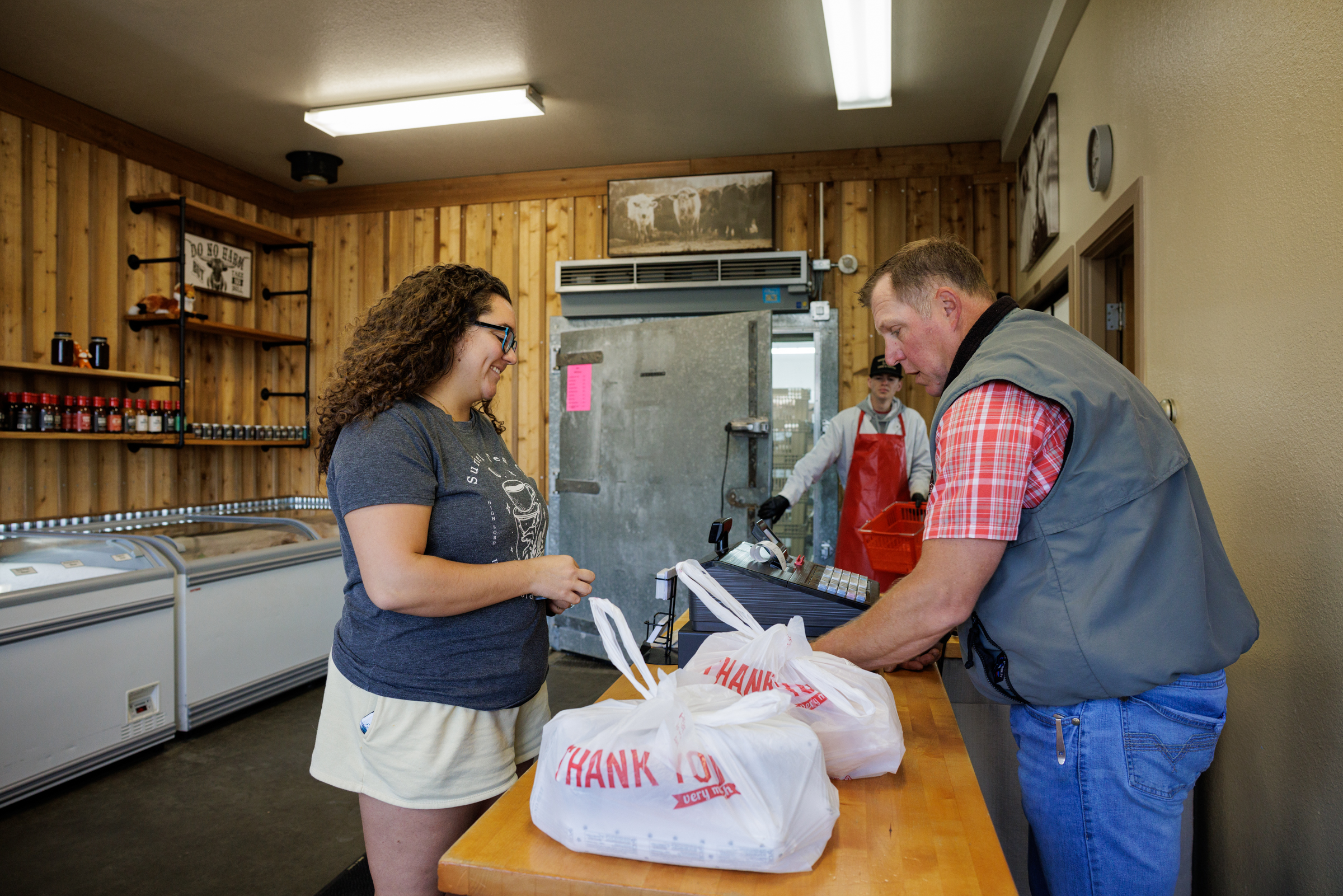
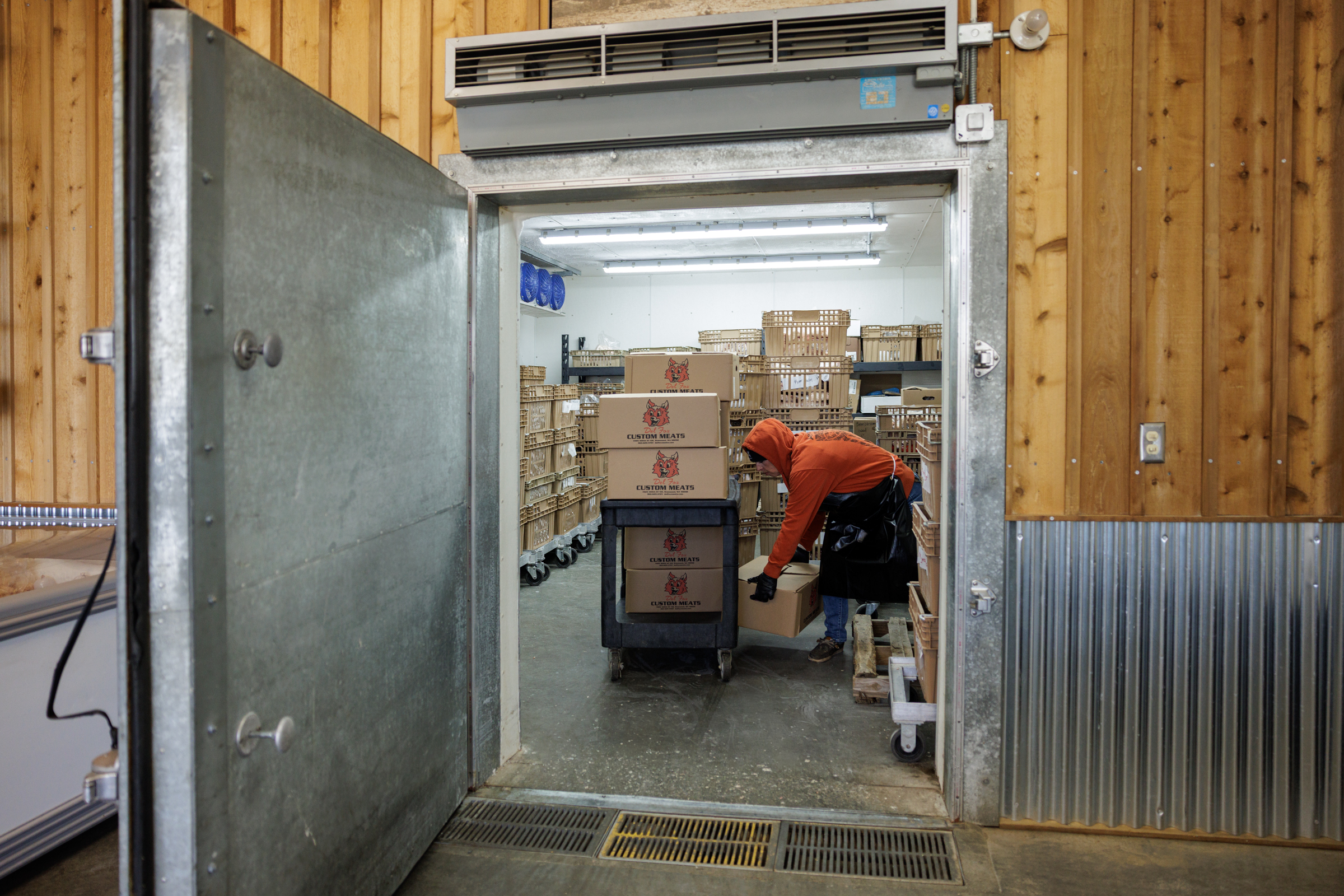

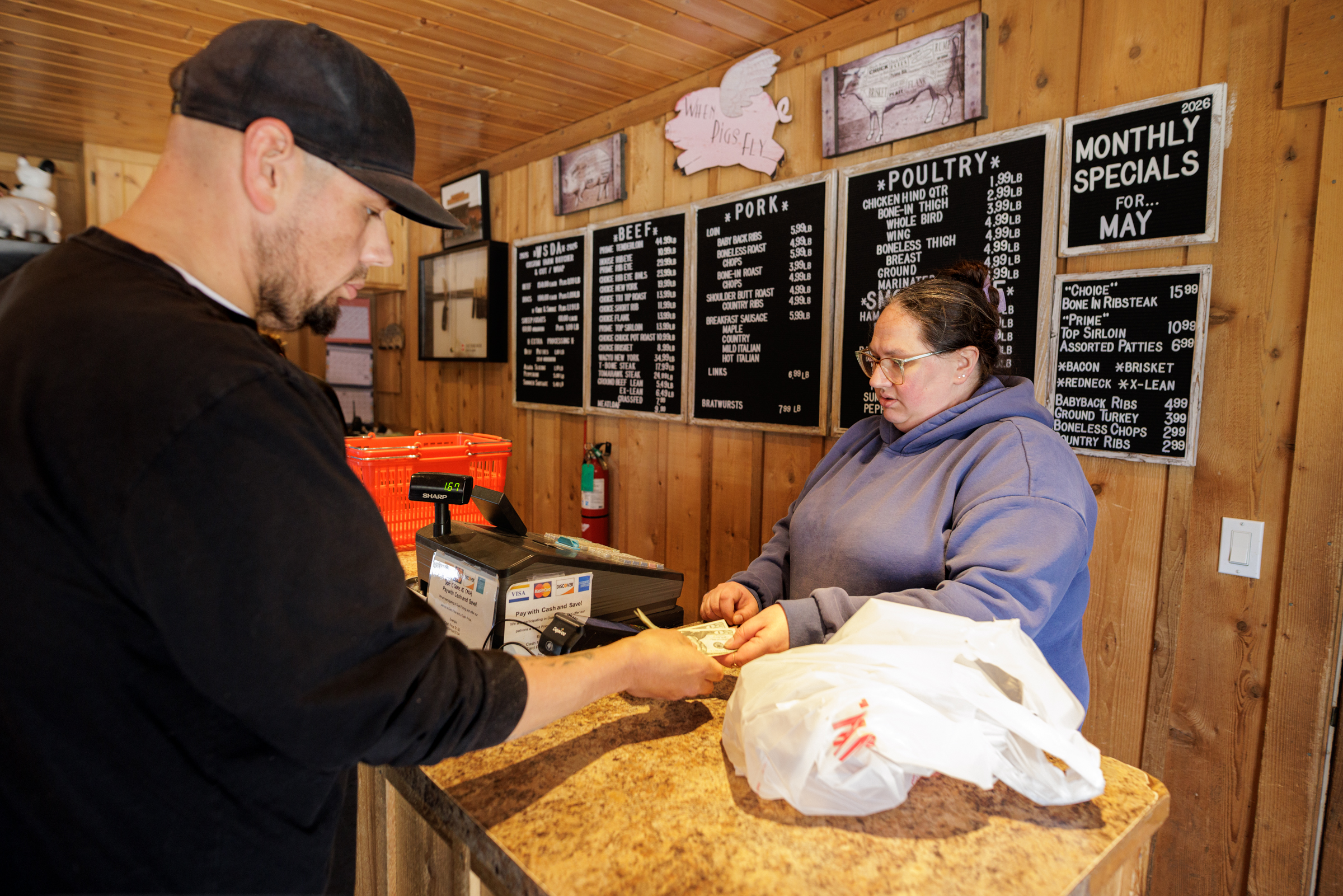
The two retail stores serve another part of the community: local shoppers in Stanwood and Bow, along with customers traveling from Bellingham, Seattle, and the nearby islands, who come to shop for meat to take home.
The two retail stores serve another part of the community: local shoppers in Stanwood and Bow, along with customers traveling from Bellingham, Seattle, and the nearby islands, who come to shop for meat to take home.

Each owner has a clear lane:
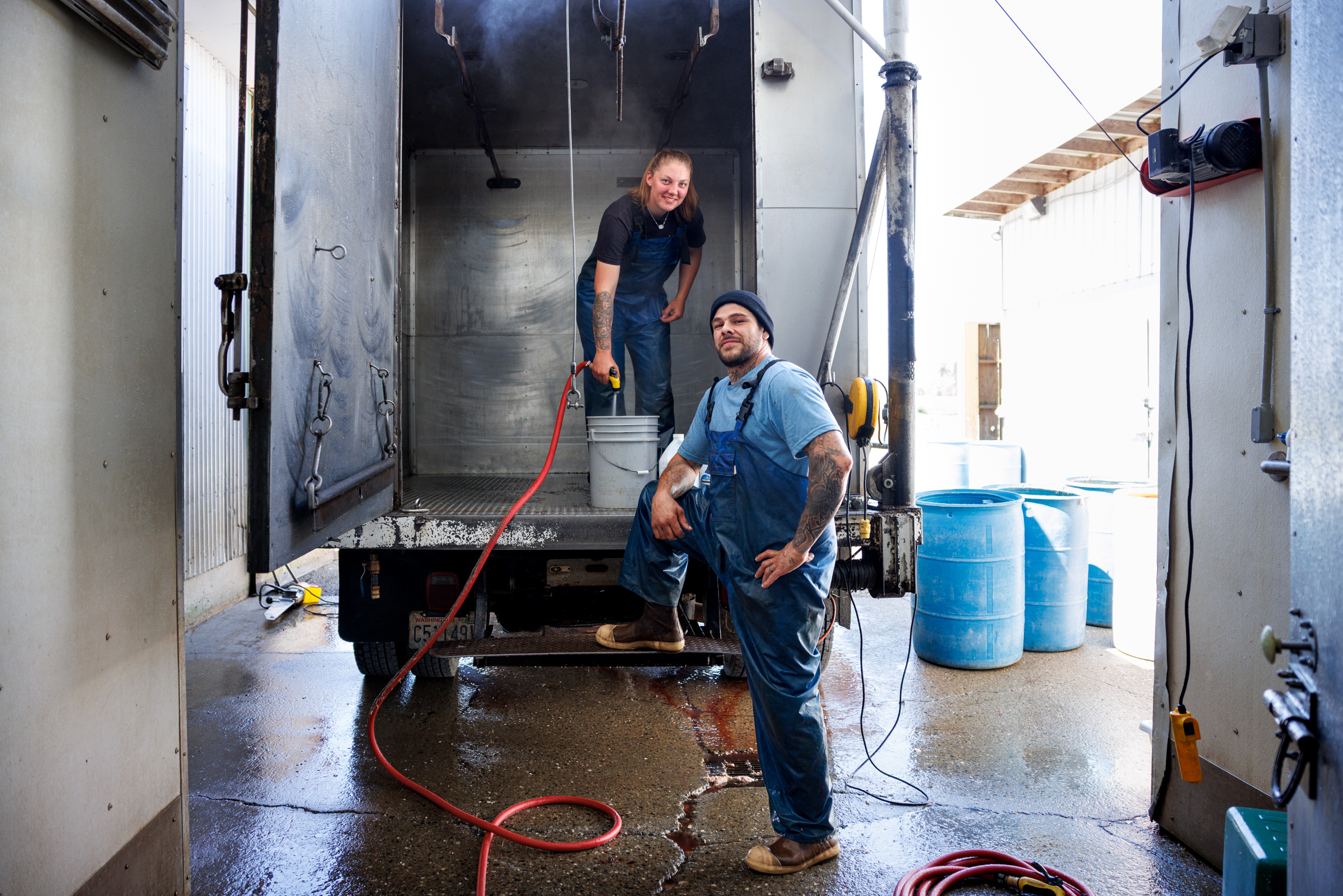
- Pat runs custom slaughter from Stanwood. He still goes out with the custom-exempt mobile slaughter truck and several helpers, working at his own farm site or traveling to customers’ farms. He also develops products for the Stanwood retail store.
- Dawn runs the business side of the Stanwood facility: HR, administration, sales, bookings, and scheduling.
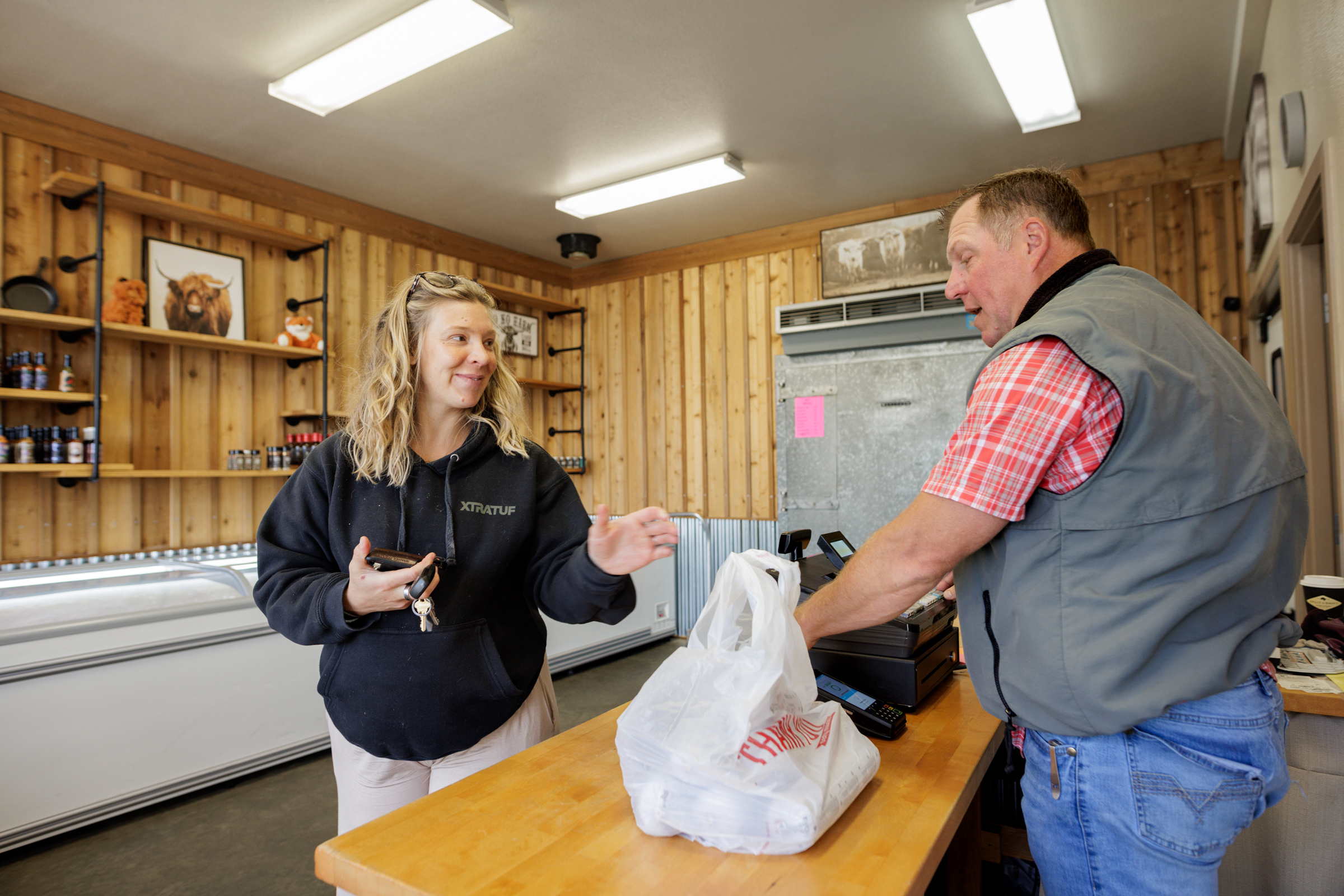
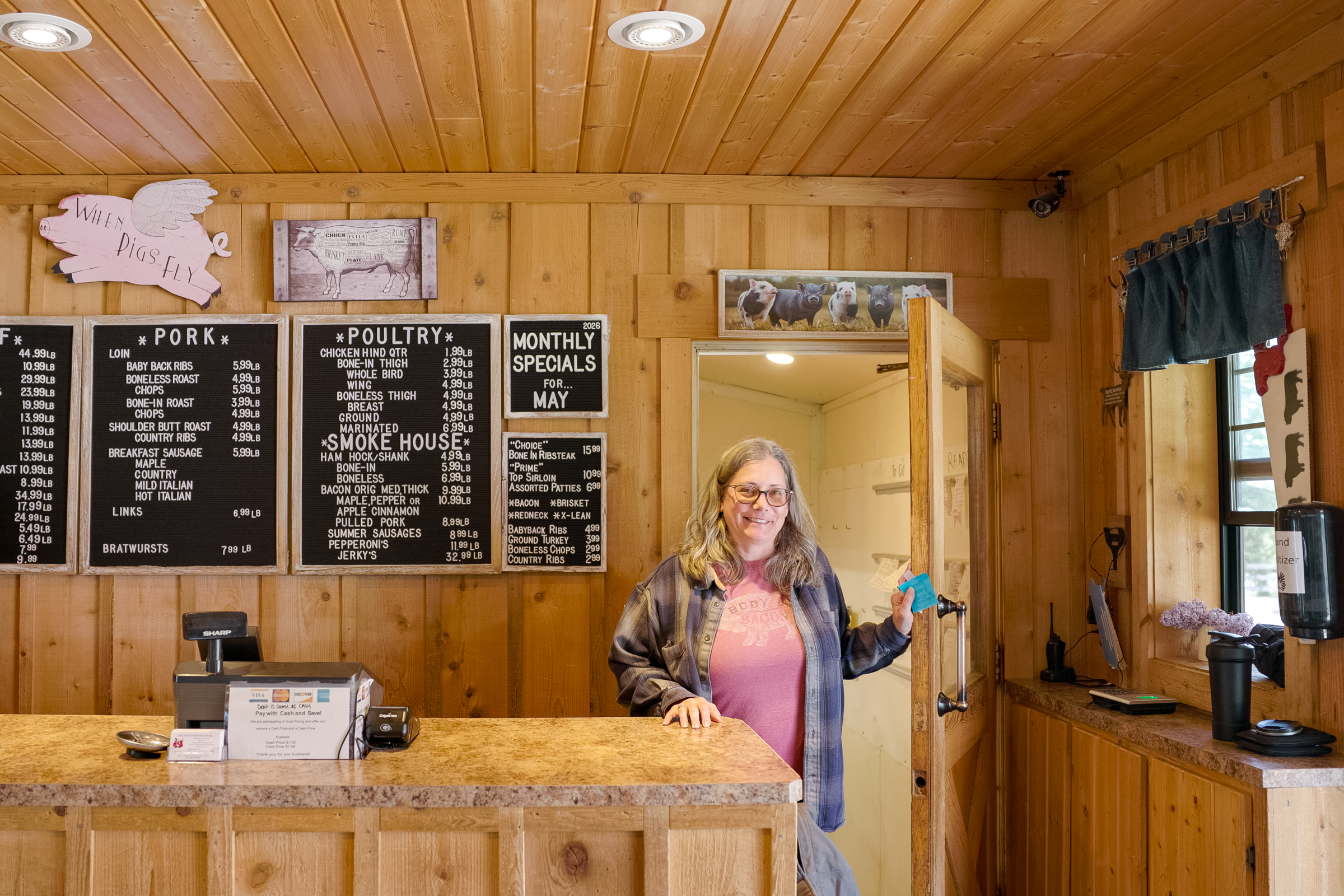
- Byron runs the Bow facility. He operates the USDA-inspected Harvest Module and oversees the Carcass Aging Cooler and brick-and-mortar processing floor. Byron also handles scheduling, customer communication, and finances. He fills in wherever he’s needed, including behind the register at the retail store.
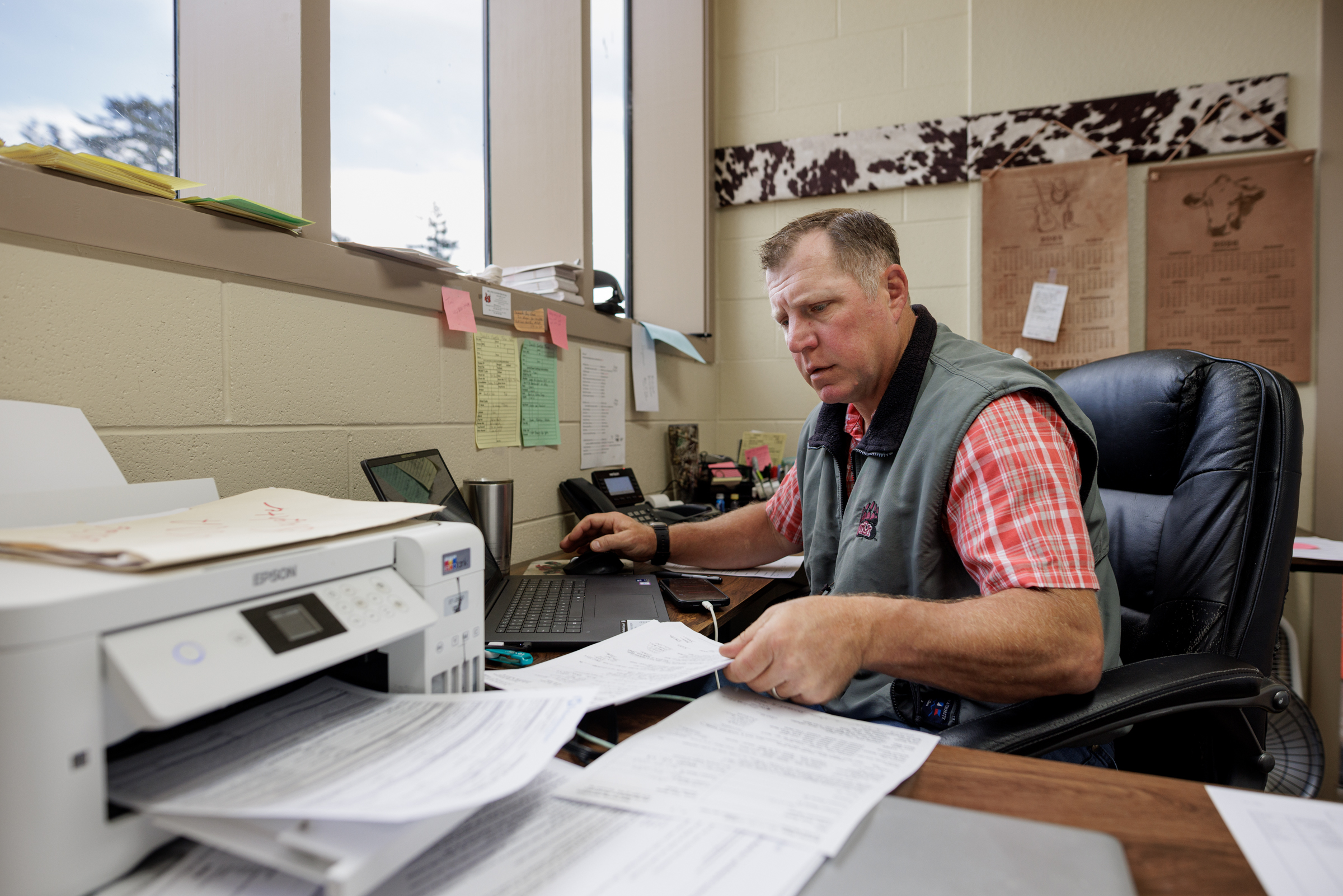
Pat and Byron meet at Stanwood between 5:00 and 6:00 a.m. every morning. They go over sales, the market, and the week’s operations at both shops. Then Byron drives to Bow, where harvest starts at 7:00 a.m.
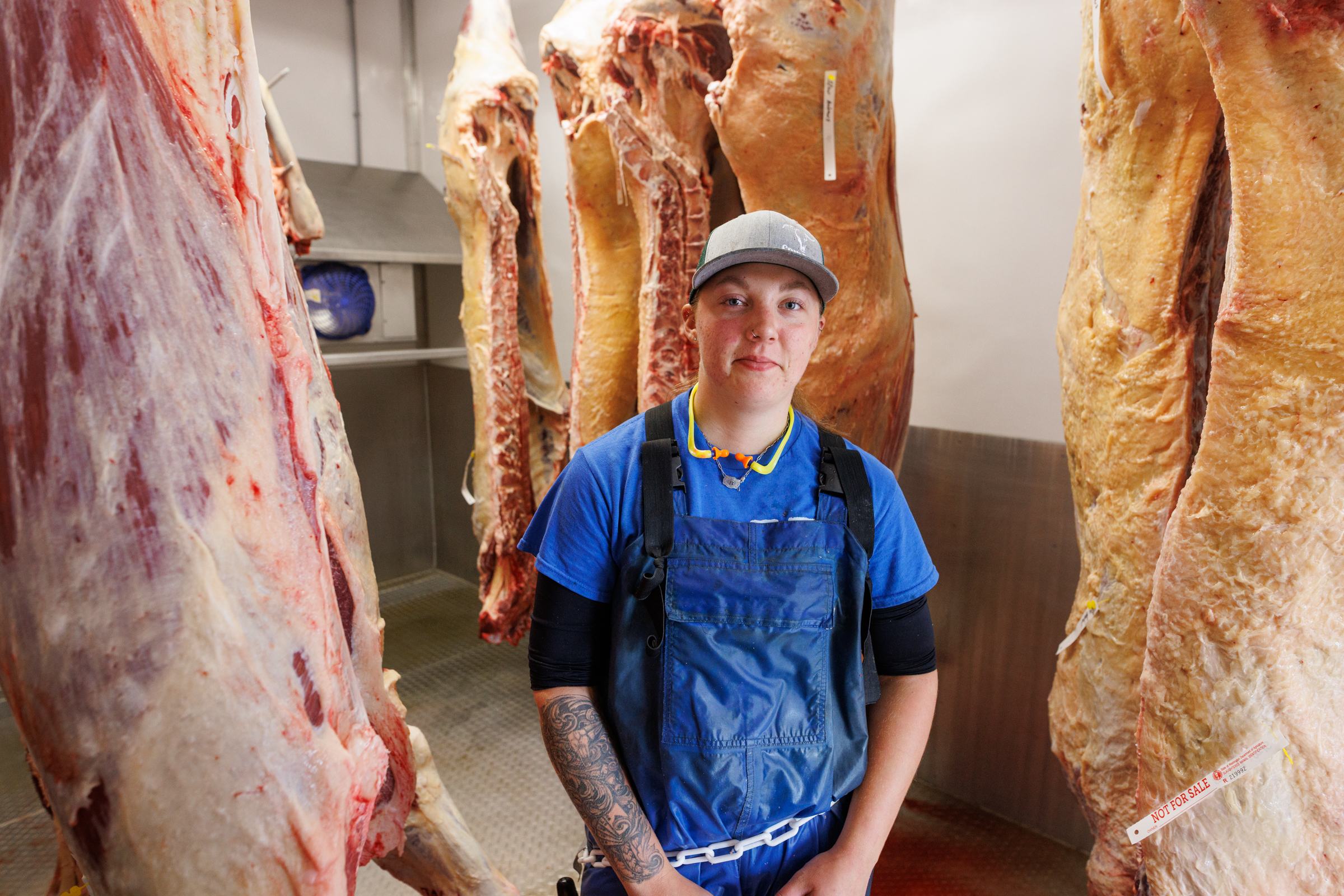
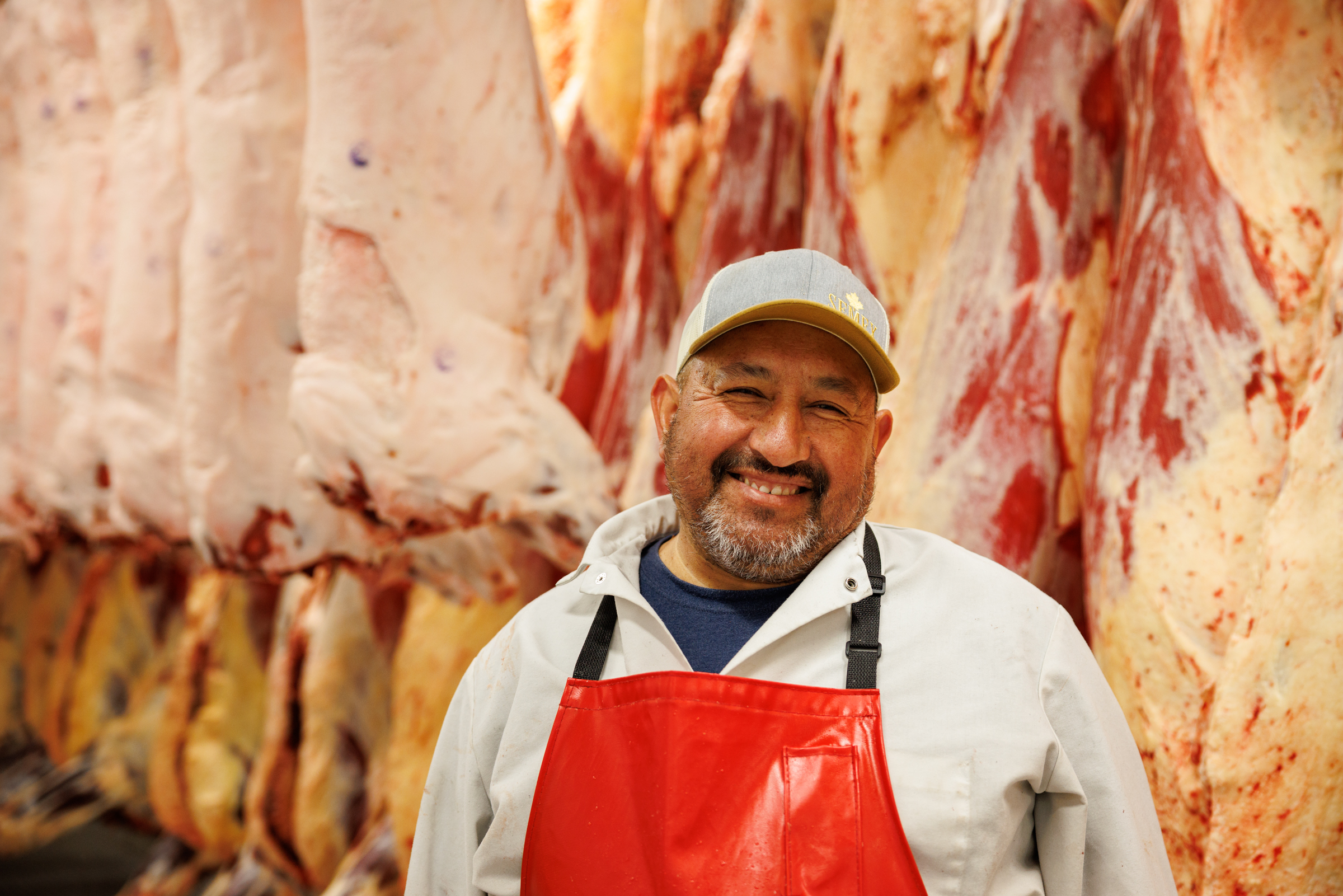
Pat, Dawn, and Byron credit their team for much of the business’s success. Many processors struggle to find and keep employees, so they’ve worked hard to make sure their employees feel valued and want to stay at Del Fox Meats. Many have been there for years—from their mobile slaughter truck crew to their overnight cleaner—and the owners are training the next generation to step up as experienced employees retire.
THRIFT, CREATIVITY, AND RETAIL GROWTH
Pat grew up with very little, and the habits he learned early on are central to how he runs the business. He buys spices in bulk, watches for a deal, and wastes nothing.
“What can you do at a meat shop that somebody else can’t do? We’re all taking an animal apart and making it into pretty little packages, unless we’re making something that’s cooked, or ready to cook, or seasoned. Then we can do things differently.”
Pat Cairus, Co-Owner of Del Fox Meats
“What can you do at a meat shop that somebody else can’t do?” he asked. “We’re all taking an animal apart and making it into pretty little packages, unless we’re making something that’s cooked, or ready to cook, or seasoned. Then we can do things differently.”
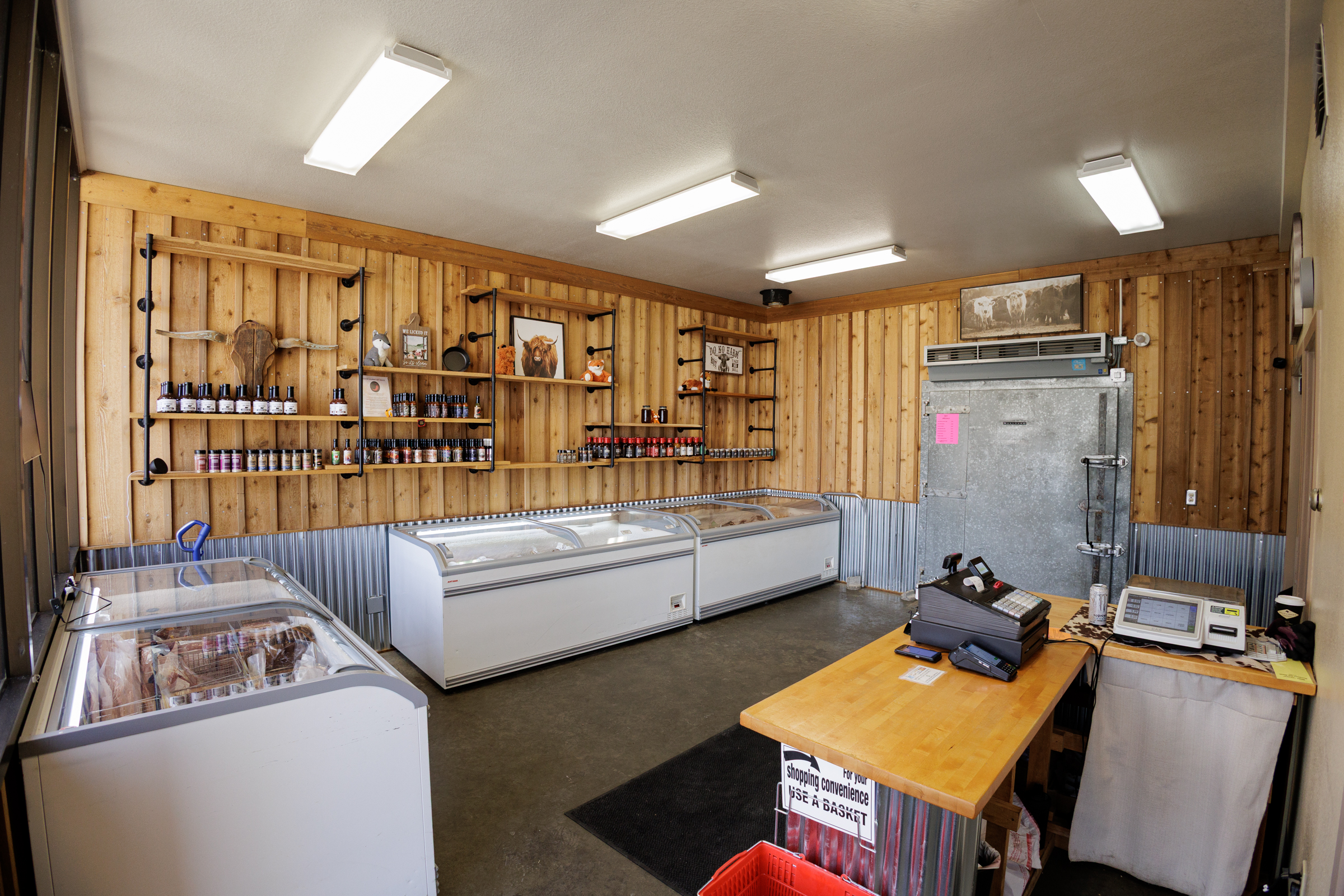

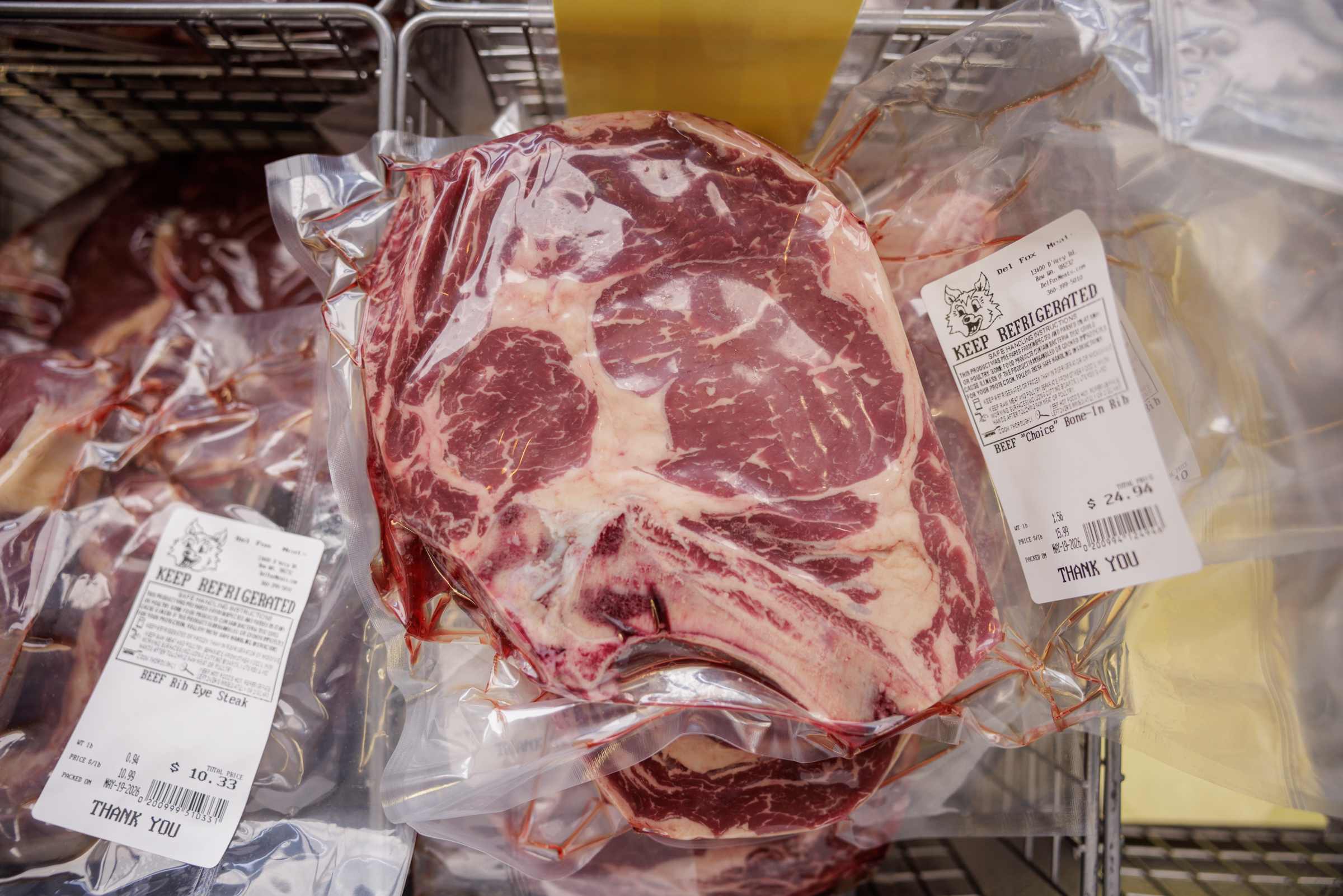
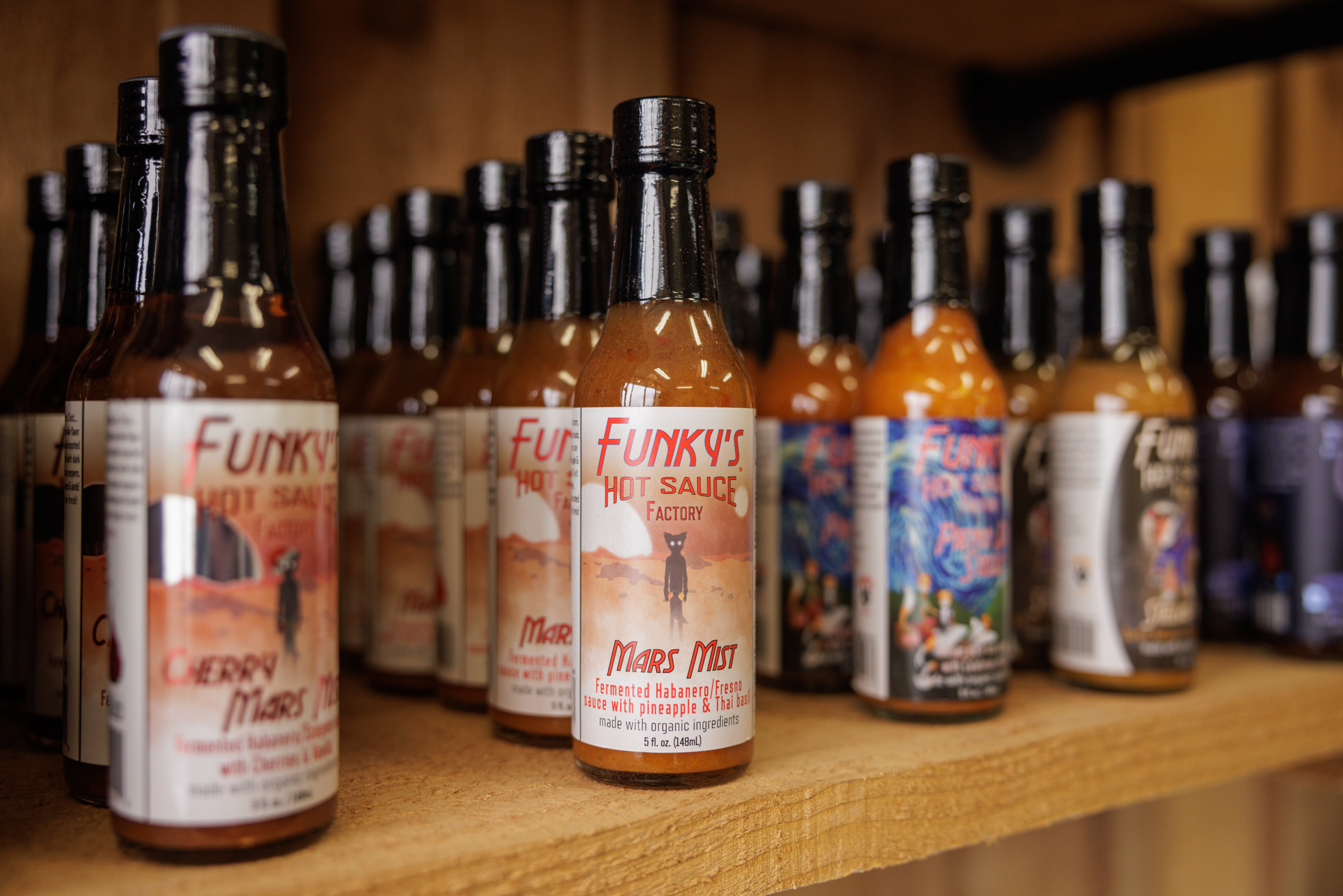
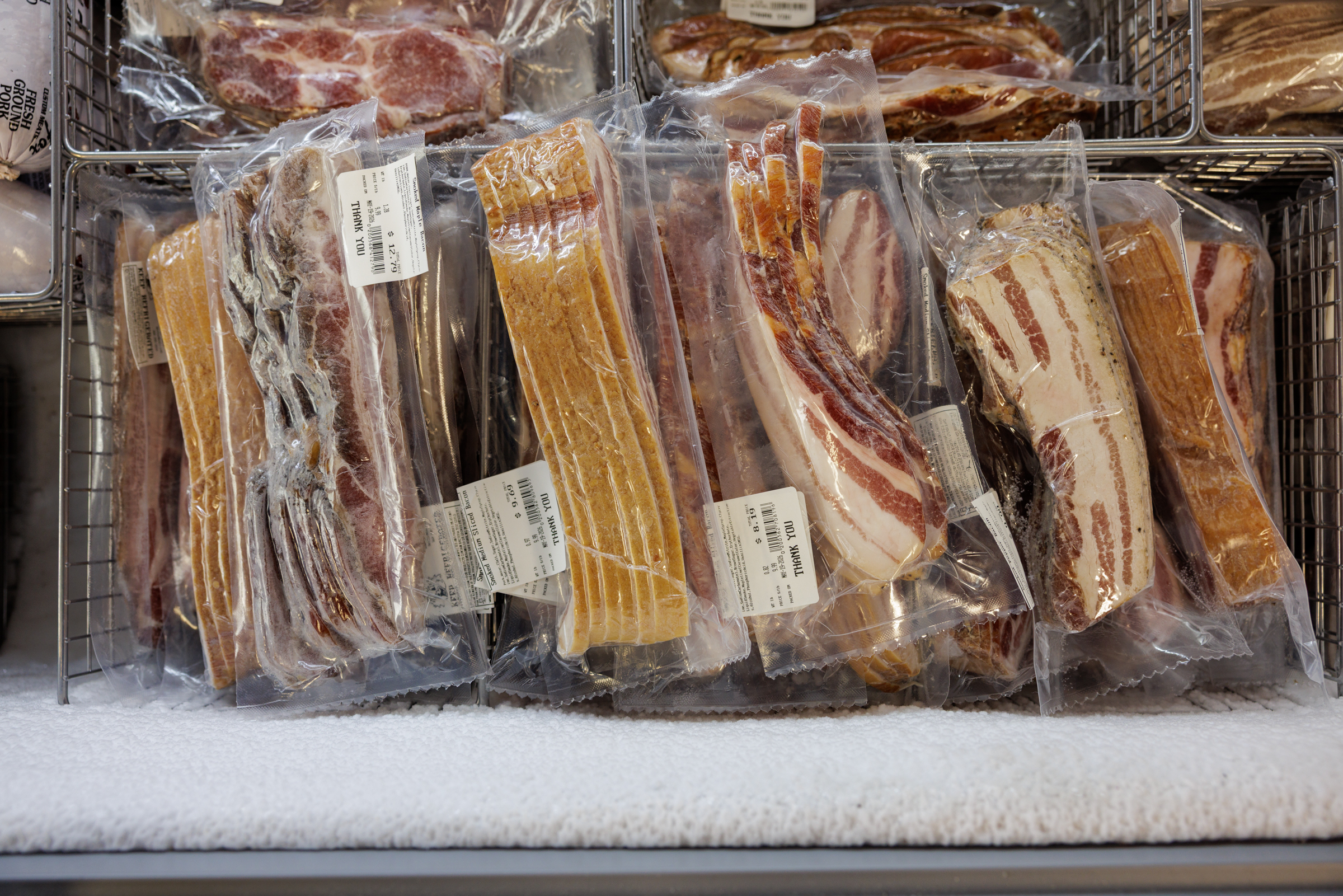
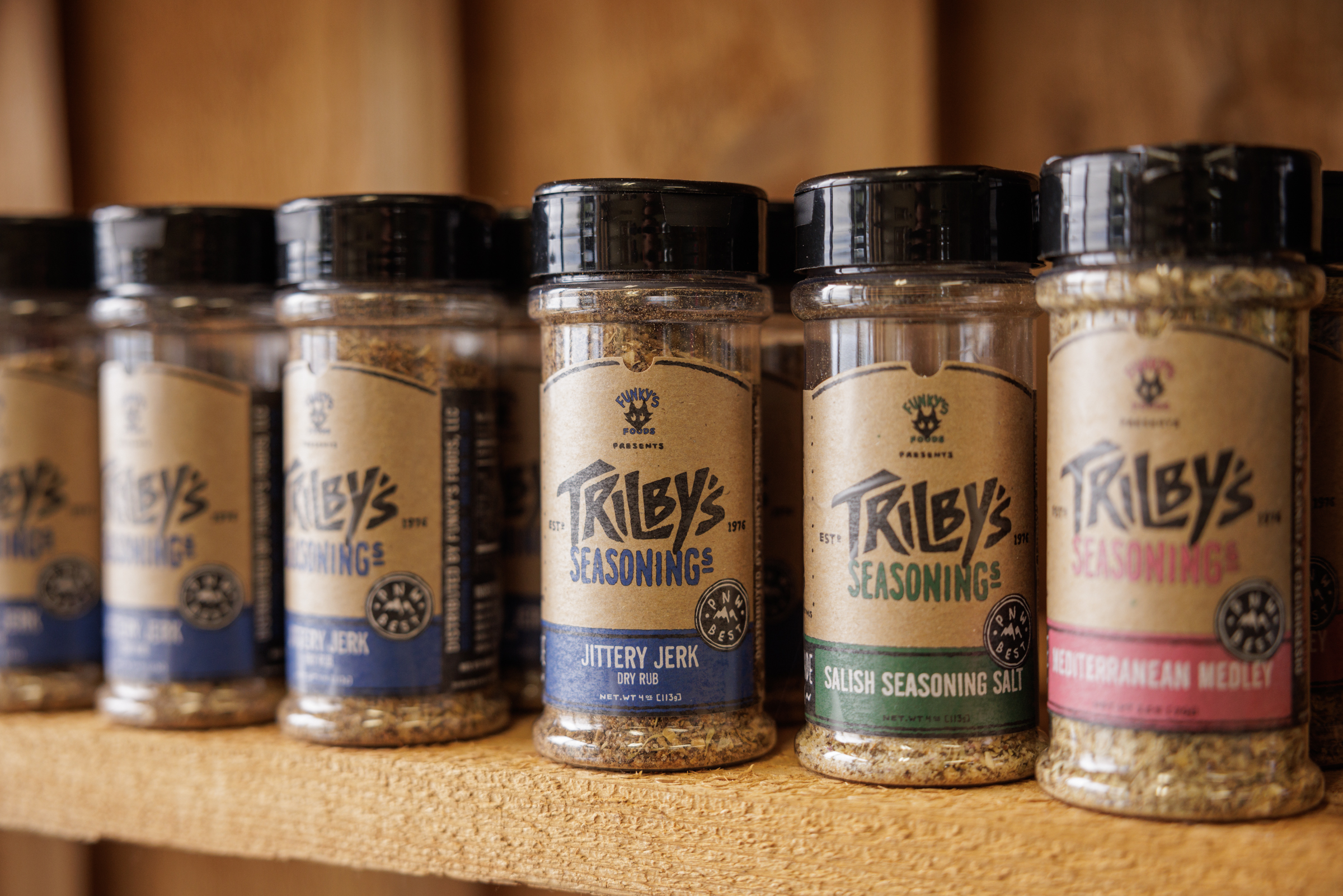
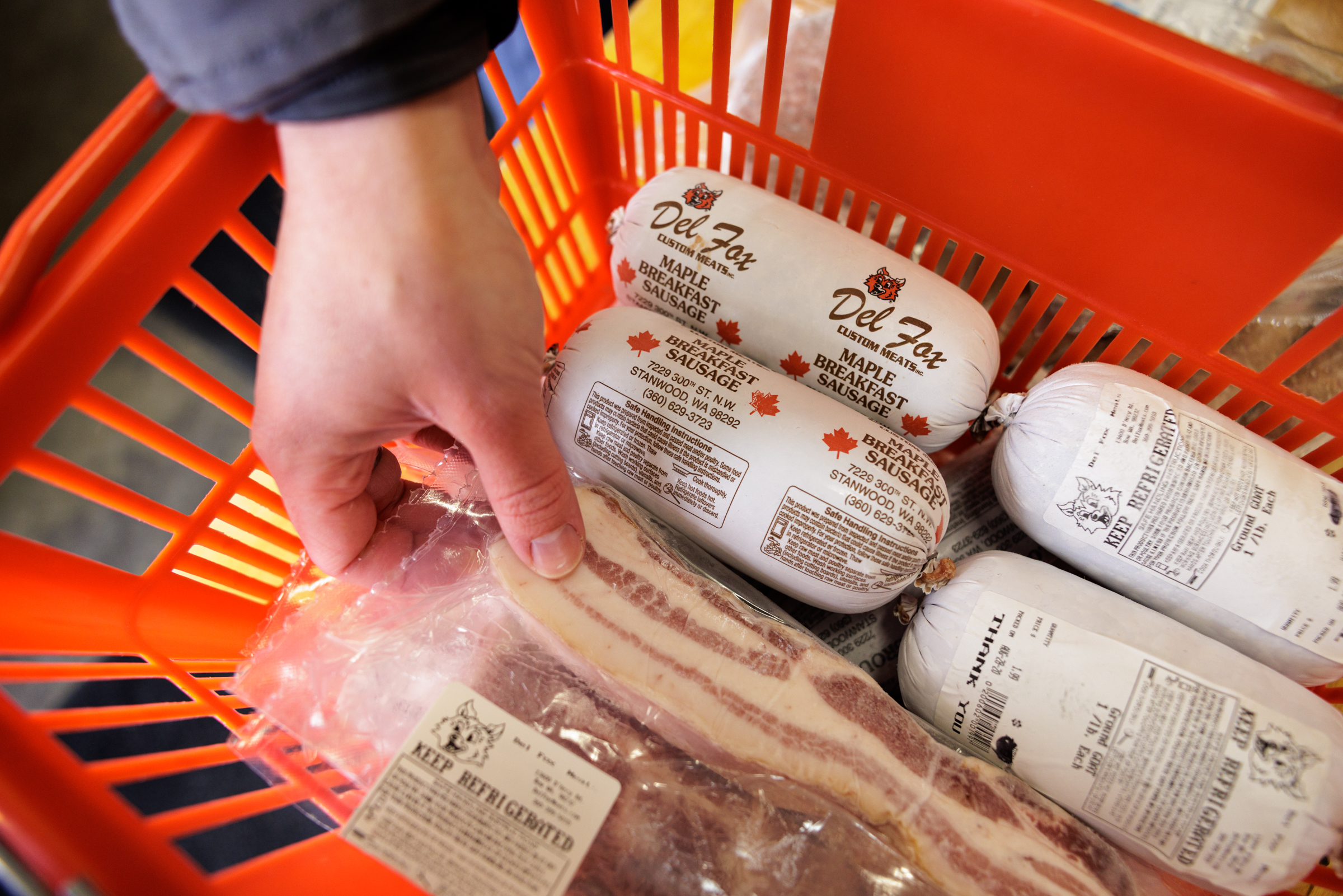

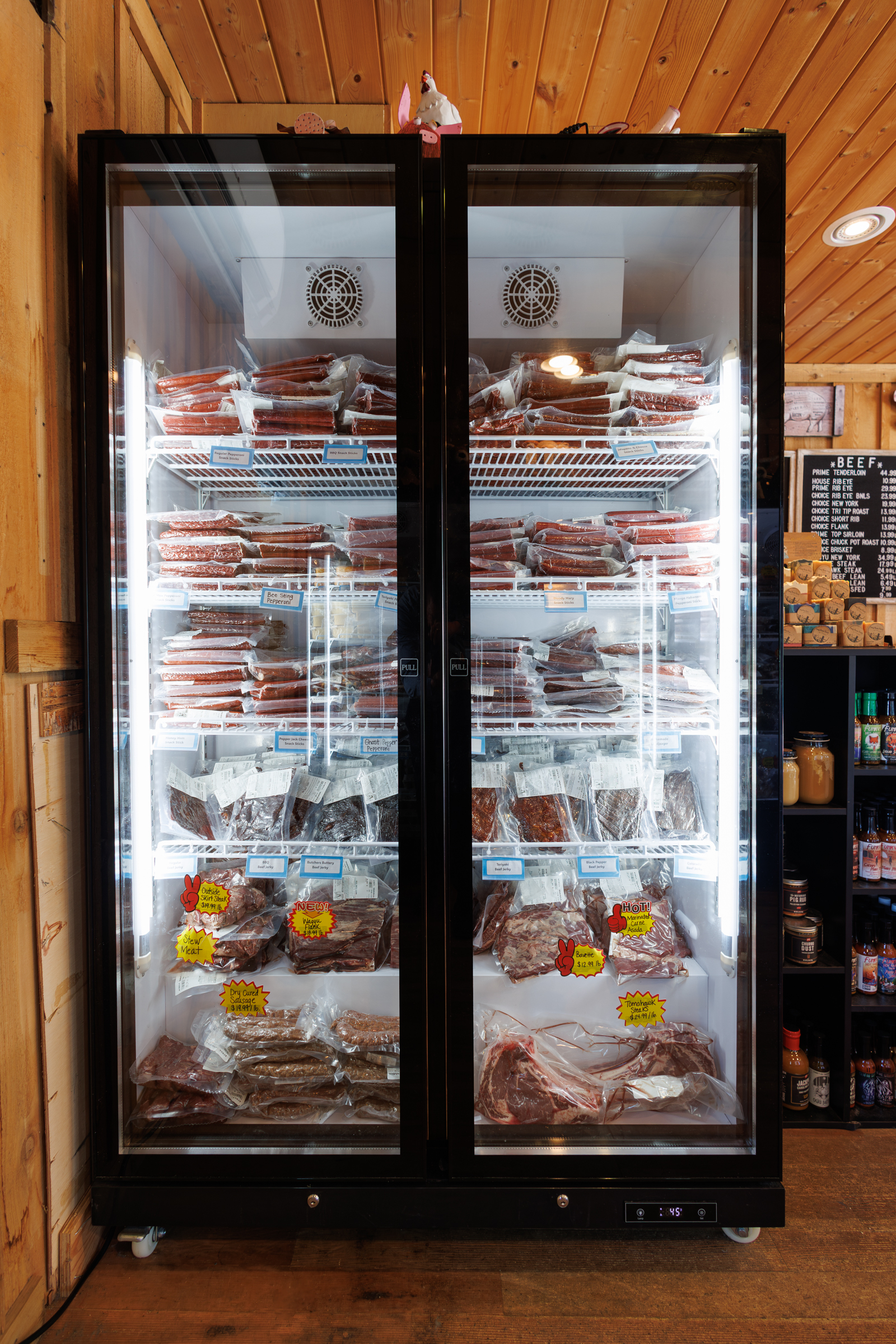
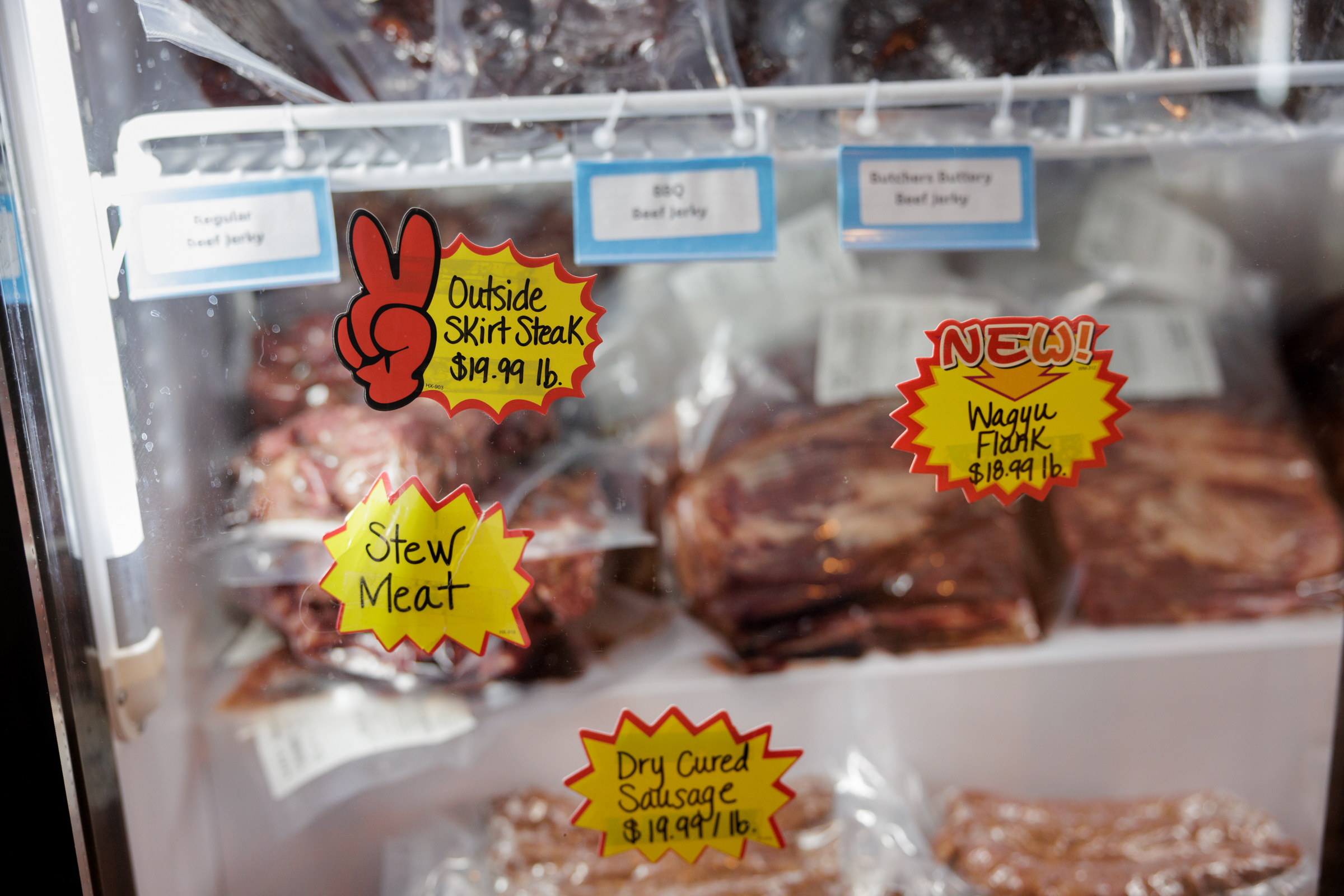
Both the Stanwood and Bow retail stores carry beef, pork, lamb, chicken, and seafood, from steaks, roasts, and ground meat to jerky, bacon, and snack sticks. Local honey, sauces, and spices round out the selection.
Pat’s thrift and creativity have helped him find a market for more than the familiar cuts. He took what the shop had in abundance—heart, liver, and inexpensive trim—and turned it into ground pet food. Bones left over from processing—cut, packaged, and sold as dog bones—paid for a storage shop he built.
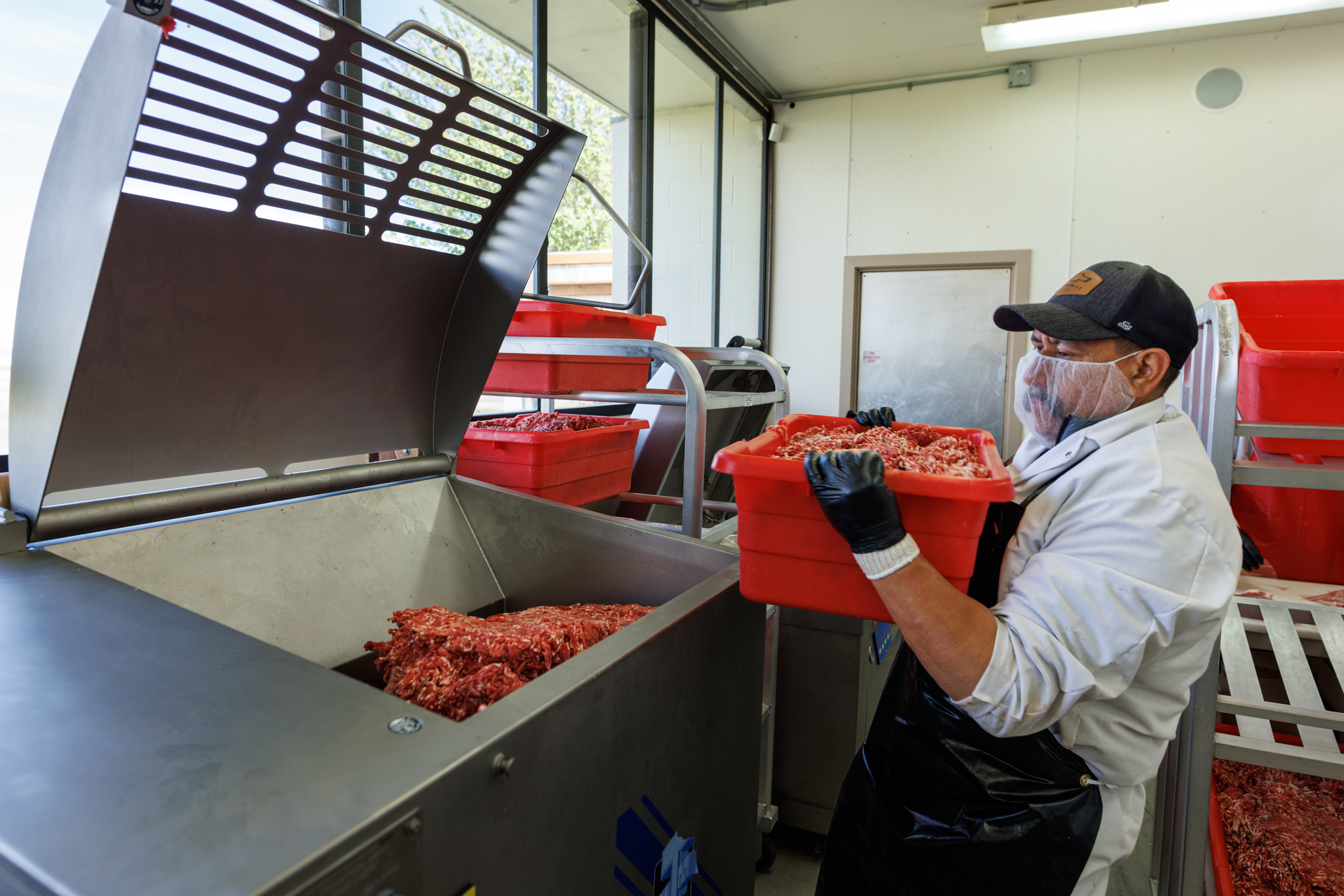
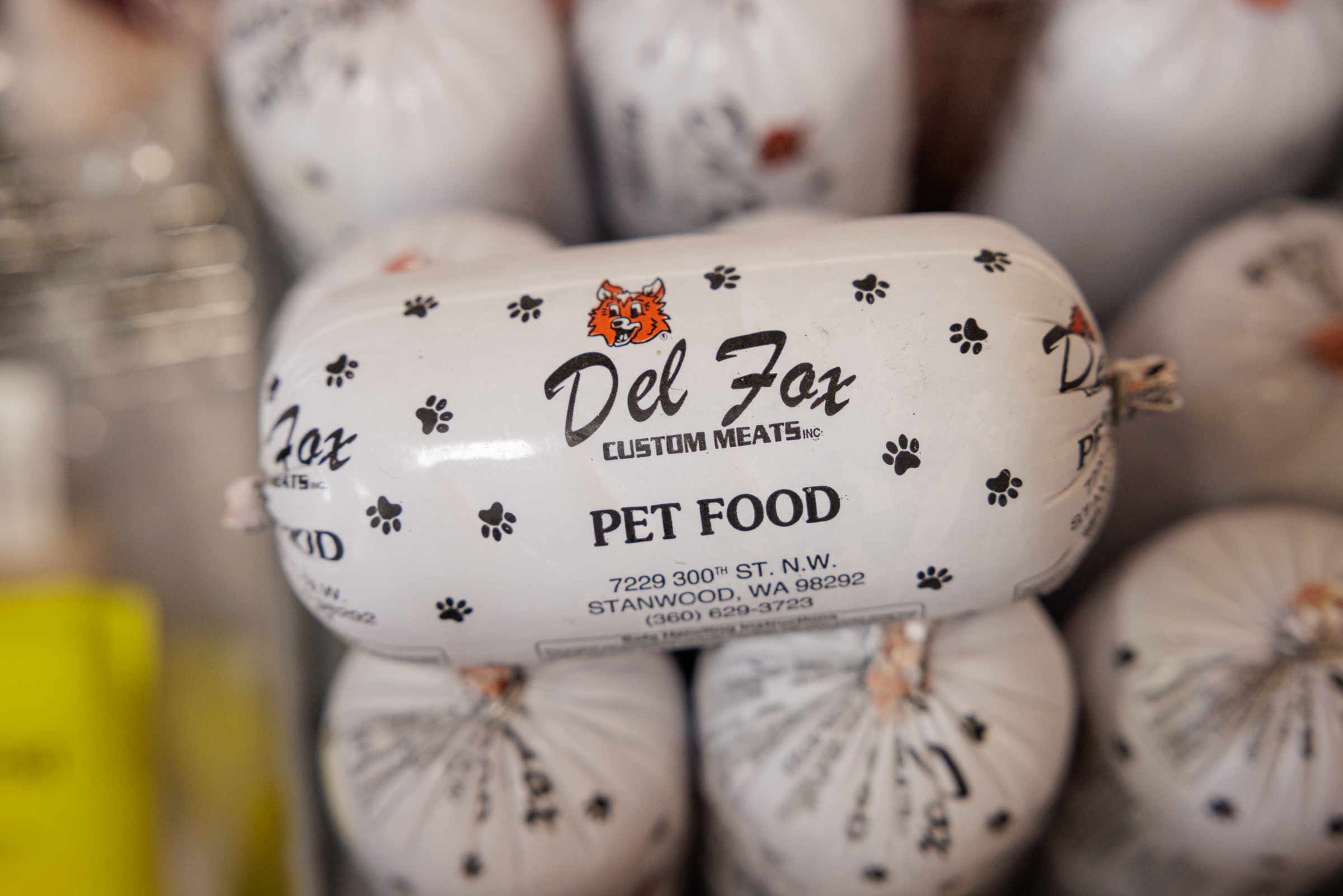
“With a little bit of creativity, we were able to build a retail business that far exceeds our custom and USDA business,” Pat said.
Pat and Byron have also had success selling ready-to-eat meats. They started by smoking 150 pounds of brisket on a Saturday in 2018, posting it on Facebook, and nearly selling out by the end of the day. Now they smoke 800–1,000 pounds every Saturday and sell out in a few hours.
THE NEXT CHAPTER
Decades of serving their community have earned Del Fox Meats a loyal customer base spanning generations. “I’ve butchered for some of these folks since 1983,” Pat said. “Their kids are raising animals. The grandkids are there helping.”
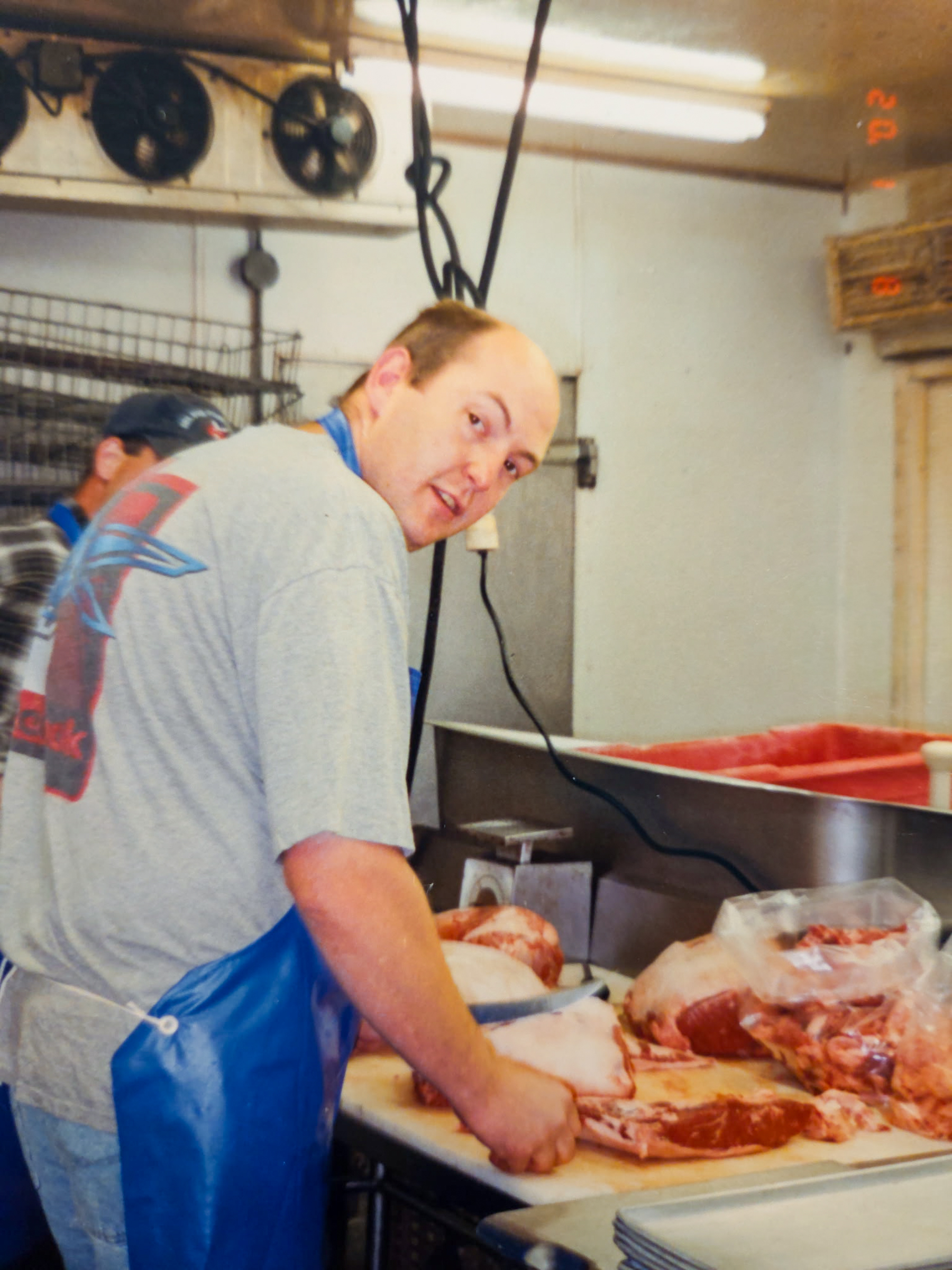
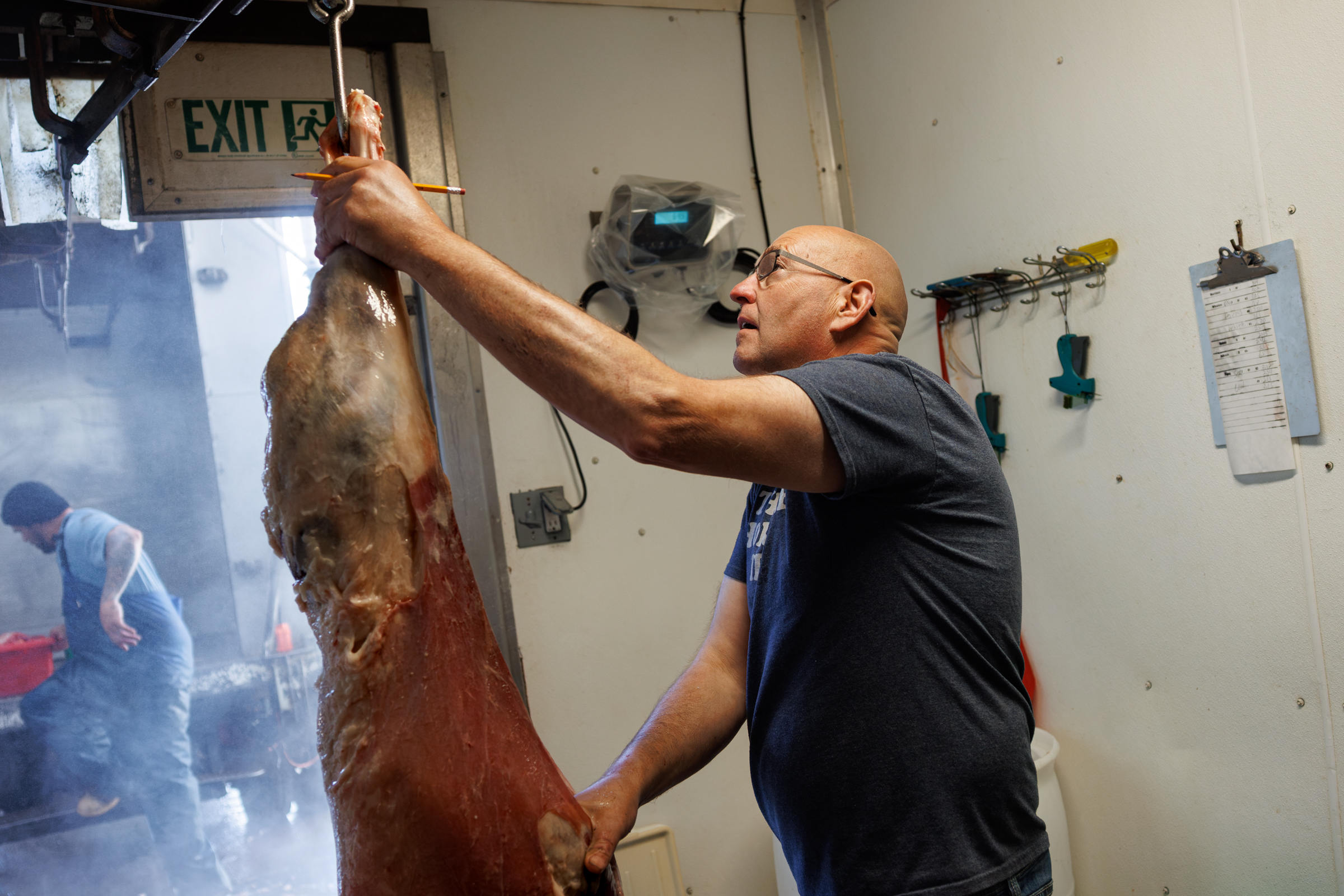
Pat believes small businesses can adapt to meet the needs of the communities they serve. “I can bend my business to meet the economic condition you’re in,” he said. “We’re going to get you the food you need to feed your family. Period.”
“I can bend my business to meet the economic condition you’re in. We’re going to get you the food you need to feed your family. Period.”
Pat Cairus, Co-Owner of Del Fox Meats
Pat and Dawn are easing toward retirement. The plan for what comes next—including Byron’s purchase of the remainder of the business—is already in motion, because Del Fox Meats matters to them, to Byron, and to their community as a whole.
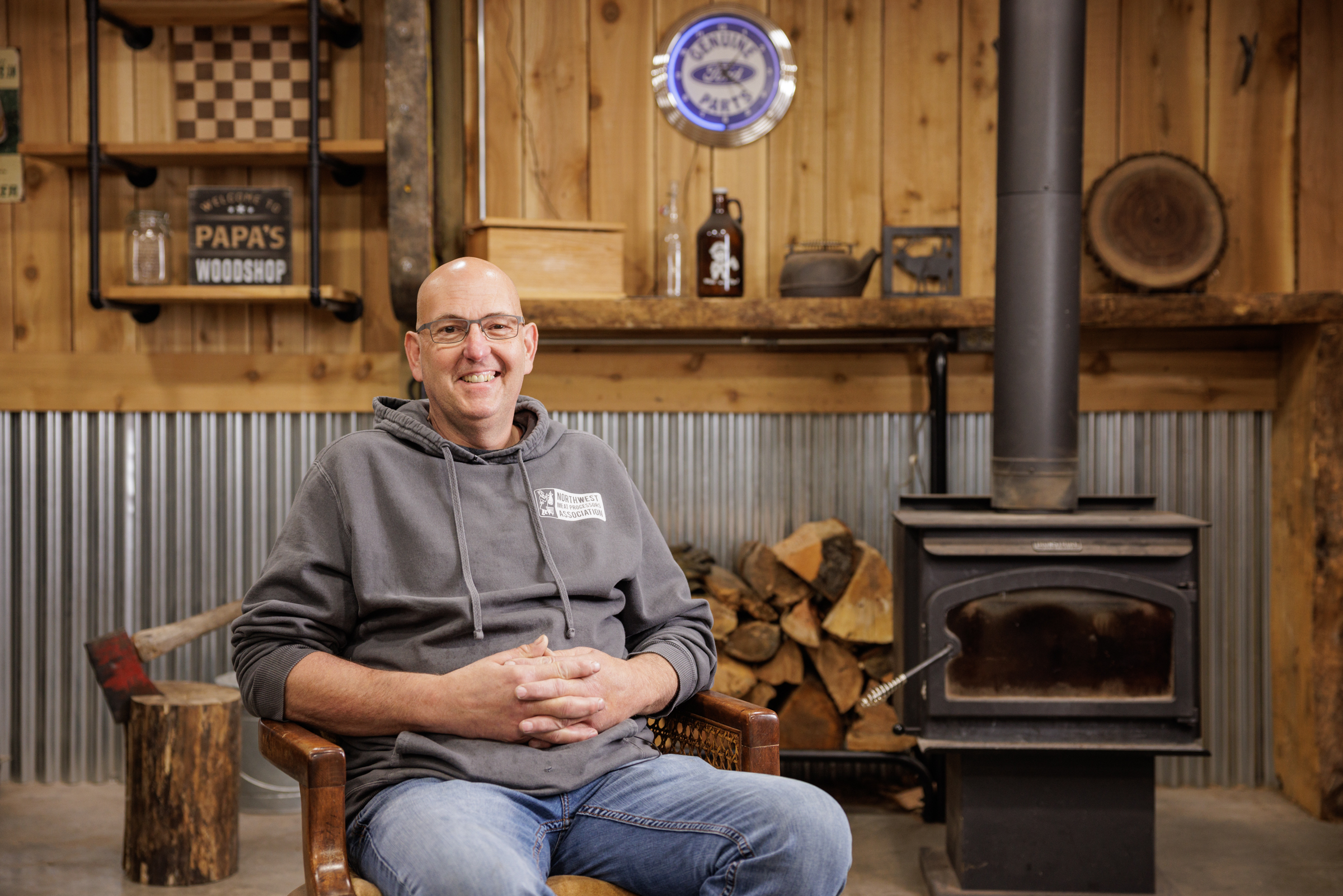
“If somebody doesn’t step up and take that business over, where is it all going to go?”
Byron Hill, Co-Owner of Del Fox Meats
Byron knows what is at stake across the industry. Meat processing was once a common career, he reflected, but many experienced butchers are retiring. “If somebody doesn’t step up and take that business over, where is it all going to go?”
Recalling the changes he made over the years, Pat isn’t asking Byron to keep things the way he did them. He’d like Del Fox Meats to stay in the community and for Byron to “do his own thing” with the business. “There’s nothing more fun than making your own name out of it.”
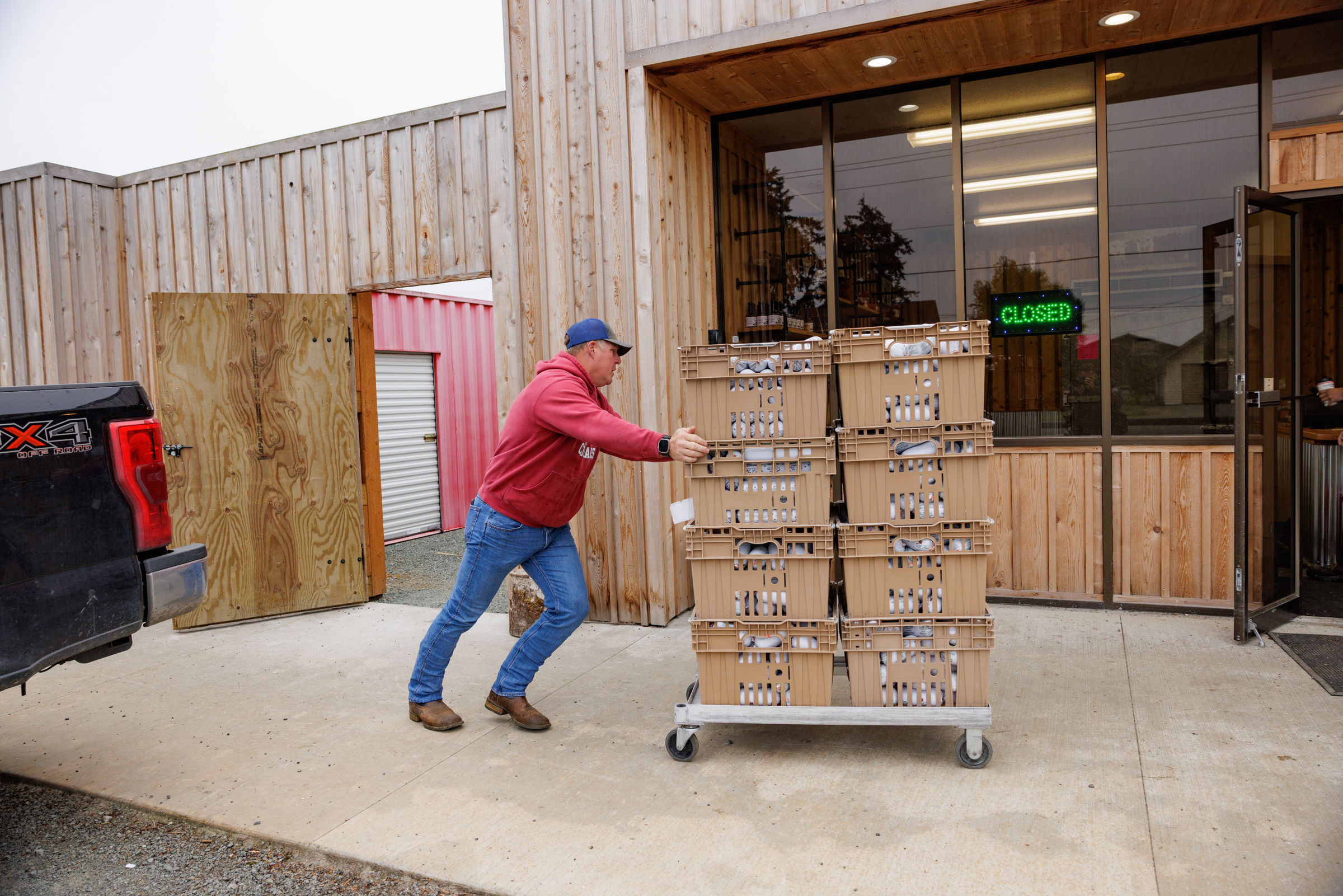
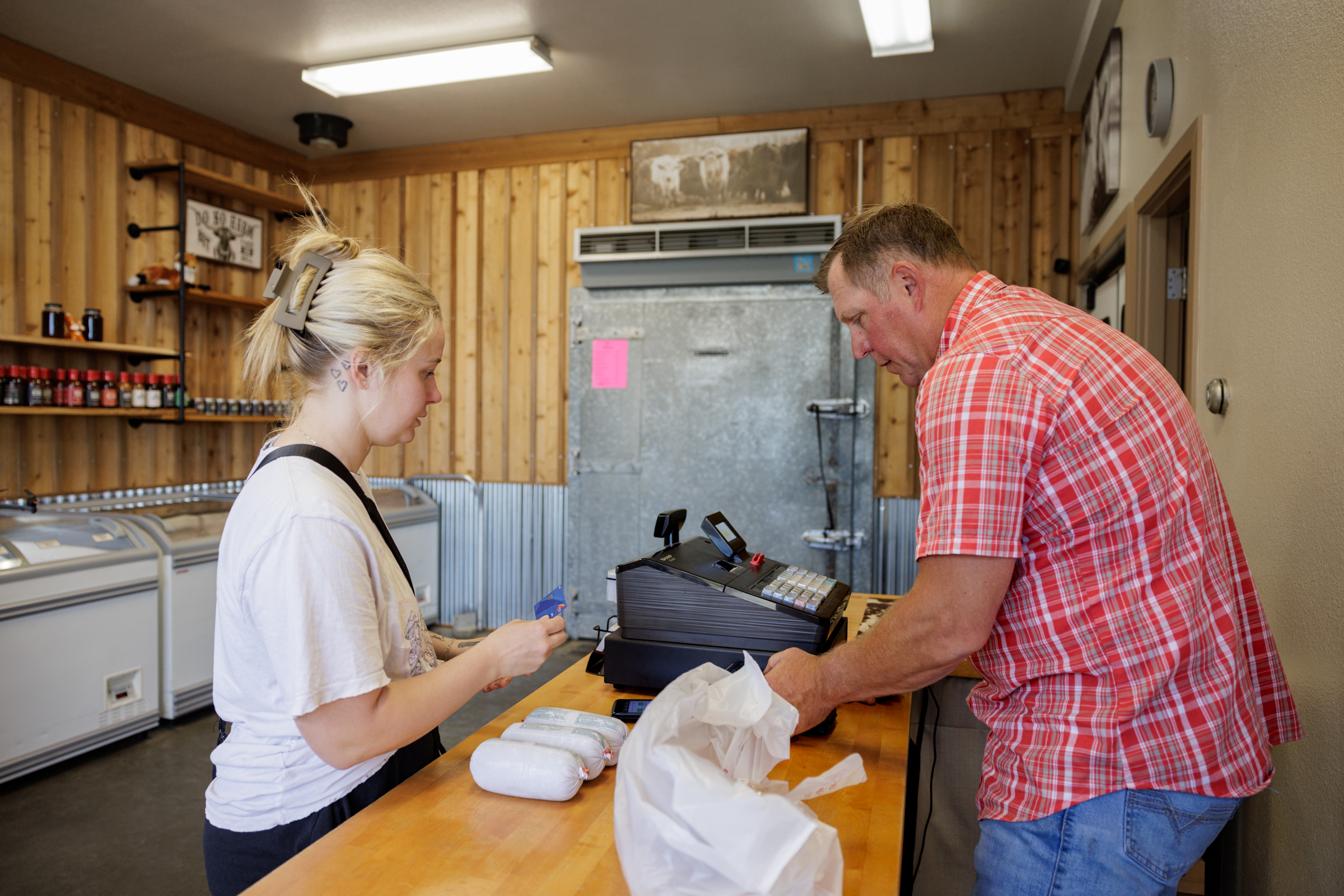
Years ago, Del Fox sold his shop to a kid who had grown up working there to help provide for his family. Pat carried the business into the next generation, changing nearly everything about how it ran. With retirement now in sight, he’s eager to see Byron make the business his own.
Visit Del Fox Meats here. Learn more about Friesla’s Ecosystem of Services here.