
The Martha’s Vineyard Times recently featured a new initiative from Tick Free MV and the Martha’s Vineyard Agricultural Society to expand local meat processing capacity on the Massachusetts island.
The project includes two Friesla Mobile Harvest Units configured specifically for deer processing—one for harvest and another equipped to process meat into finished product. The new capacity will enable increased deer harvest and venison donations while strengthening the local food system and expanding the island’s processing capabilities for the future.
Read the full story from The Martha’s Vineyard Times below.
FROM THE MARTHA’S VINEYARD TIMES
Island steps up its processing capacity as hunting season nears
Tick Free MV and Agricultural Society in partnership to upgrade deer cooler to full-fledged meat processing facility.
By Hayley Duffy | September 16, 2026
Originally published by The Martha’s Vineyard Times. Reprinted with permission.
As an expanded hunting season approaches, an offensive aimed at managing the deer herd is bracing and hoping that the Island harvests and processes more venison.
New plans for the bold initiative, which is led by Tick Free MV and the Martha’s Vineyard Agricultural Society, were announced this week. It is aimed at confronting the public health crisis caused by a surging deer population that serves as a primary vector for ticks and tick-borne conditions, including alpha-gal syndrome.
The strategy has the added benefit of addressing another crisis — increasing food insecurity on-Island and across the state.
The two lead organizations announced this week that they used $1.5 million in philanthropic funds to expand the Island’s meat-processing capacity — for both deer and eventually livestock — year-round.
Phase one of the project, a tangible touchpoint of Tick Free MV’s mission from the start, includes a temporary network of four trailers, two of which were custom-designed on the West Coast to process as many as 20 to 30 deer a day, a step up from what is currently available on the Island. The local nonprofit, which is less than a year old, also purchased a refrigerated cooler trailer and another trailer for office space. All four trailers will be located on the Agricultural Society’s grounds in West Tisbury, and those involved are hopeful that they will be operational for this coming hunting season. Tick Free MV fundraised for the entire project, and is gifting the equipment to the society.


This year, there is an early hunting season that starts on Sept. 21 and ends on Oct. 1. The rest of the hunting season continues throughout the fall and winter. The program won’t be up and running by the early season, but the trailers should arrive on the Island in early October.
“It’s come together really quickly,” Virginia Barbatti, executive director of Tick Free MV, said about the project she said the two organizations see as “an investment in the community.” The expanded-capacity project aims to not only aid a public health crisis caused by ticks, perpetuated by their hosts like deer, but also increase donations to the food pantry and promote job creation. The long-term goal is to also expand cold-storage capacity for local farmers.
Phase one is temporary and limited to processing donated deer as part of a state program that started on the Island, but the hope is that in phase two, which would include a more permanent facility on the society’s grounds, anyone could process deer, donated or kept, and local farmers, of livestock and flowers, could utilize cold-storage space for their products. Tick Free MV plans to continue to hand out cash incentives to hunters for donated deer ($100 per buck, $150 per doe), on which Barbatti said they spent $12,000 last season.


“It’s really food systems infrastructure, and because of this two-phase vision that we have, having this permanent facility, it’s quite exciting to think about the opportunities that are created for our Island long-term,” Barbatti said. Phase two, which is still to be determined, both in scale and timeline, is part of what Lauren Lynch, president of the Agricultural Society, terms the “master site plan” for the entire grounds. But the recently procured trailers are planned to go inside a future permanent structure.
“This is actually good timing that we are partnering on this, because we’re at a point where we want to look and see … what do we want these grounds to look like, and what do we want to get out of them,” Lynch said.
There is currently a deer cooler on the society’s ground, operated by Patrick Roden-Reynolds, a tick biologist for the MV Tick Program, and a senior advisor for Tick Free MV, for society members, but there isn’t any equipment or capacity to process the deer. The deer must be “field-dressed, skin on, legs cut off at the knees, and properly tagged,” according to the society, to go in the cooler. Though still planned to be used this year, the cooler “needs some love,” Lynch said, and a decade after being built by the MV Hunt Club, has started to tilt into the earth.
-
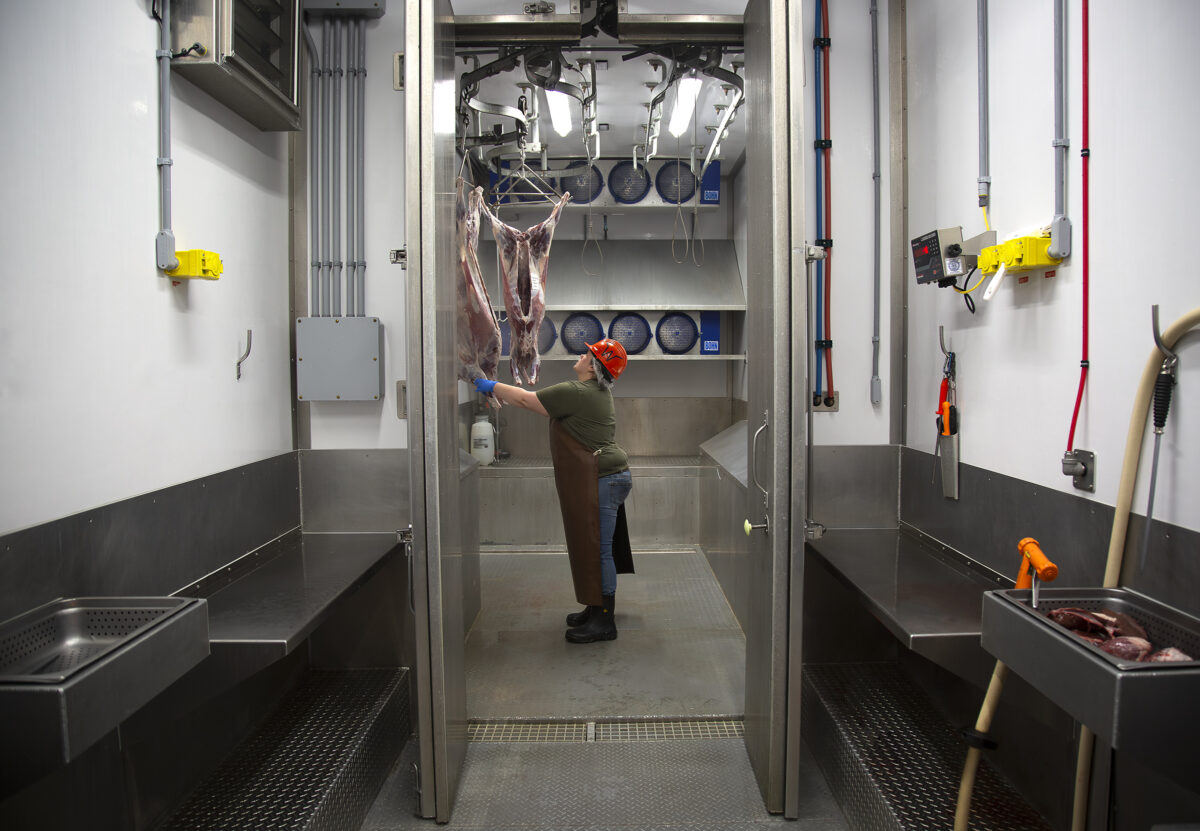
 An interior view of the Harvest Room inside a Friesla Mobile Harvest Unit, which enables multi-species harvesting: hide removal, evisceration, splitting, weighing, inspection, and washdown.
-
 An interior view of the Harvest Room inside a Friesla Mobile Harvest Unit, which enables multi-species harvesting: hide removal, evisceration, splitting, weighing, inspection, and washdown.
-
 An interior view of the Harvest Room inside a Friesla Mobile Harvest Unit, which enables multi-species harvesting: hide removal, evisceration, splitting, weighing, inspection, and washdown.
-
 An interior view of the Harvest Room inside a Friesla Mobile Harvest Unit, which enables multi-species harvesting: hide removal, evisceration, splitting, weighing, inspection, and washdown.
-
 An interior view of the Harvest Room into the Carcass Drawdown Cooler inside a Friesla Mobile Harvest Unit, which enables multi-species harvesting: hide removal, evisceration, splitting, weighing, inspection, and washdown.
-
 The meat rails for hanging carcasses and evaporators used to regulate temperature in a Friesla Mobile Harvest Units’s Carcass Drawdown Cooler.
-
 An interior view of the meat rail system running from the Carcass Drawdown Cooler into the Harvest Room inside a Friesla Mobile Harvest Unit.
-
 An interior view of the meat rail system running from the Carcass Drawdown Cooler into the Harvest Room inside a Friesla Mobile Harvest Unit.
-
 An interior view of the Harvest Room inside a Friesla Mobile Harvest Unit, which enables multi-species harvesting: hide removal, evisceration, splitting, weighing, inspection, and washdown.
-
 An interior view of the Harvest Room inside a Friesla Mobile Harvest Unit, which enables multi-species harvesting: hide removal, evisceration, splitting, weighing, inspection, and washdown.
-
 A front interior view of the Harvest Room in a Mobile Meat Harvest Unit with a closed rear door.
-
 Dual ceiling-mounted electric hoists inside a Friesla Mobile Harvest Unit’s Harvest Room, used for the safe and efficient transfer of carcasses onto the meat rail system.
-
 The hoist line and meat rail inside a Friesla Mobile Harvest Unit’s Harvest Room, used for the safe and efficient transfer of carcasses onto the meat rail system.
-
 A knee-operated sink with a side-mounted knife sterilizer, saw sterilizer, and working hose inside the Harvest Room of a Friesla Mobile Meat Harvest Unit.
-
 A digital thermometer with a remote stainless steel probe inside a Friesla Mobile Harvest Unit, used to accurately monitor internal carcass and environmental temperatures.
-
 A digital weight indicator in a Friesla Mobile Harvest Unit’s Harvest Room, used to capture and display precise carcass weights from the rail scale.
-
 A stainless-steel storage cabinet, working hose, and water mixing valves inside the Harvest Room of a Friesla Mobile Harvest Unit.
-
 A heater unit inside a Friesla Mobile Harvest Unit’s Harvest Room, used to provide warmth and maintain safe and sanitary conditions during meat harvesting.
But that will all change with phase one of this project. The refrigerated cooler, outfitted with custom racking for hanging deer, and office trailers were separately sourced, and the two meat-harvest units come from a company called Friesla in Washington that aims to restore local meat processing, a lack of which is a problem country-wide, not just on the Island.
The two trailers purchased from Friesla were specifically designed in a configuration optimal for venison processing, Barbatti said. The first unit will be used for the harvest process, and then the second is outfitted with meat-processing equipment to get the meat to a finished product.
Reece Lodder, head of marketing and sales for Friesla, who worked as a combat correspondent with the Marine Corps and was deployed in Afghanistan between 2011 and 2012, joined his father and their team in an effort restore local meat processing after he came back from his service. Friesla is the only company in the country, Lodder said, that provides both mobile and modular meat processing systems. The company also aids in project planning, facility design, coordination, and regulatory compliance. Lodder said the plan is that a team from Friesla comes to Martha’s Vineyard in October to train Islanders on how to use its equipment, what Lodder called “wrap-around services.” Barbatti and Lynch emphasized that the project is a job creator for butchers.

Philip Hale of the M.V. Shipyard and on the board of Tick Free MV, Rob McCarron, chair of the Agricultural Society’s board of trustees, and Cole Powers, who contracted to do the electrical for the project, flew out to Washington recently to see the units in person.
It’s the first time that Friesla’s worked with an organization like Tick Free MV, where the sole goal isn’t food processing, and involves deer population management and then finding “a way to feed less fortunate within the community,” Lodder said.
The donated deer from phase one of this project will be distributed by Island Grown Initiative (IGI), one of only two facilities on the Island that are equipped and permitted to donate meat through the state Share the Harvest program, through its Food Pantry, which feeds one in five Islanders. The MV Hunt Club is the other processing facility, and Joseph Capace, president of the club and on the board of the Agricultural Society, said the entities are all collaborating on this project.
The project is currently in the permitting process with the town of West Tisbury’s planning board for phase one. The select board is also aware, Barbatti said, and they are working through waste-disposal concerns raised by the town’s board of health. Barbatti said they also self-referred the project to the Martha’s Vineyard Commission, which didn’t see a problem.

There have been concerns in the past that there aren’t enough hunters, due to a loss of tradition and barriers to entry, on the Island to have a real impact on the deer population. But an initiative called Deer Damage Permits, issued by the Massachusetts Division of Fisheries and Wildlife (MassWildlife), allow agricultural property owners, such as working farms, conservation land, and some large private estates to call in hunters to treat deer as pests on their property, outside the regulated deer hunting season. The program was created in 2024, but only recently gained traction on the Island.
Martin Feehan, a deer biologist for the state who oversees 18 processors throughout the state, and has helped advise development of this project, said he’s seen use of these permits and need for processing grow. The facility is designed to meet capacity no matter what level of deer management occurs on the Island, he said; Tick Free MV’s goal is to reduce the number of deer by 70 percent after an Island-wide mapping confirmed that the population exceeded state standards by a long shot. In fact, 35 deer were removed so far this year via one of these permits, and 33 of those deer were then donated. Processing is a limiting factor to deer management, Feehan said, and this project removes that limiting factor. There are efforts by the state as well to modernize hunting laws that increase access to the sport.
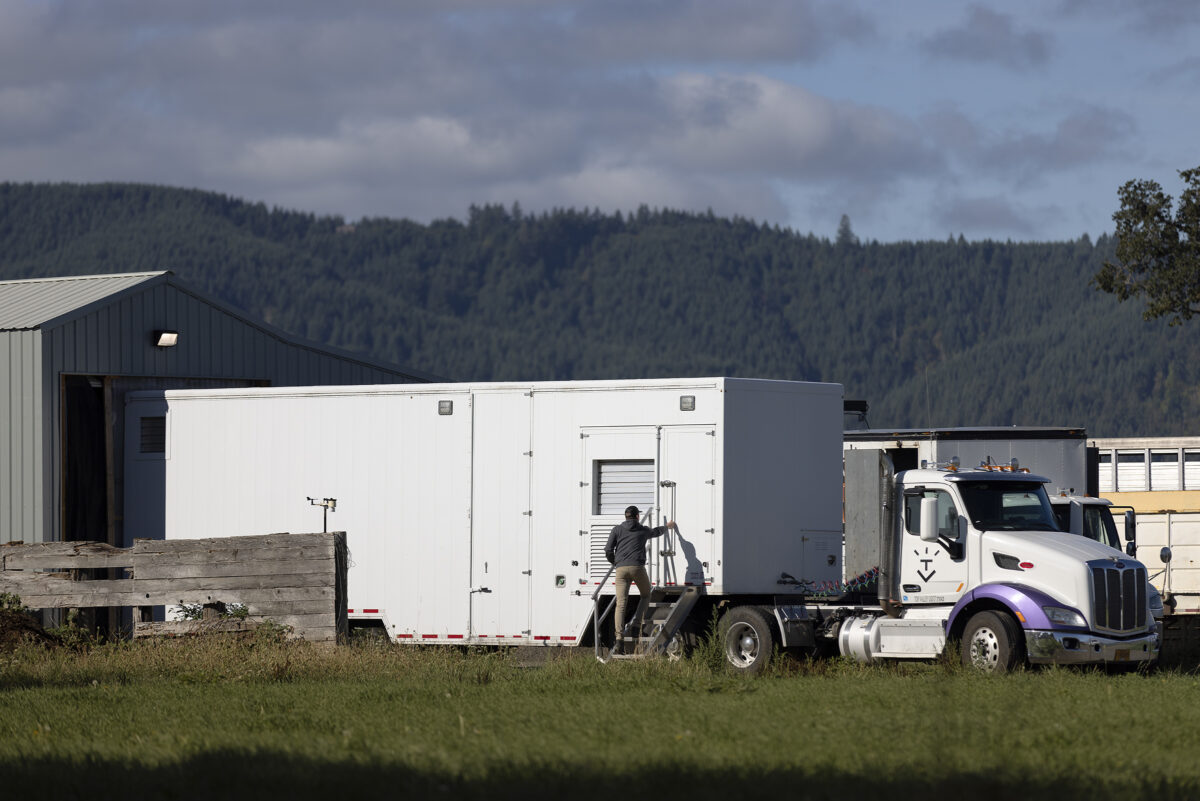

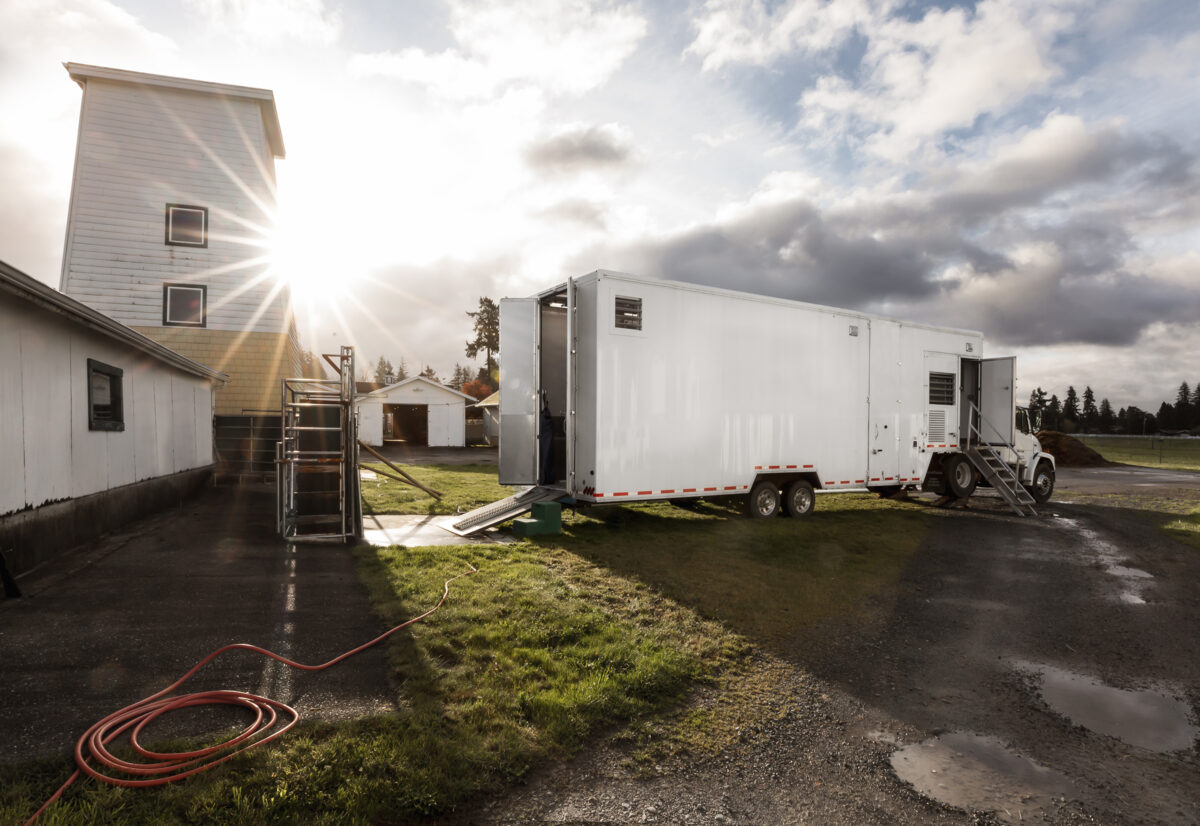
Barbatti said, “Because this year for phase one we’re focused on donations, we’re confident that these trailers … will have the capacity that we need to support an increased number of donations on the Island … And the trailers do have enough capacity to handle significant volume if at any point we need to scale up.” The trailer network can be utilized year-round due to the permits.
“While we’re addressing the tick crisis, we’re also addressing food insecurity, and it’s a piece of infrastructure that’s really food-systems infrastructure that can serve us in multiple ways,” Lynch said.
This article was originally published by The Martha’s Vineyard Times on September 16, 2026. Reprinted with permission.